
Ukrainians go to bookstores more often than to libraries: what a new study of cultural leisure showed

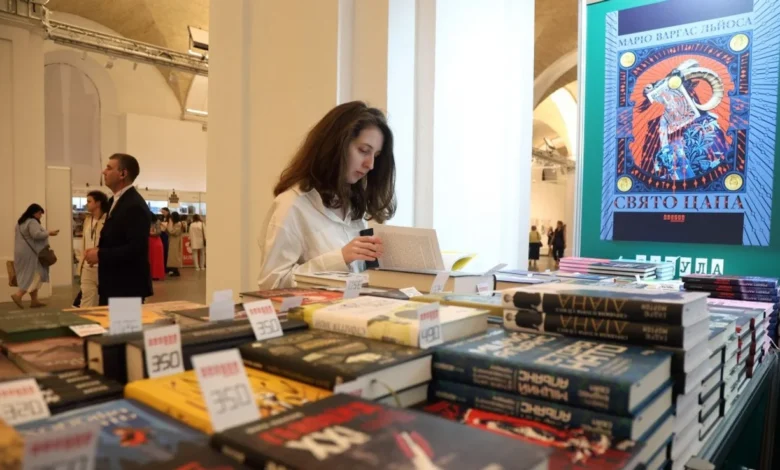
The cultural habits of Ukrainians during a full-scale war are changing under the pressure of anxiety, financial constraints, lack of time and unequal access to events in different cities. Despite this, the Research.ua study shows that reading, visiting bookstores, going to the cinema, theaters, concerts and book fairs remain part of everyday life for a significant part of citizens. An important detail is noticeable in these practices: bookstores have been visited more often than libraries in the past year, and younger Ukrainians have generally been more actively involved in cultural events.
Bookstores are becoming a place to meet books more often
According to the all-Ukrainian research Research.ua, over the past year, more than half of the surveyed Ukrainians visited a library or bookstore. The largest share of respondents, 30%, was only in a bookstore, while 21% visited both the library and the bookstore. Another 8% of respondents were only in the library.
These results indicate that for many readers, a bookstore has become a more convenient and visible space for accessing books. It combines the purchase of literature, acquaintance with new releases, the opportunity to choose publications on the spot, and an atmosphere of cultural leisure, which is especially attractive to people in large cities.
At the same time, 18% of respondents did not visit either the library or the bookstore, but read books. This means that part of the audience uses home libraries, electronic formats, donated or borrowed books. Another 17% did not visit such institutions and did not read books during the year, and 6% could not remember or answer.
Women are more active in visiting book spaces
The results of the study showed a noticeable difference between the reading practices of women and men. Only 36% of women and 24% of men visited a bookstore during the year. Both the library and the bookstore were visited by 24% of women and 19% of men.
At the same time, the proportion of those who did not visit libraries or bookstores and did not read a single book was higher among men: 21% versus 12% among women. This difference indicates that women are more likely to maintain contact with the book environment, while the male audience is more likely to drop out of regular reading.
Young people are more likely to combine libraries and bookstores
Among age groups, the highest share of visits to both libraries and bookstores was recorded among respondents aged 18–25 — 29%. In the 26–35 age group, this figure is 23%, among 36–45 year olds — 22%, and among people aged 46–55 — 15%.
Only the bookstore was visited most often by respondents aged 46–55 — 35%. High figures also have groups of 18–25 and 26–35 years, where the share is 32% and 31%, respectively. In the 36–45 age group, only the bookstore was visited by 25%.
The youngest survey participants are less likely than others to belong to the group of readers who did not go to libraries and bookstores, but read books: 9% of them. In the age group of 26–35 years, the figure is 16%, and among respondents aged 36–45 and 46–55 years — 20%.
Cultural events remain a part of life
Despite the war, the majority of respondents remain involved in cultural life. According to the results of the study, 30% of respondents attend cultural events once a month or more often, another 26% do so once every 2–3 months. 37% of respondents attend cultural events once every six months or less.
Only 7% of respondents indicated that they do not attend cultural events at all. This figure demonstrates that even in conditions of constant stress, economic uncertainty and security restrictions, people are looking for events that help maintain contact with the cultural environment.
After the start of the full-scale war, two-thirds of respondents who attend cultural events began to do so less frequently. 31% attend such events significantly less frequently, 35% somewhat less frequently.
Another 19% of respondents maintained their previous frequency of attendance, and 15% began to attend cultural events more often. This picture shows that cultural life has not disappeared, although for many people it has become less regular due to financial costs, fatigue, changing priorities, security risks, and difficult life circumstances.
Cinema, concerts, and theater remain the most popular
The most common format of cultural leisure remains movies in the cinema. Over the past year, 66% of respondents who participated in cultural events attended them.
Music concerts were attended by 42%, theater performances by 40%. The most popular formats also included book fairs, which were visited by 23% of respondents from the culturally active audience.
Excursions to places of historical heritage were chosen by 22%, exhibitions of paintings, sculptures and other works – 20%, public celebrations of special dates – 20%, events commemorating a person or event – 18%.
Literary and poetic evenings remain less popular, which were visited by 9% of respondents. Public lectures gathered 8%, opera and ethno festivals – 7% each, ballet – 5%.
Young people are more active in cultural events
Respondents aged 18–25 demonstrate above-average activity in several cultural formats. Among them, 81% visited cinemas, 53% – theater performances, 29% – book fairs, 30% – exhibitions.
Literary or poetic evenings were attended by 13% of the youngest survey participants, public lectures by 15%, and opera by 16%. Such data show that the younger audience combines mass leisure formats with an interest in events that require greater involvement and thematic interest.
Most often, respondents explained their attendance at cultural events by the need to take a break from work, routine, and stress. This motive was mentioned by 62% of respondents.
Another 56% go to cultural events for inspiration or pleasure, 51% to distract themselves from difficult news and sad events. For 47%, personal development or self-improvement is an important motive.
These answers well convey the role of culture during war: for some people, it becomes a way to restore inner balance, switch from news pressure, spend time with loved ones, or regain a sense of the normal rhythm of life.
The main conditions that could increase cultural activity were money and time, the respondents said. 54% of respondents would like to attend more events if they had enough money, and 48% would like to attend more events if they had more free time.
For 26%, it is important that cultural events take place closer to their place of residence or work. This is especially important for people from small settlements, where access to theaters, exhibitions, lectures, concerts or book events is limited.
Among those who did not attend cultural events at all during the year, the most common reasons were distrust of events taking place in Ukraine, lack of money, a small number of cultural institutions or events in the settlement, and difficult life circumstances. Each of these reasons was mentioned by 23% of respondents from this group.
The survey lasted from December 22, 2025 to January 7, 2026 using an online interview method. It involved 2,000 respondents aged 18 to 55 from all regions of Ukraine, except for the temporarily occupied territories of Crimea, Donetsk, Luhansk, Zaporizhia and Kherson regions.
The sample matched the characteristics of the urban population of Ukraine by gender, age and region of residence as of the beginning of the full-scale invasion. The study aimed to find out the attitude of citizens towards the sphere of culture, the participation of Ukrainians in cultural life, as well as everyday and cultural language practices.


