Veterans’ assistants are working at one-fifth of capacity: audit reveals planning and funding failures

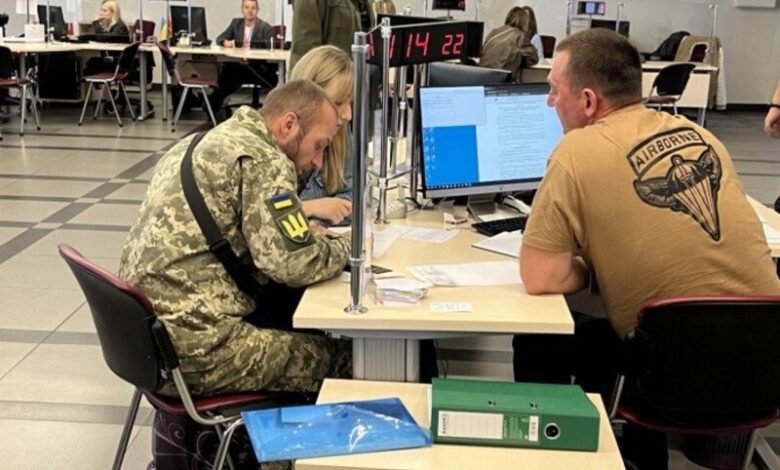
The return of military personnel to civilian life requires a clear state support system, since a demobilized person after service faces medical, social, legal, domestic and professional issues at the same time. The Institute of Veteran Assistants was supposed to become a point of first contact for defenders in communities, where a specialist helps to navigate services, documents, benefits, treatment, employment and adaptation after the front. The Audit Chamber’s audit showed that the idea remained only partially implemented, since the system encountered errors in planning, recruitment, financing and organization of work on the ground.
What the Accounting Chamber found
According to the results of the control measure, the Accounting Chamber concluded that the introduction of the Institute of Veteran Assistants was accompanied by systemic difficulties. Problems arose at several levels: from regulatory design and budget planning to the actual provision of specialists with jobs, equipment, and access to the necessary digital tools.
The representative of the Accounting Chamber, Serhiy Klyuchka, emphasized that the reintegration of demobilized servicemen is one of the most difficult tasks for the state in the conditions of a full-scale war. At the same time, the auditors noted that the path from the idea of personal support for veterans to full-fledged work in communities was blocked by managerial shortcomings.
The Ministry of Veterans Affairs launched the initiative as a tool for targeted support for defenders who need help in obtaining social, medical, administrative, and other services. According to the plan, the veteran’s assistant was supposed to accompany a person in a complex system of state services, where without a trained specialist it is easy to get lost among applications, certificates, electronic offices, and interdepartmental procedures.
However, the audit showed that the real capabilities of communities were not properly compared with the ministry’s plans. The number of positions was calculated using the formula “one specialist per 100 veterans” based on the Unified State Register of War Veterans, although the human resource potential of communities, their willingness to create such positions, and the actual need in specific regions were not sufficiently studied.
Because of this, a significant gap formed between the central level plans and local capabilities. In 2024, the Ministry of Veterans identified the need for 15 thousand specialists, while the regions proposed to create only 1,360 positions. By the end of 2024, 485 people were actually employed, and in October 2025, about 2 thousand assistants worked in communities. In 20% of communities, such positions were completely absent.
Personnel selection and inaccurate data
A separate block of comments concerns the candidate selection procedure. The auditors found violations of the deadlines for submitting applications and conducting interviews, as well as situations when selection was allowed for positions that were not vacant or were not included in the staffing list at all.
An additional problem was discrepancies in data on veterans and applications. At the beginning of 2025, there were 1.5 million veterans in the Unified State Register of War Veterans, but the register did not contain information about individual preferential categories. The ministry’s reporting as of October 1, 2025 indicated 95,086 applications, while the Unified State Register of War Veterans on the e-Veteran platform displayed 56,487 applications. No explanation for this difference was provided to the auditors.
For veteran policy, such discrepancies are of practical importance, since errors in accounting affect the planning of positions, the distribution of funds, the workload of specialists, and the availability of assistance for people returning from the military.
Billions of hryvnias not used for their intended purpose
The most notable financial conclusion of the audit was the non-use of a significant part of the funds earmarked for the remuneration of support specialists. Due to unfounded planning, the volume of the subvention had to be significantly reduced and redirected to other needs.
In 2024 and in the first nine months of 2025, 84% of the subvention, which amounts to 5.7 billion hryvnias, was redistributed to other purposes. These figures indicate that budget plans did not coincide with the real willingness of communities to create jobs, hire specialists, and provide them with working conditions.
Some communities did not have the organizational and material and technical capacity to absorb the funds. As a result, the program, which was supposed to provide mass support to veterans on the ground, worked much weaker than the declared scale.
Workplaces without proper conditions
The auditors also drew attention to the living and technical conditions in which veterans’ assistants work. In 12 inspected institutions, specialists were placed in cramped offices together with other employees, which made confidential communication with veterans and their family members difficult.
About 30% of the premises were not adapted for people with disabilities. For a system that is supposed to serve war veterans, in particular people after injuries, amputations or severe treatment, such a problem is critical in terms of the level of accessibility of services.
In some cases, specialists used their own laptops and phones. This practice creates risks for the protection of veterans’ personal data, since working with sensitive information requires official equipment, secure access channels and clear data processing rules.
Digital tools did not work fully
According to the audit findings, uniform standards for the work of support specialists were not created at the state level. Some assistants did not have personal digital keys and access to the e-Veteran platform, which is why information processing was performed manually.
Manual work increases the risk of errors, delays the processing of applications and takes up time that a specialist could spend on direct support for veterans. For a person who, after service, is trying to apply for assistance, undergo treatment or receive advice, delays in the system mean an additional burden at a time when support should be quick and understandable.
What the Accounting Chamber recommended
Following the results of the audit, the Accounting Chamber provided the Ministry of Veterans with recommendations to correct the identified shortcomings. Key tasks include realistic budget planning, improving the regulatory framework, strengthening data monitoring and implementing mandatory organizational standards for communities.
Such standards should ensure equal access to services for veterans regardless of the community in which they live. Without uniform requirements for premises, equipment, digital access, personnel selection and reporting, the veteran assistant institution will continue to depend on the unequal opportunities of individual territories.
How the Ministry of Veterans Affairs plans to correct the situation
Deputy Minister for Veterans Affairs Yulia Kirillova reported that the department is already working to eliminate the problems. To increase the efficiency of the use of funds in 2026, they plan to apply a quarterly distribution of subventions so that funding better meets real needs and the pace of job creation.
Also, testing of a new CRM system has begun in 14 regions, which should automate reporting and reduce the manual workload on specialists. Individual communities have already begun to independently allocate funds to arrange workplaces for veteran assistants.
Why this system is important for veterans
For a veteran returning from war, state support should work as a clear route, where a person is not forced to independently look for answers in various institutions. A veteran’s assistant can become a specialist who explains the procedure, helps with paperwork, directs to the right service, and supports with issues that arise after demobilization.
The Audit Chamber’s audit showed that the potential of this model has only been partially utilized. Problems with planning, financing, staffing, data, and working conditions do not negate the need for such an institution, but they do indicate the need for clearer management. For veterans, this issue is measured not by reports, but by the availability of specific assistance in the community where they return to civilian life after service.