
Аналитика
-

When Russian rockets hit Ukrainian cities, millions of people were forced to flee, not knowing what lay ahead. Then, in the terrifying year 2022, Europe opened its borders, governments announced unprecedented support, and ordinary people volunteered to help in whatever way they could. But now everything has changed. Financial assistance is being reduced or canceled altogether, and free housing is almost non-existent. Jobs are already filled, and competition in the labor market is increasing every day. The question «Why don’t Ukrainians return home?» is being asked more and more frequently in the European media. Some politicians are already openly declaring that it is time for Ukrainian refugees to return to their homeland. Local residents, who sympathized yesterday, today express dissatisfaction — they say that resources are not unlimited, and their own problems have not disappeared. Is it war fatigue, an economic crisis or growing discontent among the local population? And the main question is what to do with Ukrainians who cannot return, but do not know whether there will be a place for them where they were welcomed yesterday? Hospitable Europe in the first years of the war With the start of a full-scale invasion in 2022, millions of Ukrainians were faced with a choice: stay under fire or go into the unknown. Then Europe opened its borders and hearts to everyone. People took refugees into their homes, governments provided financial assistance, companies offered jobs. According to the official data According to the State Border Service, during the three years of the full-scale war, about 3 million citizens did not return. This figure is close to the total for the period from 2011 to 2021, which is 3.3 million people. Last year, 2% of Ukrainians who went abroad did not return to Ukraine — that’s 443,000 people. This indicator is 3.3 times higher than the level of 2023, when the difference between those who left and those who returned was only 134 thousand people. The largest number of those who did not return in 2024 was recorded in June — 194 thousand people. The main part of the refugees went abroad in the first half of 2022. In March of the same year, about 44% of Ukrainians who are still abroad left the country, in April — June — 24%, and in July — September — 12%. Although the flow of new refugees is now negligible, the length of stay abroad of those who left after the war began is steadily increasing. Despite the advantages of temporary protection, which provides social support and quick access to the labor market, Ukrainians face numerous difficulties. The biggest challenges are related to finding stable housing and work, accessing health services and overcoming the language barrier. It seemed that the support would be long lasting. But today the situation has not changed in favor of Ukrainians. How the attitude towards Ukrainian refugees abroad has changed If earlier Ukrainians could count on monthly payments, housing subsidies and social benefits, now more and more countries are cutting this assistance or canceling it altogether. For example, in Germany, the requirements for receiving payments have become stricter, in Poland, free accommodation in state centers has been canceled, and in the Czech Republic, financial support has been significantly limited. Poland became the first refuge for the majority of Ukrainians, accepting more than 1.5 million refugees. At first, the help was unprecedented: housing, financial payments, health insurance. But today the situation is different. Financial support was cut, and free housing for refugees was abolished. The Polish government is also actively discussing a draft law that could block access to free medical care for Ukrainian refugees if they do not pay insurance premiums. This can be a real shock for those who do not yet have a stable job or live only on social assistance. Previously, Ukrainians who received temporary protection in Poland had the right to free medicine on a par with citizens of the country. But now the government wants to impose stricter rules. No insurance premiums — no free medicine. If the refugee does not work and does not pay into the health care system, he will have to pay for the treatment himself. Emergency care will remain, but the rest of the services will be paid. This means that a routine doctor’s visit, examination, or routine treatment can become a problem. Children, retirees, and people with chronic illnesses who can’t work and can’t afford insurance will be the hardest hit. Poland is taking such a step because the country’s healthcare system is currently overloaded. Polish hospitals are already struggling to cope with the influx of patients, and local residents are increasingly complaining about queues and a lack of resources. Expenses for Ukrainian refugees have become a significant burden on the country’s budget, so the economic situation forces the government to reduce these expenses. After the change of government, the issue of supporting Ukrainians became more controversial — there is a constant request to limit aid in society. Yes, for data sociological research, 88% of Poles oppose further social payments to Ukrainians. Ordinary Poles increasingly express dissatisfaction because, in their opinion, Ukrainians take their jobs, rent housing, and salaries remain low. The Czech Republic also actively helped at first, but today such an initiative has changed somewhat. Financial payments have been significantly reduced, and in order to receive assistance, you must prove that you really cannot work. Housing is no longer free. Ukrainians are relocated from hotels, forcing them to look for a place to live on their own. Social tension is also growing. Although the Czech Republic has low unemployment, many Ukrainians work in services, construction and industry, which creates competition with local residents. Germany has long remained one of the most attractive countries for Ukrainians due to high social benefits. But since 2024, the situation has become more complicated. The authorities introduced stricter rules for receiving aid. Now you need to confirm that you are actively looking for work or prove that you really cannot work. Political statements about the reduction of support are being heard more and more often. Some parties directly call to review the status of Ukrainians and do everything possible to return them home. Access to housing has become more difficult, because the rental market is oversaturated, and apartment prices are rising. Austria accepted Ukrainians less actively than neighboring Germany, but also provided social guarantees. Now the situation is not so rosy. Payments are being cut, and it is more difficult for newcomers to get help. Ukrainians are obliged to look for work more actively. Increasingly, there are cases of tension in society due to the lack of housing and competition in the labor market. Ukrainian refugees in Vienna are facing new difficulties in getting basic assistance as social services have stepped up checks. This has caused concern among displaced persons. According to the head of the Vienna Social Security Fund (FSW), Martyna Plohowitz, the inspections have become more thorough due to the violations of the rules for receiving benefits. All recipients are now required to register with the Employment Service, except for the elderly or carers. Of the 14,000 Ukrainians who receive basic assistance in Vienna, about 8,000 are of working age. Some refugees complain that they have not received payments since December and are forced to turn to charities for free food and meals. For those who rent housing in the private market, a monthly compensation of 330 euros is provided. Adults are paid 260 euros for food and hygiene products, children — 145 euros. The checks will last several weeks, after which payments will be resumed subject to proof of need. At the same time, the Ukrainian community calls on the local authorities to take into account the difficult situation of refugees, especially families with children. Since the beginning of the war, the USA has provided Ukrainians with the U4U (Uniting for Ukraine) program, which allows them to temporarily live and work in the country. But this program does not provide for social benefits, so Ukrainians need to find work and housing immediately. As of 2025, the U.S. Citizenship and Immigration Services (USCIS) announced the temporary suspension of the U4U program, which provided Ukrainians fleeing the war with the opportunity to obtain asylum in the United States, until all previously submitted applications are processed. According to the US government, as of September 2023, more than 150,000 Ukrainians have used this program. Its freezing can significantly affect those who have already planned to move or are in the process of finding a sponsor. Rents are high and health insurance is too expensive. Many Ukrainians cannot obtain permanent status. And those who still managed to get their dream program code do not know what will happen after its expiration date. Despite all the difficulties, the hardest part is experiencing social tension in a foreign country. If at the beginning of the war, the majority of Europeans supported the Ukrainians, now more and more often you can hear comments addressed to refugees in the style: «We helped them, now let them fend for themselves» or «Why are they still here?». These are not just words — in some countries, the number of attacks on Ukrainian refugees has increased, and politicians have begun to use the topic of Ukrainians in their election campaigns, talking about the burden on the budget and the protection of local interests. The situation indicates that the golden age of unconditional support has passed. Ukrainians in Europe and the USA will have to adapt, look for work, solve housing issues and decide on the future. The time of easy solutions is over, and everyone has to find their way in new, more complex realities. Today, there are three possible options for Ukrainians abroad: adapt to new conditions; try to find another country to live in; return home If you plan to stay in the EU, you should look for work, housing and self-supporting opportunities, because social assistance will only decrease and eventually disappear altogether. You can try to find another country. After all, some Ukrainians are already going from Poland or Germany to Canada or Great Britain, where there are still state support programs. The option of returning home is also not suitable for everyone. Many Ukrainians lost their homes and property that they had earned for years. Their cities and villages have been completely and irreversibly destroyed. Only some Ukrainians return if their cities have become relatively safe. At the same time, doubts are creeping in, whether the Ukrainian government itself, persistently trying to return its citizens home, is putting pressure on the EU countries. Kyiv demands that European partners reduce support for Ukrainian refugees, and that men of conscription age be denied consular services altogether. On this indicates and EL Pais publishing house. In fact, it is an attempt to close all doors, forcing people to return not because they want to, but because they simply have no other way out. However, the state itself did nothing to create the conditions under which returning home would seem like a logical and safe decision. Ukrainians still do not see real guarantees of care for them. There are no clear support programs for IDPs, solutions to housing problems, or clear prospects. The government believes that it is enough to simply cut off the retreat routes. But that’s not how it works. People return to places where they feel needed and protected, not to places where they are forced not to run away. Ukrainians, who have already risked everything, fleeing from shelling in that terrible year of 2022, are unlikely to be afraid of the difficulties that await them in a foreign country. It should be understood that Europe is no longer what it was in 2022. This does not mean that the support is no longer there, it is just that it has become significantly less and it is no longer unconditional. It is obvious that the time when it was possible to rely only on state aid is passing. Ukrainians will have to adapt quickly, look for work, make plans for the future and make choices on which their lives depend. Because the doors that were wide open yesterday are gradually closing today.
Когда российские ракеты летели на украинские города, миллионы людей вынуждены были бежать, не зная, что ждет впереди. Тогда в ужасном…
Читать далее » -

Полиция между фронтом и тылом: пока их критикуют, они борются и борются с преступностью
В соцсетях и на улицах все чаще раздаются упреки в адрес полиции: «Почему они не на фронте?», «Их нужно отправить…
Читать далее » -

Вера, которая дает силу: роль капелланов на войне
Вера, которая дает силу: роль капелланов на войне
Читать далее » -

Кризис поколений: подростковое насилие как зеркало общества
Кризис поколений: подростковое насилие как зеркало общества
Читать далее » -
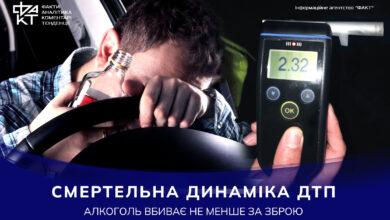
Дорожно-транспортные происшествия как оружие массового поражения: пьяные аварии в военное время
Ежегодно в результате дорожно-транспортных происшествий в мире погибает 1,3 миллиона человек, то есть один человек каждые 24 секунды. При этом…
Читать далее » -

Демографический портрет Украины: старение и катастрофическая убыль населения
Украина стоит на краю демографической пропасти. Страна не только теряет территории из-за войны, но и ежедневно теряет людей — из-за…
Читать далее » -

Кровавая экономика: как цены на нефть влияют на войны и геополитику
Баррель нефти может весить 159 литров, но в глобальной геополитике его масса измеряется во влиянии, которое изменяет судьбы целых государств.…
Читать далее » -

Теневая сторона современных технологий: дроны в руках преступников после войны
Дроны, которые во время войны стали символом технологического превосходства и незаменимым средством ведения боя, после ее завершения могут превратиться в…
Читать далее » -

Каждый четвертый украинец готов покинуть свою страну: тревожная тенденция и последствия
Война жестоко вмешалась в жизнь украинцев, разрушая привычный порядок вещей, забирая дом и планы на будущее. Страна, которая должна развивать…
Читать далее » -

On January 22, Ukraine celebrates the Day of Unity, a holiday that is a symbol of unity, strength and hope. However, today this concept appears before us in a new light. The events of recent years have sharpened the question: has Ukraine become closer to the idea of confraternity that was proclaimed in 1919? This holiday is an occasion to think about the extent to which historical lessons, for which a considerable price was paid, remain relevant, and whether we are able to build our future based on the idea of a common home. The Day of the National Assembly of Ukraine: a story that shapes identity On January 22, 1919, Kyiv witnessed an event that would lay the foundation for a new stage in the history of Ukrainian statehood. The Act of Unification between the Ukrainian People’s Republic (UNR) and the Western Ukrainian People’s Republic (ZUNR) was solemnly proclaimed on Sofia Square. This document symbolized the aspiration of two parts of Ukraine, separated by historical and geopolitical circumstances, to unite into a single state. The idea of unifying Ukrainian lands has been maturing for centuries. Western Ukrainian lands were under the rule of the Austro-Hungarian Empire, and Transdnieper lands were under the Russian Empire. These two parts of Ukraine had different experiences of state administration, education and culture, but they were united by their desire for national independence. The First World War and the subsequent collapse of empires created a unique chance to implement this idea. The UNR declared independence in January 1918, and the ZUNR was formed in November of the same year after the collapse of Austria-Hungary. The common enemy of both states was Poland, which claimed the western Ukrainian territories, and Bolshevik Russia, which sought to regain control over the Dnieper region. It should be noted that the Act of Zluka had great symbolic significance. However, the legal and administrative unification of the two states remained a difficult task. The ZUNR, transformed into the Western Regions of the UNR (ZO UNR), retained its autonomy, a separate army and a system of administration. Moreover, joint political decisions were often blocked by differences in approaches to solving key issues. At the same time, the military offensive of Poland on Galicia became a critical moment. ZO UNR, left without sufficient support, was forced to retreat, and its territories were occupied by Poland. The Ukrainian People’s Republic, which at that time was at war with the Bolsheviks, could not effectively help. The realities of that time demonstrated how difficult it was to maintain unity in a state that had just begun to form. External pressure from stronger neighbors and internal contradictions became the main reasons why the attempt to create a united Ukraine was defeated. In Soviet times, the memory of the Zluka Act was suppressed in every possible way. Soviet historiography tried to erase this episode from the national memory, focusing on another date — the entry of Western Ukraine into the Ukrainian SSR in 1939. However, in independent Ukraine, the Day of Sobornosty regained its significance. In 1990, it was marked by the formation of a «living chain» from Kyiv to Lviv, which became a symbol of the desire for unity. Similar actions are repeated today, reminding of how important it is to maintain the connection between regions. Historical lessons of unity: what the past teaches us In the 11th century, Kyivan Rus was one of the most powerful states in Europe, united under the rule of Prince Yaroslav the Wise. However, after his death in 1054, a period of civil strife began, when the princes fought for power, dividing the country into separate principalities. Disunity and constant conflicts weakened Rus’, making it easy prey for external enemies. In 1240, the Mongol hordes led by Khan Batiya captured Kyiv, finally burying the former greatness of the state. It should be noted that the Ruin period in the history of the Hetmanate (1660–1680s) became one of the most tragic pages of Ukrainian history. After the death of Bohdan Khmelnytsky, his heirs could not preserve the unity of the Cossack state. The struggle for the hetman’s mace between Ivan Vyhovskyi, Yuriy Khmelnytskyi, Ivan Bryukhovetskyi and other hetmans split the country. Instead of a common front against external threats such as Poland, Muscovy, or the Ottoman Empire, the Cossack chieftain made conflicting agreements that only deepened the split. As a result, the Hetmanate lost its autonomy, and Ukraine was divided between two empires. During the 19th century, Ukrainian lands were under the rule of the Russian and Austro-Hungarian empires. The lack of unity among the Ukrainian elite, which often focused on foreign countries, made it difficult to create a unified national movement. On the Left Bank, the policy of Russification was carried out, which destroyed Ukrainian culture and language. In Western Ukraine, although there was a certain cultural autonomy, the political division between Russophiles and Ukrainophiles prevented the consolidation of efforts. However, after the declaration of independence of the Ukrainian People’s Republic in 1918 and the merger with the Western Ukrainian People’s Republic in 1919, it became clear that unification was only the beginning. The UNR faced internal contradictions that undermined the state from within. The lack of understanding between the UNR and ZUNR governments, as well as the struggle between socialists, anarchists and other political groups, weakened Ukraine’s position. Ultimately, the Bolshevik army took advantage of this disunity, and the Ukrainian People’s Republic lost its independence. Let’s also return to the lessons of foreign history. One of the most famous examples is the Roman Empire. In its heyday, it was the most powerful state in Europe, but internal contradictions, power struggles and economic inequality led to its decline. The division of the empire into Western and Eastern (Byzantine) in 395 was the first step towards its final collapse. The western part was captured by barbarian tribes in the 5th century, losing the status of a superpower. The Holy Roman Empire, which existed for almost a thousand years, fell apart due to constant conflicts between the emperor and individual principalities that sought greater autonomy. For example, during the Thirty Years’ War (1618–1648), religious differences between Catholics and Protestants turned the empire into an arena of bloodshed. This conflict weakened the central authority to such an extent that the empire ceased to be a single political force and was eventually dissolved in 1806. Let’s mention one more example. In the 15th century, a war broke out in England between two branches of the Plantagenet dynasty — the Lancasters and the Yorks. This conflict, known as the War of the Red and White Roses (1455–1487), was a disaster for the kingdom. The struggle for the throne not only devastated the country, but also weakened the monarchy. Only through the unification of the dynasties in the marriage of Henry VII Tudor and Elizabeth of York was it possible to restore stability in the state. As you know, Napoleon Bonaparte built one of the most powerful empires in the world, but over-expansion and lack of unity in his army and among his allies led to its downfall. His military campaigns caused discontent among the occupied peoples, who began to rise in rebellion. As a result, defeat in Russia and subsequent military failures ended the Napoleonic era. The Civil War in the USA (1861–1865), which also led to a split in society, was no exception. At that time, internal contradictions reached a climax — the conflict between the North and the South over the issue of slavery and economic differences divided the country. Although the war ended in victory for the North, it caused enormous human and economic losses, and left a deep mark on society, the effects of which are still felt today. At the end of the 20th century, Yugoslavia, which for decades united various ethnic and religious groups, also broke up into several independent states. The reason for this was ethnic conflicts, nationalist ambitions and economic inequality. The wars that accompanied the collapse (1991–2001) resulted in mass casualties, ethnic cleansing and humanitarian disaster. Yugoslavia became a vivid example of how a split in society can destroy even a relatively stable state. The Soviet Union, which united 15 republics, also collapsed. In 1991, these occurred due to the economic crisis, political instability and the growth of national movements. Despite the powerful military potential, the state could not withstand internal disagreements, and different nationalities began to actively fight for independence. Consequently, the loss of unity in leadership and society made disintegration inevitable. The history of mankind is filled with examples when the loss of unity and common purpose became fatal for entire peoples and states. They demonstrate that the lack of unity, mutual understanding and common purpose always leads to the weakening of the state, making it vulnerable to external enemies and internal crises. History has repeatedly shown that only those states survive that are able to overcome differences and consolidate their forces. Ukraine is no exception, its history vividly illustrates how disagreements within society can lead to the loss of independence. In today’s country, regional divisions, ongoing political crises and external pressures continue to test our ability to consolidate. The loss of Crimea in 2014 and the start of the war in Donbass were a direct consequence of weak political will, internal disagreements and insufficient attention to national unity. Internal threats to the unity of Ukraine: modern realities History also teaches us that the greatest threats to the state do not always come from outside. Often, internal conflicts, differences of opinion and society’s inability to dialogue become the cause of weakening and sometimes loss of independence. Modern Ukraine, faced with the challenges of war and geopolitical pressure, simultaneously struggles with threats that arise at its very foundation — social unity. As already mentioned, the history of Ukraine is rich in examples when internal conflicts became decisive in the loss of independence. The internecine strife of the times of Kyivan Rus, the Ruin period in the Hetmanship or the disagreements between the Ukrainian People’s Republic and the People’s Republic of Ukraine in 1919 — all these events demonstrate how the lack of unity and mutual understanding between different groups of society led to the collapse of even the most daring state-building projects. However, today Ukraine is once again facing the threat of repeating these mistakes, because internal disagreements are only intensifying against the background of the war. Despite many years of efforts, the language issue remains one of the most painful in Ukraine. Legislative initiatives aimed at supporting the Ukrainian language cause irritation among a part of society that considers them excessive or discriminatory. In turn, supporters of such measures accuse opponents of sabotaging state policy. This polarization transforms language from a tool of unification into a cause for contention, actively used by enemy propaganda. Society reacts sharply to the political activities of individual parties or their leaders. For example, supporters of different political forces often not only criticize opponents, but are also openly hostile to their voters, creating tension even within families or communities. Politics becomes a personal conflict rather than a problem-solving tool. The situation surrounding religion in Ukraine also remains tense. The transition of church communities to the OCU and their conflict with the UOC (Moscow Patriarchate) is sometimes accompanied not only by legal disputes, but also by physical confrontation. Religion, which should be a source of unification of society and its moral support in difficult times, becomes another fault line that splits communities and increases mistrust. The issue of mobilization is now causing serious social disagreements. Some consider it necessary for victory, others accuse the state of unfair approaches and lack of transparency. In social networks, one can see waves of outrage about the conditions of mobilization, the spread of fakes and even open calls for sabotage. This creates tension that shakes trust in the state and its institutions. In addition to political views, the language issue, religious conflicts and attitudes to mobilization, there are a number of other factors that create differences in Ukrainian society. These issues are not always on the surface, but have a powerful potential to exacerbate internal tensions if ignored. Yes, one threat to state unity is intolerance to a different point of view. In many public discussions, criticism of the government or disagreement with the majority is automatically perceived as «treason». Such an atmosphere destroys the possibility for a healthy reasoned dialogue, where different points of view could bring society closer together. Instead, society is increasingly polarized, dividing into «own» and «others». War, economic crisis, total corruption and constant scandals surrounding state institutions only increased people’s frustration and the gap between different social groups. Against the background of general impoverishment, a large part of the population feels outraged by the demonstrative luxury of officials, businessmen or representatives of show business. Society is increasingly divided between those who are forced to survive and those who remain «outside the war». This creates distrust in the authorities, and also increasingly divides Ukrainians. Historical, cultural and economic features of different regions of Ukraine also become the basis for disputes. For example, Western Ukraine, which has always been distinguished by strong nationalist sentiments, often does not find a common language with the South and East. This is often used by hostile propaganda, emphasizing the «incongruence of interests» of different parts of the country. In addition, the question of how exactly the processes of reintegration of the occupied territories should take place also divides society. Some citizens advocate a «tough scenario» that includes forceful methods, while others call for compromises and dialogue. This debate is accompanied by mistrust between the «camps», and any proposal is often met with outrage and accusations of betrayal. At the same time, the cause of internal conflicts is related to the renaming of toponyms, historical events, monuments, as well as figures, such as figures of the Soviet era or Stepan Bandera. For example, the heroization of Ukrainian nationalists causes resistance among those who consider them controversial figures. At the same time, the heroes of the Second World War, who fought against the fascists, also began to be perceived ambiguously in modern society. Hence, history is a continuous lesson of the importance of maintaining unity in the face of internal and external threats. Modern Ukraine is faced with many factors that are currently dividing society, and this always comes at a high cost. Our state is now at a crossroads, where every conflict becomes a crack in its foundation. At the same time, history has proven more than once that internal disagreements do not simply weaken, but open the door to external influence, from which it is difficult to get out. Today, unity should not only be a declaration, but a struggle against real problems that cause polarization of opinion. Ukrainians should realize that the loss of unity does not begin with loud political decisions, but with everyday trifles — intolerance of other people’s opinions, sarcastic or offensive comments, unwillingness to listen and understand. That is why preserving unity is not a task exclusively for politicians or officials, it should be decided by everyone who calls Ukraine their home. Because it is in these big or small, often imperceptible actions that our common future is born or destroyed. Oksana Ishchenko
22 января Украина отмечает День Соборности – праздник, являющийся символом единства, силы и надежды. Однако сегодня это понятие предстает перед…
Читать далее »