
Экспертное мнение
-

The full-scale war waged by Russia against Ukraine has forced millions of people to flee their homes in search of a safe place to live. Evacuation of the population has become a vital measure, but this process is not always easy. Many Ukrainians, even under the threat of shelling and destruction, deliberately remain in dangerous regions due to fear of the unknown, reluctance to leave their homes, or the need to care for elderly relatives. This creates additional difficulties for the authorities, because the safety of citizens remains a priority, and in some cases forced evacuation has to be resorted to. The issue of evacuating families with children is particularly acute. According to the norms of international law and Ukrainian legislation, the state is obliged to ensure the protection of children, even if their parents refuse to leave the dangerous territory. That is why legislative initiatives were developed, which provide for the possibility of forced removal of children from the combat zone by decision of military administrations. This is not an easy, but necessary decision, designed to preserve the lives of the most vulnerable categories of the population. Deputy Minister of Internal Affairs of Ukraine Bohdan Drapyaty stated, that the evacuation of the civilian population has become one of the main state priorities. For almost three years, measures to evacuate people from war zones have been going on continuously. According to official data, as of the beginning of January 2025, approximately three million people were evacuated from dangerous regions, of which 655,000 were children, and more than 105,000 were people with disabilities. Drapyatyi emphasized that in the system of the Ministry of Internal Affairs, evacuation is carried out by special units of the National Police «White Angels» and rescuers of the State Emergency Service. Currently, there are 21 groups of «White Angels», which include 124 police officers, as well as 13 rescue and evacuation groups of the State Emergency Service with a total number of 140 people. As the official stated, only in 2024, about 18,000 people were evacuated by the efforts of the Ministry of Internal Affairs, including almost 4,000 children. In addition to rescuing civilians, the units also deliver humanitarian aid, evacuate bodies of the dead and even remove domestic animals, which is an important humanitarian aspect. At the same time, Drapyatyi drew attention to problems that require improvement of legislative regulation. He emphasized that the evacuation of children, the elderly and persons with disabilities is often delayed due to the refusal of relatives, which puts these people in a hopeless situation. There are known cases when delay led to tragic consequences in the territories of active hostilities in the Donetsk, Sumy, Zaporizhia and Kharkiv regions. The deputy minister reminded that the Ministry of Internal Affairs has developed a number of draft laws to improve evacuation procedures. In particular, the government supported and submitted to the Verkhovna Rada two draft laws — No. 12353, which improves the evacuation mechanism, and No. 12354, which introduces responsibility for violating martial law. Drapyatyi emphasized that draft law No. 12353 has already been adopted by the Verkhovna Rada in the first reading. He drew attention to the fact that the current legislation provides for the evacuation of children only accompanied by one of their parents or legal representatives. However, practice shows that even in active combat zones, some parents categorically refuse to evacuate, putting not only themselves, but also their children at risk. As Drapyatyi explained, the adoption of draft law No. 12353 provides for the obligation of parents to ensure safe conditions for the child. In the event of their refusal to evacuate children from active combat zones, the National Police will be empowered to remove the children with subsequent transfer to the care of social services in safe areas. According to him, the evacuation of children from the territories of potential hostilities will be carried out together with one of the parents or other legal representatives with the participation of guardianship authorities and the National Police. At the same time, in areas of active hostilities, this process will take place without the participation of guardianship bodies due to the high level of security. Drapyatyi emphasized that these legislative initiatives should increase the efficiency of evacuation and ensure the protection of the civilian population, especially children, who cannot make decisions about their own safety on their own. As Bohdan Drapyaty emphasized, the forced evacuation of children by the National Police from active combat zones in the absence of parental consent is a forced but necessary measure that is conceptually supported by all interested parties. According to the Constitution of Ukraine, the UN Convention on the Rights of the Child and current Ukrainian legislation, protection of a child’s life is one of the main responsibilities of the state. If an adult deliberately remains in a dangerous area, it should not endanger the lives of his children. Drapyatyi emphasized that evacuation measures include not only the removal of people from the combat zone, but also the provision of temporary housing, medicines and basic necessities. In cooperation with regional administrations and volunteer organizations, this mechanism works harmoniously. According to draft law No. 12353, compulsory evacuation of children will be carried out by decision of the regional military administration after coordination with the military command and the Evacuation Coordination Headquarters. In addition, the official emphasized another serious problem — the arbitrary return of previously evacuated persons to the combat zones. Such actions not only expose people to mortal danger, but also complicate the conduct of defensive operations. It is known that the Russian military has repeatedly used the civilian population as human shields in the temporarily occupied territories. To prevent such cases, at the legislative level, it is planned to introduce restrictions on entry and stay in settlements from which mandatory evacuation has been announced. Citizens will be able to return there only after the end of active hostilities and the creation of safe living conditions. As Drapyatyi noted, government bill No. 12354 provides for administrative responsibility for violating this ban. In particular, fines from 510 to 850 UAH will be imposed for illegal stay in such areas, and from 1,700 to 3,400 UAH for repeated violations. This bill also establishes fines for curfew violations: from UAH 850 to UAH 1,700 for the first violation, and from UAH 1,700 to UAH 3,400 for a second violation. As the deputy minister emphasized, the introduction of stricter control over the observance of martial law is an important practical step. A large number of violations are recorded in the frontline regions, which creates risks for civilians and the military. Compliance with curfew and evacuation rules will contribute to the safety of citizens and increase the effectiveness of Ukraine’s defense measures.
Полномасштабная война, развязанная Россией против Украины, заставила миллионы людей покинуть свои дома в поисках безопасного места для жизни. Эвакуация населения…
Читать далее » -

Общественное недоверие к государству и судам заключается в том, что Украина была частью империи и Советского Союза — заместитель министра юстиции Александр Банчук
Судебная власть в Украине вызывает много критики со стороны общества. Недоверие к судьям, затянутые дела, скандалы и коррупционные риски –…
Читать далее » -

«Население такого города, как Житомир, исчезает с каждым годом»: Василий Воскобойник о демографическом кризисе и привлечении мигрантов из стран третьего мира
«Население такого города, как Житомир, исчезает с каждым годом»: Василий Воскобойник о демографическом кризисе и привлечении мигрантов из стран третьего…
Читать далее » -

Депопуляция в Украине неизбежна: прогноз директора Института демографии
Украина находится в состоянии глубокого демографического кризиса, который явился следствием многих факторов: снижение рождаемости, высокой смертности, массовой эмиграции и войны.…
Читать далее » -
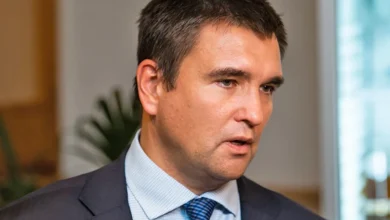
«Вероятность появления «черного лебедя» существует 24/7″: Климкин о политике Трампа и встрече с Путиным
Мир замер в ожидании возможной встречи Дональда Трампа и Владимира Путина. Это событие может стать одним из ключевых моментов в…
Читать далее » -

Глава ГНС обещает регуляторные изменения для уменьшения количества заблокированных накладных
Глава ГНС обещает регуляторные изменения для уменьшения количества заблокированных накладных
Читать далее » -

Редкоземельные металлы в обмен на помощь США: реакция Офиса президента и Шольца на заявление Трампа
Мировые и украинские медиа взорвались обсуждениями после резонансного заявления Дональда Трампа. Президент США заявил, что хочет заключить соглашение с Украиной…
Читать далее » -

Translated copy of Translated copy of Untitled document Translated copy of Translated copy of Untitled document 100% Turn on screen reader supportTo enable screen reader support, press Ctrl+Alt+Z To learn about keyboard shortcuts, press Ctrl+slash
The war in Ukraine has been going on for almost three years, but the topic of mobilization is causing more…
Читать далее » -

The situation of Ukrainian refugees in Europe is becoming more difficult every month. If at the beginning of the full-scale invasion, European countries welcomed migrants with open arms, providing housing, social benefits and access to medicine, but now the policy of many states is changing. Initiation of thorough checks on refugees Vienna was one of the first cities where Ukrainian refugees faced harsh changes. Austria’s social services began to scrutinize whether all recipients of benefits really met the requirements and discovered hundreds of cases of violations. In particular, it was found that many people were outside the country while continuing to receive benefits. As explained head of the Social Security Fund of Vienna, Martyna Plochowitz, such situations have forced the authorities to temporarily stop payments until the refugees confirm that they are staying in Austria and really need help. From now on, registration with the employment service has become a mandatory condition for receiving support. Exceptions will be made only for people who have valid reasons — old age, health problems or caring for relatives. Consequences of checks Due to increased inspections in Vienna, many Ukrainians have already felt the consequences of this policy. Fourteen thousand Ukrainian refugees currently live in the city, eight thousand of whom are of working age. Some of them have not received payments since December, which is why they are forced to turn to charitable organizations for help. Those who rent housing privately used to receive three hundred and thirty euros per month for this, and two hundred and sixty euros for adults and one hundred and forty-five euros for children for food and hygiene. Now these payments are temporarily frozen, and people are forced to find ways to survive on their own. The checks will last several weeks, after which social benefits will be resumed for those who can prove their real need. However, the Ukrainian community in Vienna has already expressed concern and called on the local authorities to take into account the difficult circumstances in which the migrants, especially families with children, found themselves. However, this case is only part of a general trend that is gaining momentum throughout Europe. The situation in other countries More and more countries are reviewing the conditions for providing assistance to Ukrainian refugees. In Germany, temporary protection status is already denied to those who often leave the country or stay outside its borders for a long time. In the Czech Republic, they plan to reduce payments to those who have not found a job, and Poland has introduced stricter rules for receiving financial support. The reasons for such changes are primarily economic, as countries that have received hundreds of thousands of migrants are facing financial difficulties, and the costs of refugees are becoming an increasingly heavy burden on their budgets. In addition, politicians are forced to take into account the growing discontent among the local population, which increasingly raises questions about the fairness of the distribution of public funds. The main reasons for this are the growing financial burden on the budgets of countries, political changes and the emergence of internal economic crises. Increasingly, governments are introducing more welfare checks and cutting benefits, citing the need to control public spending. If this trend continues, Ukrainians will have to prepare for new challenges. Social support, which was provided in the first years of the war, is gradually reduced, and the requirements for refugees are becoming more and more strict. This means that those who remain abroad should look for opportunities for employment and integration, because they no longer have to hope for indefinite assistance.
Kharkiv was again at the center of discussions as a potential target of a new Russian offensive. Rumors, forecasts, analytics…
Читать далее » -

Удастся ли сохранить машиностроительный экспорт: Дмитрий Кисилевский о бездействии НБУ
Украинская экономика переживает одно из сложнейших испытаний в своей истории, и поддержка экспорта сейчас критически важна для ее устойчивости. Особенно…
Читать далее »