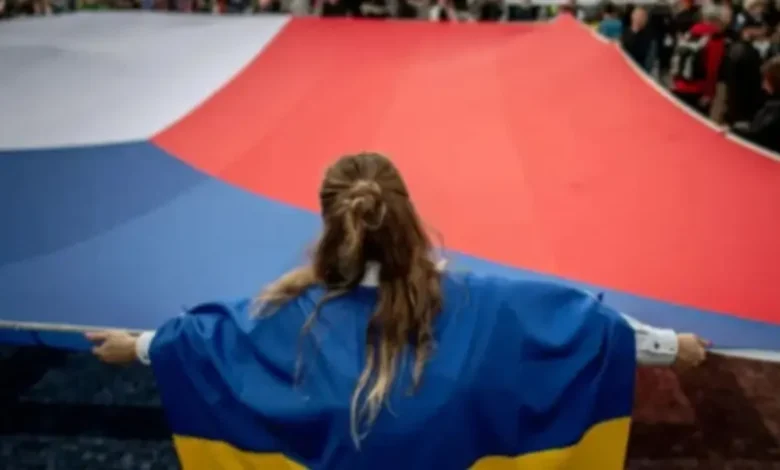
Since the beginning of Russia’s full-scale invasion of Ukraine, millions of Ukrainians have been forced to seek safe haven abroad. For many, the Czech Republic became a country that provided not only a temporary refuge, but also an opportunity to start a new life. However, this situation creates a serious demographic and social challenge for Ukraine, because many refugees do not plan to return home even after the end of the war. The loss of millions of citizens, in particular the young, economically active population, threatens both the economic development and the social structure of Ukraine.
Research results
On March 10, the Sociological Institute of the Academy of Sciences of the Czech Republic (Sociologický ústav AV ČR) published the results a large study on the situation of Ukrainian refugees in the country. The survey was conducted among 1,048 forced migrants aged 18 and older.
One of the key questions of the study concerned the intentions of Ukrainian refugees to return to their homeland. The results turned out to be alarming: only 21% of the respondents declared their desire to return to Ukraine within the next two years. At the same time, the vast majority – 75% of respondents – reported that they do not plan to return and want to stay in the Czech Republic or move to another country.
It is interesting that those who declared their unwillingness to return mostly considered the Czech Republic as a country for further life. A very small part of the survey participants thought about moving to another country.
Demographic characteristics of refugees
The survey also showed that the desire to return depends on the age of the respondents. Among people aged 56 and older, 36% expressed their intention to return to Ukraine. In the age group of 36-55 there were already 19% of them, and among the youngest — from 18 to 35 — only 18%. This shows that the youth, who are the basis for rebuilding Ukraine after the war, are the least interested in returning.
In addition, the desire to stay in the Czech Republic was more often expressed by those who speak the Czech language better, have a stable job and housing. On the other hand, those who do not plan to stay are mainly people with a low level of language skills, the unemployed and retired people.
Living conditions and social integration
The survey showed that the majority (79%) of Ukrainian refugees live in rented accommodation. 10% — in hostels or hotel complexes, and 8% — in so-called joint households. The average age of Ukrainian refugees is 28, which makes them younger than the average age of the Czech population. At the same time, women predominate among the refugees, many of whom have children and are economically dependent on their families (58%).
Integration in the labor market of the Czech Republic is taking place gradually. The share of Ukrainian refugees working has reached 80%. However, most of them have not been able to get a job in their specialty and are often forced to do work that does not correspond to their education and qualifications. This led to lower professional status and, as a result, lower incomes. The wage level of refugees turned out to be quite low, regardless of their level of education.
Working conditions and financial challenges
According to the results of the survey, 62% of economically active refugees faced difficult working conditions. More than a third (37%) admitted to having unstable work, and a third (33%) noted problems with legal or social protection.
Despite this, 62% of Ukrainian refugees said that their income is enough to cover the costs of living in the Czech Republic. The same number of respondents reported that they have stable employment and are confident in their employment for the next six months. However, 61% believe that their work is undervalued and should be paid more.
The majority (81%) of Ukrainian refugees receive their main income from work in the Czech Republic or Ukraine. Additionally, a quarter of respondents received humanitarian aid, 14% received benefits from the Ukrainian state (pensions), and 11% received financial assistance from Ukraine. However, despite this, 80% of Ukrainian refugee families have an income that is lower than the average income of Czech households.
Conclusions and challenges for Ukraine
The results of the survey demonstrate a serious problem for Ukraine: the vast majority of refugees, especially young people, do not plan to return home in the near future. This means the loss of a significant part of the economically active population, potential specialists and professionals who could help in the recovery of the country.
This is also a challenge for the government of Ukraine, which must develop effective programs that will stimulate the return of citizens. It is necessary to create conditions for employment, ensure access to housing, guarantee social support and work to restore the economy.
In order for Ukrainians to want to return home, it is necessary to convince them that not only a safe, but also a dignified life awaits them in Ukraine. This is a task that requires a comprehensive approach, the involvement of state and international resources, as well as the joint efforts of the government, business and civil society. Only in this way will Ukraine be able to return its citizens and ensure the future of the state.