Точка зрения
-
Великая война: три года сопротивления украинцев в глазах мировых СМИ
В течение трех лет мир был свидетелем невероятной решимости Украины в отстаивании своей независимости, а также изменений, которые произошли не…
Читать далее » -
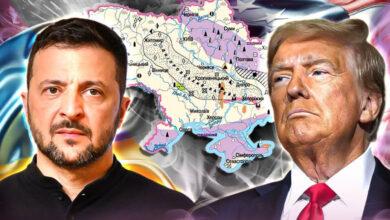
Трамп против Зеленского: политическое противостояние, которое видит весь мир
Последние дни отмечены обострением публичной риторики между президентом США Дональдом Трампом и Президентом Украины Владимиром Зеленским. Взаимные выпады и критика,…
Читать далее » -
Кризисный саммит в Париже: что говорят мировые СМИ о позиции ЕС по Украине
The war in Ukraine remains one of the main geopolitical crises of our time, and the European Union faces a…
Читать далее » -
«Украине грозит повторение афганского сценария. США хотят угодить Путину»: главное из интервью Владимира Зеленского телеканалу ARD
Президент Украины Владимир Зеленский в интервью немецкому телеканалу ARD, обнародованному 17 февраля, выразил обеспокоенность по поводу возможного развития событий по…
Читать далее » -
«Пришло время проявить зрелость в области экономики. Закон должен защищать, а не разрушать»: Сергей Позняк
Читать далее » -
Половозрастная пирамида населения Украины: что показывают последние исследования
Вопросы демографии в Украине стоят слишком остро. Утрата населения, старение общества и дисбаланс между мужчинами и женщинами – это вызовы,…
Читать далее » -
Трамп, Путин и «мирные переговоры»: как мировые СМИ комментируют громкий звонок
US President Donald Trump had a conversation with Vladimir Putin and said that they will «immediately» start peace talks regarding…
Читать далее » -
They work where war leaves only ruins and the dead. They enter the «gray zone», where battles were raging just yesterday, and are looking for those who will no longer be able to return. Their work is not only a risk, but also a debt to the dead. After all, while some are fighting, others are bringing home those who gave their lives for Ukraine. They find the bodies of Ukrainian soldiers so that their relatives can say goodbye, and they also look for dead Russians to exchange them for the bodies of our soldiers. One of such organizations is Platzdarm. Its volunteers work in minefields, under shelling, in the most dangerous places, so as not to leave anyone behind. Their mission is to bring the fallen home. Journalists of the «FAKT» information agency visited Sloviansk and witnessed the difficult, dangerous, but extremely important work of the volunteers of the «Platzdarm» organization. We spoke with its manager Oleksiy Yukov, a resident of Sloviansk, who has been searching for fallen soldiers for almost 25 years. Oleksiy, when and why did you decide to search for the dead? What did you do before the war? Before the war, I was a Thai boxing coach. He started doing this activity at the age of 13. It was at this age that he saw for the first time the battlefield of the Second World War, where the bones of the dead — both Soviet and German soldiers — lay on the surface of the earth. All this was looted by people. And then I thought for the first time: where is the humanity? Why in the 20th century you can come across human remains, fragments of weapons in the middle of the forest, and everyone pretends that this is normal? This was the beginning of my life’s work. I realized that a person remains a person as long as he remembers those who have gone to eternity. Every year, I delved more and more into this topic, began to research archives, talk to old residents, and look for places of mass burials. And when this war began, I already knew for sure that I would not be able to stand aside. Tell us about the activities of Platzdarmu. Where do you work and what difficulties do you face? Until 2014, the «Platzdarm» volunteer organization was engaged in the search for the dead of the Second World War, but after the start of the war in Ukraine, our mission changed. We began to search for and return the bodies of soldiers who died in the war with Russia. These are both the Ukrainian military, whom we bring home, and the Russian soldiers, who are exchanged for the bodies of our dead. Since 2014, we collected the bodies of the dead in Slovyansk, and then worked along the entire front line — Ilovaisk, Debaltseve, Avdiyivka and other hot spots. Now our work has become more difficult due to offensive actions. We work both in the territories controlled by Ukraine and in the temporarily occupied territories. The biggest risks are drones and shelling. We can’t work in groups to avoid attracting attention, so we go in two by two. It is often necessary to cover a distance of several kilometers on foot. We find bodies in forests, reservoirs, plantations, carry them out on our own, because it is impossible to use equipment. We make evacuation points for ourselves, and then, using means of radio-electronic warfare, we quickly take the bodies out by car. We work mainly when the weather is bad — rain, strong wind, or at dusk. The enemy is constantly counting us out with drones and artillery. Sometimes you have to sift through the ground to collect even the smallest fragments of bodies. It is often necessary to rake rubble, disassemble pieces of equipment, lift bodies from under the rubble of concrete structures that collapsed after shelling. We have a lot of work, probably life will not be enough for it. But we are working as hard as we can. What are the biggest difficulties in identifying the dead? The hardest thing is when the body is completely burned. In such cases, identification is almost impossible. We identify a person by clothes, personal belongings, we study the condition of bones, even the remains of nails and teeth. Alas, time is working against us — the bodies are stretched by animals, natural conditions destroy the remains. The sex, age, and nature of injuries can be determined from the bones. We also find signs of chronic diseases, which helps to establish an identity. What is the most common cause of death in the military? Most often, these are mine and explosive injuries. Almost nothing remains from explosions, artillery fire, and drone strikes. Where there were direct shell hits, it is extremely difficult to find anything. Often these are only individual fragments of the body that are scattered over dozens of meters. What motivates you and the volunteers to do such dangerous work? One of the main motivations is the return home of the dead, our boys who defended our Motherland, who gave their lives at the front. And each of them should know that if disaster happens, they will not be left on the field. They will fight for his soul, his body, search for him and bring him home. It is my honor to bring back the souls that were lost in war. And it doesn’t matter what this war is called, «special military operation», ATO, World War I or World War II. It is always a war, because people, whole nations, are killed and maimed there. I had to see mountains of bodies piled up like broken toys. It’s scary! Corpses just lie in landings, and they have no chance to return home, even dead. And if it weren’t for our work, they would stay there forever. But they have the right to the last way home. This is not just work, but our duty to the dead and to their families, who are waiting for them every day. It is clear that this is precisely why you are risking your life. But how do you explain the risk you take to collect the remains of Russian soldiers? We differ from our enemies in our humanity, we always remain human, regardless of the situation. A Russian soldier is also a person. Even if he committed crimes during his life, we do not fight with the dead. This is not Ukrainian. We take away all the dead — both ours and theirs. Even when we are killed, we remain human. And if we lose it, then how will we be better than them? What emotions do you feel when you find the dead or their remains? These are always very strong experiences. You realize that some of these people gave their lives for our country, fought for our future, and others came to destroy us and our children. The greatest pain is for our fallen boys, for those who should live, rejoice, build their future. But at the same time, there is no hatred for the bodies of enemies. They are already dead. Death puts an end to everything, and we treat them with a certain respect. Death does not forgive bad treatment of the dead. I don’t understand those who say: «Let them hang around, they deserve it.» This is wrong! All the dead must be buried. Because every body is someone’s son, father, brother. Their mothers, wives, and children mourn them. It is important for them to have a grave where they can come, pray, and say goodbye. It’s a question of humanity, regardless of whose side they were on. What do you do when you find the remains of bodies? We hand over the bodies of our soldiers to Ukrainian specialists, who then ensure their return to their relatives for burial. We transfer the remains of Russian soldiers for exchange — we have already transferred more than 750 bodies. This is difficult and painful work, in which many people are involved — not only our search team, but the Coordination Headquarters, General Headquarters, GUR, SBU, police, doctors. Everyone does their part to do this job with the utmost precision and dignity. Do you find the bodies of civilians? Nowadays, civilians are rarely found in the war zone, but earlier it was more common. The worst thing is to find children. It hurts to the core! We found civilians buried simply in yards, in cities, in destroyed houses, basements, barns… It is especially difficult when the body has burned so much that it is impossible to take biological material for identification. And it hurts even more when you know that the neighbors saw these bodies, knew they were there, but kept silent. Then, after some time, they told that they were afraid, they didn’t want extra problems. This indifference is simply terrifying! How could you pass by and do nothing? But, unfortunately, war exposes not only heroism, but also people’s weaknesses. https://youtu.be/J4WvnD8xuk4 Oleksiy, thank you and all the volunteers of the «Platzdarm» organization for your extremely important work, for each person found, for each family, to which you returned a part of their lost dignity! May your mission be heard and supported, may dangers bypass you, and human gratitude become your talisman! Thank you very much! We continue our work, we do it for the sake of those who are waiting at home, who want to know the truth, who have the right to say goodbye to their relatives. And while this war continues, we will not stop! I wish all of us a speedy end to the war and a happy peaceful life!
Они работают там, где война покидает только развалины и погибших. Они заходят в серую зону, где еще вчера гремели бои,…
Читать далее » -
On February 11, Kyiv Mayor Vitaliy Klitschko spoke at the forum «Democratic stability of Ukraine during the war and during the recovery period.» During his speech, he raised a number of key issues, including the possibility of ending the war, the prospects for electoral processes, the risks of social conflicts after the war, and the need for comprehensive reforms in all spheres of life. He emphasized that the restoration of the country requires not only physical reconstruction, but also deep changes in the state administration, legal system and economy. Klitschko emphasized the importance of the unity of society and all branches of government for the successful future of Ukraine. As noted Vitaliy Klitschko, today society is focused on political processes, especially on the upcoming elections, while Ukraine is losing its heroes at the front every day. He emphasized that the loss of territories continues, and there is no clear answer to the question of when the war will end and peace will be restored. Every Ukrainian asks himself this question, but there is currently no clear answer. Most likely in a month or two. Klitschko emphasized that although most of the political forces currently operating in Ukraine are in a common political environment and united around the restoration of the country, pre-election processes have already begun. He warned that the election campaign may be accompanied by a tough confrontation between political forces, and society may painfully perceive a possible compromise that will become necessary to end hostilities. He also emphasized that maintaining the army is an expensive process. After the end of hostilities, at least a third of the military personnel of the nearly million-strong Ukrainian army will be transferred to the reserve, and they will need to find work quickly. At the same time, the state must ensure their rapid reintegration and employment. At the same time, political battles are intensifying, which can lead to a «struggle for destruction», which is dangerous for the stability of the state. Klitschko expressed fears about possible riots and civil confrontation after the end of the war. He noted that in the history of other countries, a period of political instability and depressed mood in society was often observed after military conflicts. To avoid this, it is necessary to ensure the unity of all branches of government and society in general. He emphasized that one of the most important challenges is to find an effective plan for the recovery of the country, which still does not exist. Negotiations are already underway with international partners, in particular Brussels and European institutions, regarding the implementation of reforms that should affect all spheres of life. Among the key reforms, Klitschko singled out the reform of local self-government and the continuation of decentralization, which has already proven its effectiveness. He emphasized that local self-government is the basis of democracy in any European country, and it cannot be destroyed. He noted that the direction of local self-government reform has already been agreed with the Association of Cities of Ukraine and European partners. In addition, reforms in the sphere of the police, prosecutor’s office, law enforcement agencies and anti-corruption bodies are important. Klitschko emphasized that the restoration of Ukraine is not only the reconstruction of destroyed buildings, but a complex process of transformation of state institutions, which should take place in cooperation with international partners and the entire Ukrainian society.
11 февраля городской голова Киева Виталий Кличко выступил на форуме «Демократическая устойчивость Украины во время войны и в период восстановления».…
Читать далее » -
Украина заняла 105 место в Индексе восприятия коррупции: позиция НАПК по этому вопросу
Читать далее »