30-day registration for 5-year status for Ukrainians has started in the Czech Republic: conditions and deadlines

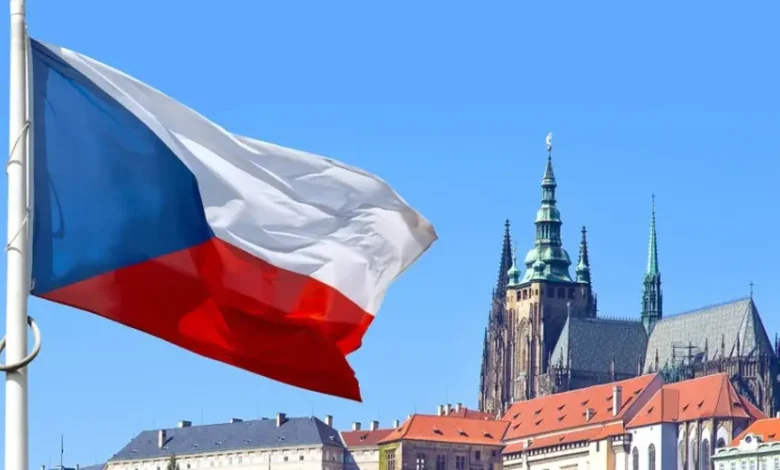
The opening of registration for a five-year long-term residence permit for Ukrainians with temporary protection has become one of the most important migration events this spring in the Czech Republic. For the first time, outside the usual queue in the migration services, a separate path to a more stable status has appeared for people who have been living in the country for several years. For many Ukrainian families who temporarily reside in the Czech Republic and are making plans after March 2027, this program opens up the opportunity to move from a temporary regime to a longer and more predictable format of residence, although access to it is limited in terms of both time and the number of places.
What does the Lex Ukraine 2026 program entail
From April 1, 2026, registration for a special long-term residence permit — a five-year long-term permit for Ukrainians under temporary protection — will start in the Czech Republic. You can apply only within thirty days, that is, until the end of April.
At the same time, the program has a quota of approximately 15 thousand permits, while the number of potential applicants, according to the given estimates, is about 400 thousand. With such a ratio, competition will be extremely high, so exact compliance with the conditions and timely submission will be crucial.
The Czech program Lex Ukraine 2026 was created as a separate mechanism for Ukrainians with temporary protection who seek to transition to long-term status without the standard multi-year waiting procedure within the general migration system. Its logic is to give a certain category of applicants a path to a more legal and stable stay, if they have already integrated into the Czech environment, have a confirmed income and are not dependent on social assistance.
The five-year permit provides much broader opportunities than the current temporary protection regime. Its owner receives a more stable legal status, freer access to the labor market, the right to travel within the Schengen zone for up to 90 days in every 180 days, as well as the prospect of further transition to permanent residence. For many Ukrainians who have already adapted to life in the Czech Republic, this format looks like the most understandable way to consolidate their position for several years ahead.
The significance of the new program
The limited application period makes the April stage key, because missing this window actually closes access to the program within 2026. The material states that the next registration cycle is not planned this year, so for those who do not apply on time, the standard migration procedures of the Czech Ministry of Internal Affairs will remain, and they are usually longer and more complicated.
The scale of competition also gives additional weight to this program. If last year, about 15 thousand permits were issued under a similar program and a similar quota is expected for 2026, then the number of people who can potentially apply for participation is many times higher than the number of available places. Under such conditions, even full compliance with the basic criteria does not mean automatic receipt of the status, so the preparation of documents and technical readiness for submission acquire special importance.
Who can apply
Participation in the program is available only to those applicants who meet clearly defined conditions, and data verification is carried out by the Czech Ministry of the Interior through its own registers. Such a mechanism means that the information submitted is checked against existing databases, so discrepancies between documents and official records are quickly detected.
One of the key requirements concerns the duration of stay under temporary protection in the Czech Republic. The applicant must have a continuous status of more than two years, actually from 2022 or 2023, which cuts off those who arrived later or had breaks in legal residence. A separate set of requirements is related to income: for one person, an annual income of 440,000 Czech crowns is required, and for each additional family member this amount increases by another 110,000 crowns. Confirmation is provided by a tax return or salary slip.
An important condition is the absence of dependence on social benefits. The material indicates that benefit recipients are not included in the program, so economic independence becomes one of the central criteria. The absence of a criminal record is checked separately, and for families with children, an additional argument in favor of the applicant is attendance at school or kindergarten.
Participation is theoretically possible for pensioners and mothers with children, but the practical difficulty lies in the income threshold, which is too high for many of these applicants. In such cases, according to the description given, the alternative option remains to extend temporary protection until March 15, 2026 and further search for other ways of legalization.
How the procedure will take place
The procedure is divided into two stages, between which there is a waiting period of several months. The first step is Expression of Interest – online registration on the Foreigners’ Portal of the Ministry of the Interior of the Czech Republic, which will last from April 1 to 30, 2026. At this stage, the applicant must upload documents on income for 2024, in particular a tax return or confirmation from the employer. The text emphasizes that the verification will take place through state databases, so the information provided must fully match the official data.
The second stage is scheduled for October 2026 and concerns biometrics. After the preliminary selection, those who pass the first check will receive a personal invitation and an appointment to submit biometric data. The final decision is expected by the end of 2026, and in case of a positive result, the applicant will be issued a five-year resident card.
For those who do not take advantage of the April deadline, participation in this wave of the program will be lost. That is why the first stage is crucial: without it, further consideration simply will not begin.
After receiving such a permit, a person enters a much more stable legal regime than the one that provides temporary protection. On the labor market, this means more freedom: you can change employers, engage in entrepreneurial activities, work freelance without additional permits, which often complicate professional planning for foreigners with temporary residence permits.
A separate advantage is the right to short-term trips within the Schengen area – up to 90 days in every 180 days, like holders of a regular long-term permit. For people whose family, professional or personal circumstances are connected with several countries, this provides significantly more mobility and predictability.
Another important aspect is related to further legalization. Years of residence under the Lex Ukraine status are counted towards the experience required to obtain stály pobyt, i.e. permanent residence. Thus, the five-year permit works as an intermediate, but very important stage on a longer route, which in the future may also lead to citizenship, if the applicant meets the following requirements of Czech law.
What restrictions should be taken into account
Despite the obvious advantages, this status also has significant restrictions that it is advisable to consider before submitting documents. The material indicates that it does not provide access to social benefits, and the list of benefits is narrower when compared to a residence permit based on family reunification. For some applicants, this point may be of fundamental importance, especially if the family’s financial situation is unstable or depends on state support.
It is worth considering possible additional checks when traveling or leaving the Czech Republic. The very fact of having a long-term status greatly simplifies the legal situation, but border control and document checks remain a normal part of migration practice, so holders of a new permit will still have to carefully monitor the validity of documents and the rules for crossing the border.
What is needed for registration
Since the main selection starts on April 1, the preparation of documents and technical details should have been completed in advance, without being postponed to the last days. First of all, it is worth checking the official income for 2024, summing up all legal income – wages, income from entrepreneurial activity, pension and other confirmed payments. The material explains that the reference year was 2024, since the declarations for 2025 may not have been fully processed in the system yet.
The next step should be to collect documents confirming this income. For some, this will be a tax return, for others, certificates or information from the employer, but in any case, the key point will be the correspondence of all numbers and dates to the data already in the official databases.
Technical preparation is also important, because the submission will take place via the frs.gov.cz portal. If you do not have an account yet, it is advisable to create one by the beginning of April, since the first days of the system’s operation may be very busy. For families where documents are submitted together, it is important to check the data of all family members in advance, since incomes are summed up, and the requirement of economic independence is considered for the entire household.
For Ukrainians who meet the program criteria and plan to link their lives with the Czech Republic for a longer period, the April registration opens up a concrete opportunity to move from temporary protection to a five-year residence permit. At the same time, a strict quota, high income requirements, a limited application period, and a mandatory check through state registers make this process very demanding in terms of details, so the accuracy of documents, timely registration, and full compliance with the established conditions will be crucial.