
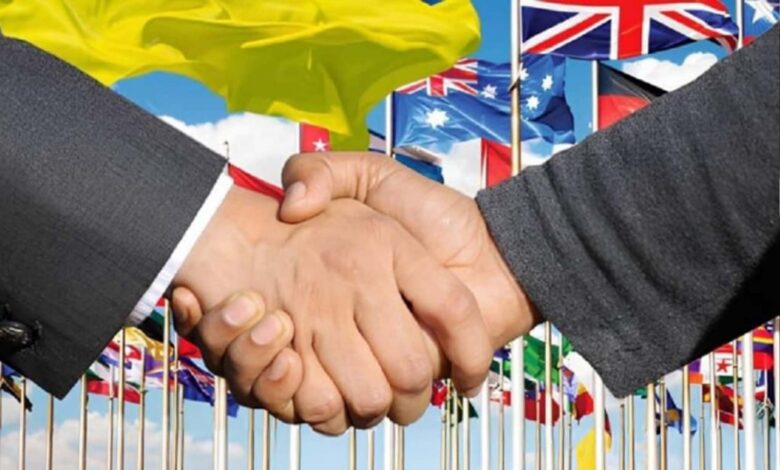
April 24 is the International Day of Multilateralism and Diplomacy for Peace, World Women’s Health Day, International Youth Solidarity Day and World Day for the Protection of Laboratory Animals. On this day, history seems to turn over several different books at once – from ancient thrones and legendary wars to political conspiracies, scientific breakthroughs and events that changed the fate of entire nations.
International Day of Multilateralism and Diplomacy for Peace
This day was established by the United Nations in 2018. It was introduced to support the approach in which states cooperate in solving international issues through dialogue and agreed-upon solutions. The main idea is related to the role of diplomacy in preventing conflicts, maintaining stability and developing cooperation between countries.
Today’s day emphasizes the importance of multilateral institutions and mechanisms that help coordinate the actions of states in the areas of security, economics, humanitarian aid and human rights. In today’s environment, when the world is facing wars, crises, and global challenges, diplomacy remains one of the key tools for reaching agreements and reducing tensions between countries.
Interesting facts
In 2022, Ukraine for the first time actively used the “uniting for peace” mechanism in the UN General Assembly, which allows it to bypass blocking decisions in the Security Council and submit important issues to a wider vote of states.
During a full-scale war, Ukrainian diplomacy achieved an unprecedented number of UN General Assembly resolutions condemning aggression, some of which were supported by more than 140 countries, which became one of the highest levels of international support in recent decades.
In 2022, the Ramstein format was created, within the framework of which dozens of states coordinate military assistance to Ukraine, and this mechanism became an example of modern multilateral interaction outside of classical structures.
Ukraine initiated an international “grain agreement” mediated by the UN and Turkey, which allowed for the resumption of grain exports across the Black Sea even in the midst of war, which affected the stability of food markets in many countries.
In 2023, the Ukrainian peace formula was presented as a basis for negotiations and discussed at the level of dozens of states, including countries of the Global South, which expanded the geography of diplomatic support.
After 2022, Ukraine received candidate status for accession to the European Union, and this decision was the result of rapid multilateral diplomatic coordination between all member states.
For the first time in the history of the International Court of Justice, such large-scale interstate lawsuits related to the war in Ukraine were filed, and dozens of countries joined the cases as third parties.
Ukrainian diplomats during the war are conducting active “digital diplomacy”, using social networks to communicate with foreign audiences and governments, which has become a new tool for multilateral influence.
In 2024, Ukraine was able to attract support for the creation of an international registry of war damage, which should become the basis for future compensation, and dozens of states have joined the initiative.
World Women’s Health Day
This day is celebrated every year on the last Friday of April and is dedicated to the physical and mental health of women. The initiative appeared in 1987 with the support of international organizations working in the field of health and women’s rights. The main focus is on access to medical care, disease prevention and the impact of social conditions on health.
Today’s day emphasizes the importance of regular examinations, early diagnosis and maintaining a healthy lifestyle. Special attention is paid to maternal health, cancer, mental health and the consequences of violence. In different countries, the need to improve medical systems is emphasized so that women can receive quality care regardless of their place of residence.
Interesting facts
Cardiovascular disease remains the leading cause of death for women worldwide, and the symptoms of a heart attack in women often differ from the classic ones, making timely diagnosis difficult.
About a third of women in the world experience physical or sexual violence during their lifetime, and this has a long-term impact on physical and mental health.
During the full-scale war in Ukraine, access to medical services for women in front-line regions became significantly more difficult, so mobile gynecological teams began to operate, traveling to remote communities.
After 2022, the number of psychological support programs for women who have experienced traumatic war experiences, including forced displacement and loss of housing, increased in Ukraine.
Postpartum depression remains an underestimated problem, and a significant proportion of women do not seek help due to fear of judgment or misunderstanding of the symptoms.
Vaccination against human papillomavirus significantly reduces the risk of cervical cancer, but vaccination coverage in many countries is still insufficient.
Ukraine has programs for early detection of breast cancer, but many women are examined at later stages due to the lack of regular check-ups.
Studies show that women are more likely to postpone seeking medical care due to the combination of work, household duties, and family care, which affects the timeliness of treatment.
International Youth Solidarity Day
This date was chosen to honor the completion of the Bandung Conference, which took place in 1955 and brought together Asian and African countries to discuss common political and social issues. This event was an important step in the development of international cooperation and influenced the formation of movements that advocated independence and mutual support between states.
This day is associated with the role of youth in social processes and international interaction. It focuses on the participation of the younger generation in the development of civic initiatives, education and intercultural dialogue. In modern conditions, the contribution of young people to overcoming crises, including wars, social challenges and economic changes, is of particular importance.
Interesting facts
The Bandung Conference of 1955 was one of the first large-scale meetings of countries that did not belong to major political blocs, and a significant part of the preparatory work was carried out by young diplomats and advisers.
After the start of a full-scale war in Ukraine, thousands of young people joined volunteer initiatives, organizing evacuations, delivering humanitarian aid and supporting the military.
Ukrainian youth actively use social networks to inform the international community, creating campaigns that influence public opinion in other countries.
In 2022, many Ukrainian students were given the opportunity to temporarily study abroad, which became an example of international educational support during the war.
Youth organizations in Ukraine are involved in the restoration of damaged buildings and public spaces in deoccupied cities.
In different countries of the world, after the pandemic, youth participation in volunteering and community projects has increased, which has led to the emergence of new international initiatives.
In Ukraine, a significant part of IT volunteer projects in the field of cybersecurity was created by young specialists who coordinate their activities with international partners.
Sociological studies show that young people are more likely to support international cooperation and joint solutions to global problems than older generations, which affects future political processes.
World Day for the Protection of Laboratory Animals
World Day for the Protection of Laboratory Animals was launched in 1979 on the initiative of an international association that opposed cruel experiments on animals. The idea quickly spread to different countries and drew attention to the conditions of keeping animals in scientific research and the need to control such practices.
This day is associated with the development of ethical standards in science and the search for alternatives to animal experiments. Many countries have regulations that limit the use of animals and oblige researchers to use other methods, if possible. These include cell models, computer simulations, and other approaches that allow for the reduction or avoidance of experiments.
Interesting facts
The “3R” principle provides for the replacement, reduction, and refinement of animal experiments and has become the basis of modern bioethics in scientific research.
The European Union prohibits the testing of cosmetics on animals, and this rule applies not only to the production but also to the sale of such products.
Mice and rats make up the majority of laboratory animals in the world, since their genetics are well studied, and their life cycle allows for rapid research results.
International standards for the treatment of laboratory animals are gradually being implemented in Ukraine, including requirements for housing conditions and ethical control of experiments.
During the war in Ukraine, some scientific laboratories were evacuated along with the animals to preserve research programs and ensure proper care.
Modern technologies allow the creation of organoids – miniature models of human organs that are used to test drugs without involving animals.
Some pharmaceutical companies completely abandon animal experiments in the early stages of drug development, using artificial intelligence to predict results.
There are special shelters for laboratory animals, where they are kept after the completion of research, if their condition allows.
Studies show that the results of experiments on animals do not always accurately reflect the reaction of the human body, so science is actively looking for more accurate alternatives.
Historical events on this day
1479 BC – Thutmose III ascended the Egyptian throne, but real power gradually concentrated in the hands of Hatshepsut.
1184 BC – according to the chronology of Eratosthenes and Apollodorus of Athens, the Greeks entered Troy thanks to the Trojan Horse.
1333 – Casimir III the Great and his wife Aldona were crowned in the Wawel Cathedral in Kraków.
1521 – Juan de Padilla, one of the leaders of the uprising against Emperor Charles V, was executed in Spain.
1547 – in the Battle of Mühlberg, Charles V’s troops defeated the Protestant Schmalkalden League and captured the Elector of Saxony, Johann Friedrich I.
1558 – Queen Mary I of Scotland married the French Dauphin François in the Cathedral of Notre Dame de Paris.
1585 – Cardinal Felice Peretti di Montalto became Pope Sixtus V.
1617 – on the Louvre Bridge, on the orders of Louis XIII, the Marquis Concini, the de facto leader of French politics, was killed.
1646 – the Uzhgorod Church Union was concluded.
1648 – four regiments of registered Cossacks switched to the side of Bohdan Khmelnytsky.
1671 – Stepan Razin, the leader of the Don Cossack uprising, was captured in Kahalnyk.
1682 – Archpriest Avvakum and other leaders of the Old Believers who opposed Nikon’s reforms were burned in the Pustozersk prison.
1704 – The Boston News-Letter, the first regular newspaper in colonial America, began to be published in Boston.
1723 – The authorities of Bern executed Jean Davel, a Swiss hero and leader of the separatist movement.
1771 – A tsunami about 85 meters high covered the coast of the Japanese island of Ishigaki.
1793 – Catherine II issued a decree on the creation of an Orthodox diocese in Right-Bank Ukraine.
1794 – Tadeusz Kościuszko’s troops defeated the Russian army in the Battle of Racławice.
1800 – President John Adams founded the Library of Congress of the United States, allocating funds for the purchase of books.
1833 – A patent for carbonated water was obtained in the United States.
1846 – the Mexican-American War began.
1867 – the Turkestan Governorate-General was created, and General K. P. Kaufman was appointed its head.
1872 – after the eruption of Vesuvius, lava destroyed two villages, killing about 25 people.
1877 – the Russian Empire declared war on the Ottoman Empire.
1884 – Namibia was declared a German colony.
1884 – Greenwich was approved as the point of passage of the zero meridian.
1891 – in Italy, elections based on party lists were canceled.
1895 – Joshua Slocum embarked on the world’s first solo circumnavigation of the globe.
1897 – Pietro Acciartho made a failed assassination attempt on King Umberto I of Italy in Rome.
1898 – Spain declared war on the United States after refusing to comply with an ultimatum to withdraw troops from Cuba.
1900 – Sigmund Freud’s work “The Interpretation of Dreams” was published.
1909 – A cinematographer first took to the air in an airplane, becoming a passenger in Wilbur Wright’s biplane near Rome.
1915 – Ottoman authorities began arrests and deportations of the Armenian intelligentsia of Constantinople.
1916 – the Easter Rising against British rule began in Ireland.
1918 – the American Expeditionary Force landed in Murmansk.
1918 – Pavlo Skoropadsky, at a secret meeting with the German command, agreed to support a coup against the Central Rada.
1918 – the Crimean group of the UNR Army occupied Simferopol after the battle.
1919 – the Soviet government was overthrown in Lithuania.
1919 – an art gallery was founded in Toronto.
1920 – the governments of Poland and the UNR signed an agreement on military assistance.
1921 – terrorists killed German Foreign Minister Walter Rathenau.
1926 – The USSR and Germany signed a treaty of friendship and neutrality.
1940 – Great Britain began evacuating troops from Greece, leaving behind a significant part of its weapons and equipment.
1946 – the first flights of Soviet MiG-9 and Yak-15 jet aircraft took place.
1949 – the Taras Shevchenko Literary and Art Museum was solemnly opened in Kyiv.
1949 – wartime restrictions on the sale of sweets were abolished in England.
1950 – Transjordan was renamed the Hashemite Kingdom of Jordan.
1952 – Ontario received its first oil from Alberta via a pipeline.
1953 – Queen Elizabeth II knighted Winston Churchill.
1954 – A Bratislava court sentenced Gustav Husak to life imprisonment.
1955 – The Bandung Conference of 29 countries that opposed colonialism, racism, and the logic of the Cold War ended.
1955 – Iraq and Turkey signed an agreement on security and defense cooperation, known as the “Baghdad Pact”.
1957 – Mao Zedong stated at the State Council of the People’s Republic of China: “You don’t need to read many books”.
1962 – The United States first transmitted a television signal from the Pacific coast to the Atlantic via the experimental satellite “Eco-1”.
1964 – In South Vietnam, guerrillas fired on a plane carrying American General William Westmoreland, wounding six people.
1965 – In Armenia, the victims of the Armenian Genocide in the Ottoman Empire were officially commemorated for the first time.
1965 – American troops began an intervention in the Dominican Republic.
1967 – In Greece, the regime of the “black colonels” banned the wearing of miniskirts.
1967 – Cosmonaut Vladimir Komarov died during the return of the Soyuz-1 spacecraft to Earth.
1968 – Mauritius became a member of the United Nations.
1970 – China launched its first artificial Earth satellite, Dong Fang Hong 1.
1970 – Gambia, which had previously gained independence from Great Britain, became a republic.
1974 – in Germany, Chancellor Willy Brandt’s personal assistant, Gunther Guillaume, was arrested, who turned out to be an agent of the GDR secret services.
1975 – the British government decided to acquire a controlling stake in British Leyland Motors.
1975 – the Baader-Meinhof group carried out an explosion at the German embassy in Stockholm.
1981 – the first IBM personal computer was introduced.
1981 – the United States lifted the embargo on grain supplies to the USSR.
1983 – The Socialist Party of Austria lost its absolute majority in parliament, after which Chancellor Bruno Krejci resigned.
1984 – Apple introduced the Apple IIc portable computer in San Francisco.
1985 – The Supreme Court of Canada recognized the legality of store opening on Sundays.
1986 – The Philippine ferry Dona Josephine sank, killing 194 people.
1987 – The US Navy first used dolphins for military purposes in the Persian Gulf.
1990 – The Hubble Space Telescope was launched into Earth orbit.
1992 – The Federal Republic of Yugoslavia was formed as part of Serbia and Montenegro.
1993 – IRA militants detonated an explosion in the Bishopsgate district of London, causing widespread destruction.
1996 – The Palestinian National Council supported the removal of provisions on armed struggle against Israel from the PLO documents.
1997 – The United States became the 75th state to ratify the Chemical Weapons Convention.
1997 – The lower house of the Japanese parliament allowed heart transplants.
1998 – NATO issued an ultimatum to Yugoslavia demanding that it withdraw its troops from Kosovo.
1999 – The NATO Council in Washington adopted a new strategic concept that allowed the use of Alliance forces to respond to human rights violations in Europe.
2000 – near Cape Tarkhankut, a Russian anti-ship missile hit the Ukrainian motor ship Pavlo Vereshchagin during live fire by the Black Sea Fleet.
2000 – a technological failure occurred at a nuclear reactor in Japan.
2004 – the United States lifted economic sanctions against Libya after it abandoned its weapons of mass destruction programs.
2004 – Vitali Klitschko defeated Corry Sanders and won the vacant WBC heavyweight world title.
2005 – Pope Benedict XVI was inaugurated.


