
April 3rd is International Road Maintenance Day, World Aquatic Day, International Recruiter Day, Mobile Phone Birthday and Barcode Birthday. This day also remained in the history of mankind as a trace of numerous events that shaped the course of geographical discoveries, scientific progress, military history and culture.
International Road Maintenance Day
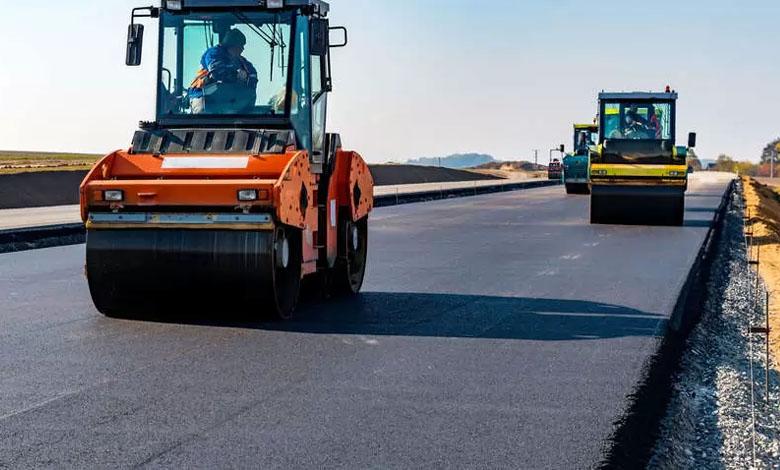
The day draws attention to the role, importance and complexity of maintaining road infrastructure in good condition. This day is celebrated every year on the third Saturday of April and is designed to honor the work of road services, engineers, technicians, utility workers and everyone who takes care of safe and high-quality roads every day.
The problem of road maintenance is global in nature. In developed countries, the main focus is on modernization, adaptation of infrastructure to climate changes, use of new technologies and sustainable materials. In developing countries, the main challenges are lack of funds, irregular maintenance and lack of a systematic approach. At the same time, the quality of the roads is a determining factor for economic development, access to medical and educational services, as well as the reduction of accidents.
In the context of today’s world, where road infrastructure is often under pressure from wars, climate disasters, heavy traffic and urbanization, International Road Maintenance Day is an important reminder that well-maintained roads are not only about convenience, but also about safety, environmental sustainability and social justice.
Interesting facts
World Bank research has shown that $1 invested in preventative road maintenance saves up to $6 in future major repairs.
The most expensive road in the world is the Chubut-Caleta Olivia highway in Argentina, where the cost of construction exceeded 20 million US dollars per kilometer, in particular due to extremely difficult geological conditions and logistical costs.
In the US, road services use more than 20 million tons of salt annually to fight ice, which creates a serious burden on the environment and leads to corrosion of cars.
The oldest road in the world is considered to be the “Stone Road” in Egypt, which connected the granite deposit with the Nile bank. He is more than 4 thousand years old.
In Switzerland, there is a high-tech road monitoring system, where special sensors under the asphalt transmit data on pavement wear, moisture level, pressure and temperature – all this allows you to plan repairs with an accuracy of up to a month.
In Japan, road authorities are using robots and drones to detect cracks in roads and monitor bridges, reducing the need for human intervention.
In Iceland, where the climate is particularly aggressive, roads are built from basalt asphalt, which has a unique ability to withstand extreme temperature changes.
World Aquatic Day
This day was started in 2020 by an initiative group of students and teachers of the Center for Animal Law Studies (Center for Animal Law Studies) at Lewis and Clark University (USA) with the aim of drawing attention to the legal protection, conservation and humane treatment of aquatic creatures – from whales and dolphins to fish, molluscs and even microscopic organisms.
The purpose of this day is to draw attention to the extraordinary biodiversity of the aquatic world and the deep environmental, ethical and legal problems associated with its conservation. Marine and freshwater animals play a key role in the stability of global ecosystems, but they are often the invisible victims of overfishing, climate change, pollution, environmental degradation and lack of adequate legal protection.
The theme changes every year. In the early years, the focus was on fish, particularly how fisheries and aquaculture affect animal welfare. In the following years, attention was paid to cephalopods (octopus, squid), whales, dolphins and coral ecosystems.
Interesting facts
According to scientists, more than 95% of ocean animal species remain understudied or not discovered at all. New species of fish, molluscs and invertebrates are discovered every year.
Octopuses have three hearts, blue blood and the ability to think independently with each arm, making them some of the most intelligent invertebrates on the planet.
Fish have noceception – the ability to feel pain. Although this has long been denied, modern research has unequivocally confirmed that many species are capable of experiencing suffering.
In 2023, the UN announced the creation of an international treaty to protect marine biodiversity in the high oceans that covers areas beyond national jurisdictions. This is a historic step for the protection of aquatic animals.
Every year about 100 million tons of fish are caught from the oceans. At the same time, up to 40% of this catch is bycatch – animals that are caught unintentionally and often thrown away dead.
Covering only 1% of the ocean, coral reefs provide habitat for over 25% of all marine species. But more than 70% of the world’s corals are threatened with extinction due to climate change.
In many countries, octopuses are already protected as “sentient animals”, which affects legal restrictions on their use in experiments and cooking.
International Recruiter’s Day
This day is celebrated every year since 2011 on the first Wednesday of April. It was launched in Europe by recruiting agencies and platforms as a way of honoring people who help companies find talent and job seekers find a decent place to work.
A recruiter is not just an intermediary between an employer and a candidate. In today’s world, where the pace of change, competition for personnel and the transformation of the labor market reach unprecedented scales, it is recruiters who have become strategic partners in team building, corporate culture formation and ensuring innovation.
International Recruiter’s Day is an opportunity to draw attention to a professional role that, although it remains in the shadows, determines the trajectories of hundreds of thousands of human destinies every day. It’s a day when companies thank their recruiters, and recruiters themselves analyze the changes in recruitment approaches: from cold calls to artificial intelligence and automated resume sorting.
Modern recruiting is not only about technical selection. It’s about empathy, communication, understanding candidate motivations and fine-tuning the business needs and people’s expectations. In the post-pandemic world, in the conditions of hybrid work, mass emigration and the growing role of social networks, the recruiting profession has faced new challenges – and that is why its contribution is particularly visible and significant.
Interesting facts
More than 90% of recruiters today use LinkedIn as their primary platform for finding candidates. In the 2020s, the platform actually replaced traditional job postings.
On average, a recruiter spends only 6-7 seconds reviewing each resume at the first stage of selection. That is why a clear structure and correct accents in the CV are critically important.
About 75% of employers have already implemented ATS (Applicant Tracking Systems) — automatic candidate sorting systems. If the resume is not optimized for such algorithms, it may not even reach a living person.
Some companies use artificial intelligence to analyze emotions during video interviews, assess tone of voice, facial expressions and reactions. This causes controversy among ethicists, but has already become a reality.
It is a well-known fact that the best candidates are “in the market” for no more than 10 days before they receive an offer. Therefore, recruiting has become a race for speed and flexibility.
Recruiters in the IT field experience the most burnout among HR professionals — due to high market demands, a shortage of specialists, and the constant stress associated with closing positions.
In 2023, analysts noted a global trend toward “soft recruiting” — an emphasis on conversation, values, inclusion, and psychological compatibility instead of formal skill assessments.
Mobile phone birthday
This is an unofficial but symbolically important holiday that marks a technological breakthrough in communication. It was on this day in 1973 that engineer Martin Cooper, an employee of the Motorola company, made the world’s first call from a mobile phone, walking out into the streets of New York with a massive device in his hand. He not only demonstrated a new development, but also made a call to his main competitor – an engineer from the Bell Labs company, which was simultaneously developing its own prototypes of mobile communicators. It was an act of technological superiority, but also a historic gesture that ushered in the age of mobile communication.
The first mobile phone was called the Motorola DynaTAC 8000X, it weighed 1.1 kg, was the size of a brick, the battery was enough for 30 minutes of talk, and it had to be charged for about 10 hours. It was a far cry from today’s smartphones, but it laid the groundwork for a revolution that changed human communication, business, journalism, security, privacy — and ultimately the very fabric of social connections.
Since then, the mobile phone has gone from an elitist toy to a ubiquitous, almost biological extension of man. Today, there are more than 5.5 billion mobile users in the world, and smartphones have become the center not only for communication, but also for banking, healthcare, education and media consumption.
April 3 is an opportunity to remember not only a technical breakthrough, but also to think about the impact of mobile communication on culture, privacy and psyche. In an age where each of us carries a device in our pocket more powerful than NASA’s moon landing computers, issues of ethics, information hygiene and responsible use become as important as innovation.
Interesting facts
The first mobile device cost around $4,000 (equivalent to over $10,000 today) and did not become widely available until 1983.
Martin Cooper later admitted that the idea of a mobile phone was inspired by science fiction films, in particular the communicators in Star Trek.
Today, mobile coverage covers more than 98% of the world’s population, including remote villages, deserts and polar regions.
In the 2010s, it was recorded that there were more mobile phones than people, with an average of 1.2 devices for every inhabitant of the Earth.
The word “smartphone” first appeared in 1995 with the appearance of the IBM Simon device – a hybrid phone, pager and PDA that had a touch screen and supported mail.
The modern flagship smartphone is superior in performance to all computing systems that were used in the creation of the first space rockets.
Many psychologists consider mobile addiction to be one of the key threats of the 21st century. Some studies indicate that the average user checks their phone up to 150 times a day.
Birthday barcode
Every year, April 3 is considered the birthday of the barcode, one of the most important and invisible technologies that has changed the world’s trade, logistics, accounting, medicine and even security. It was on this day in 1973 that IBM officially presented to the world the development of the bar code standard — a unified system that allows machine reading of information from product labels.
This presentation was the culmination of many years of work on the automation of accounting for goods in retail trade. The standard introduced by IBM was named UPC (Universal Product Code). It consisted of a sequence of vertical lines of different thicknesses and intervals between them, which encoded numerical information read by a special device — a laser scanner.
It was a quiet but profound revolution. Thanks to the bar code, modern supermarkets, warehouses, automated cash registers, accounting systems, just-in-time delivery and product traceability control — from the producer to the end consumer — became possible. Without it, there would be no effective system of global trade.
The first barcoded product to be scanned at checkout was Wrigley’s chewing gum on June 26, 1974 at a Marsh supermarket in Ohio (USA). This object is now preserved in the Smithsonian Museum as a symbol of a new era.
Interesting facts
The idea of machine reading information originated in the 1940s, when American graduate student Norman Joseph Woodland drew a bar code in the form of concentric circles on the sand of a Florida beach. It was the ancestor of modern code.
IBM developed the scanners and the computer system, but the global adoption of the barcode required a single unification of the standard, which took place precisely on April 3, 1973.
Barcodes have significantly reduced human error in accounting and allowed companies to save millions of dollars in inventory, logistics and inspections.
There are more than 20 types of barcodes, including EAN-13, QR code, Data Matrix, PDF417, and more, used in a variety of fields, from medicine to airline tickets.
Today’s barcodes are capable of encoding not only numbers, but also text, links, geolocation and biometric data—in the case of 2D codes like QR.
Experts estimate that more than 6 billion barcodes are scanned around the world every day, from every product in a supermarket to a tag in a hospital ward.
Ukraine is an active member of the GS1 global system, which administers the bar code and product numbering standard in more than 100 countries.
Historical events on this day
1502 year – Christopher Columbus embarked on his fourth and final voyage to the Americas, seeking to find a sea route to Asia through the new continent.
1559 year – the signing of the Cato-Cambrian Peace put an end to the protracted Italian wars, which lasted more than sixty years and involved France, Spain, the Holy Roman Empire and a number of Italian states.
1789 year – the ship “Bounty” under the leadership of Captain William Bligh left Tahiti, taking a course for America – it was this voyage that later became famous because of the mutiny of the crew.
1836 year – the imperial government of Russia decided on the construction of the first passenger railway – Tsarskoselskaya, which will connect St. Petersburg with the royal residence.
1863 year – in the United States, for the first time, naval medals were awarded, starting the tradition of honoring gallantry in the fleet.
1879 year – in the city of Tyrnovo (Bulgaria), the Great People’s Assembly declared the city of Sofia the capital of the state – at that time, only 12 thousand people lived in the city.
1885 year – German inventor Gottlieb Daimler received a patent for his first water-cooled internal combustion engine with a capacity of 0.5 horsepower.
1896 year – the sports publication La Gazzetta dello Sport is founded in Milan, which will later become one of the leading European media in the field of sports.
1907 year – the University of Saskatchewan appeared in Canada, which later became an important scientific center of the country.
1910 year – a group of researchers made the first documented ascent of McKinley (now Denali) in Alaska, the highest mountain in North America.
1917 year – Vladimir Lenin arrived in Petrograd from exile, opening a new revolutionary stage in Russian history.
1918 year – during the First World War, Marshal Ferdinand Foch was appointed commander-in-chief of all Allied forces on the Western Front.
1919 year – the Soviet government in Ukraine declared the territory of Askania-Nova a nature reserve, laying the foundations for nature protection in the south of the country.
1933 year – for the first time, the plane successfully flew over the top of Everest, making a technically difficult and symbolic flight.
1933 year – Ukrainian surgeon Yuriy Voronyi in Kherson performed the world’s first kidney transplant from a dead person to a living person.
1940 year – mass shootings of Polish officers began in Kozelsk, Starobilsk and Ostashkov – later these events became known as the Katyn tragedy.
1948 year – US President Harry Truman approved the economic aid plan for European countries after the Second World War, which went down in history as the “Marshall Plan”.
1966 year – the Soviet station “Luna-10” became the first artificial satellite of the Moon, entering its orbit.
1981 year – the first issue of the independent trade union publication “Weekly Solidarity” was published in Poland, which became a symbol of the movement of resistance to the communist regime.
1987 year – the headquarters of the World Health Organization became a smoke-free zone: smoking was officially banned here.
1990 year – the blue-yellow Ukrainian flag, consecrated in the St. George Cathedral, was raised above the Lviv City Council, a symbol of national awakening.
1999 year – during the war in Yugoslavia, NATO troops first carried out airstrikes on the country’s capital, Belgrade.
2007 year – the French TGV train set a new world speed record for passenger transport, accelerating to 574.8 km/h.


