
August 17th is World Desertification and Drought Day, World Karate Day, World Scavenger Day and World Tessellation Day. The events of this day in different eras include military campaigns, significant political declarations, scientific breakthroughs, technical achievements and symbolic cultural milestones that have entered the history of the world.
World Day to Combat Desertification and Drought
This day is celebrated to draw attention to the problem of land degradation and water scarcity. The date was chosen in honor of the adoption in 1994 of the UN Convention to Combat Desertification, which became a key international document in the field of soil protection and restoration of degraded areas.
Desertification and drought are global challenges that threaten food security, biodiversity and livelihoods of millions of people in different regions of the world. Their effects are exacerbated by climate change, overuse of land and water, deforestation and urbanization.
For Ukraine, this topic is particularly relevant due to the active processes of soil drying and degradation, especially in the southern and eastern regions. Under the influence of climate change and intensive economic use, significant areas of chernozems lose their fertility, and the lack of moisture negatively affects crops and water supply.
Steppe and coastal areas are in the risk zone, in particular the Southern coast, Kherson Oblast, Zaporizhzhia Oblast and part of Donbass. The situation is complicated by the consequences of the war: the destruction of hydraulic structures, soil pollution and the impossibility of proper irrigation in some territories.
Interesting facts
According to UN estimates, more than 40% of the world’s land is already degraded, and more than 1.3 billion people suffer from the effects of desertification.
In Ukraine, land areas at risk of desertification exceed 15% of the country’s territory.
The highest indicators of precipitation deficit in Ukraine are recorded in the southern regions, where the amount of atmospheric moisture sometimes decreases to 300 mm per year.
In the Kherson region, before the destruction of the Kakhovskaya HPP, one of the largest irrigation systems in Europe was operating, providing water to more than 200,000 hectares of land.
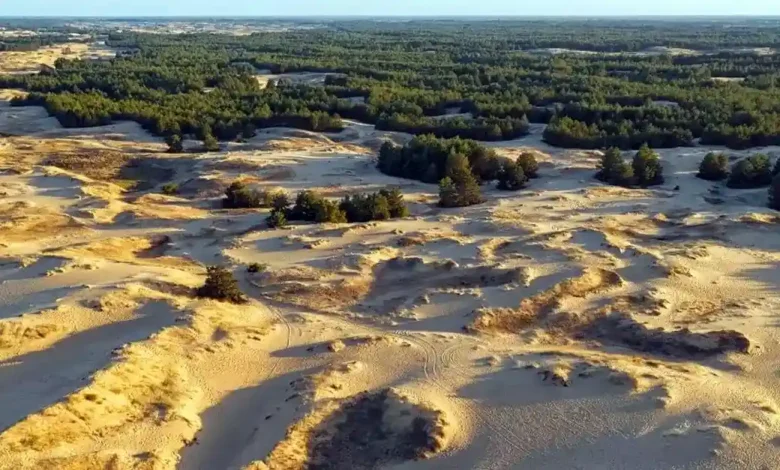
In the Odesa region on the coast of the Black Sea, the formation of sand arenas, similar to small deserts, has already been recorded.
Some Ukrainian farmers implement “no-till” technologies to conserve soil moisture and reduce erosion.
International practices to combat desertification include the creation of “green belts” of trees and shrubs that reduce wind erosion and conserve moisture.
World Karate Day
This day is celebrated to honor the history, philosophy and athletic achievements of this martial art. The date was chosen in honor of the official recognition of karate as an Olympic sport, which took place before the Tokyo 2020 Games. Karate, which originated on the island of Okinawa in Japan, combines physical training, technical mastery and moral and ethical principles, including respect, self-discipline and self-improvement.
Today, it has many schools and styles, from traditional to athletic, and its philosophy appeals to both professional athletes and those involved in health and character development.
In Ukraine, karate gained popularity in the second half of the 20th century, and after gaining independence, it began to actively develop within the framework of national federations. Ukrainian athletes regularly participate in international competitions, winning awards at the world and European championships.
After the inclusion of karate in the program of the Olympic Games, interest in it has increased significantly, especially among young people. Sections operate in most major cities, and trainers implement modern training methods while preserving the traditional values of this martial art.
Interesting facts
Karate was included in the program of the Olympic Games only once – in Tokyo 2020, but the International Karate Federation continues to fight for its return.
There are more than 100 million people practicing karate in the world, and official federations operate in more than 190 countries.
The oldest style of karate is considered to be Shorin-ryu, founded in Okinawa in the 19th century, while one of the most popular is Shotokan, created by master Gitin Funakoshi.
In Ukraine, the first official karate competitions were held in 1989, and since then the national team has won dozens of medals at international tournaments.
Ukrainian karate player Stanislav Horuna became the bronze medalist of the 2020 Tokyo Olympics in the category up to 75 kg, which became a historic success for Ukrainian karate.
Karate training includes not only practicing punches and blocks, but also kata – a complex of movements that symbolizes a fight with several opponents.
In many countries, karate is a mandatory part of the training of police and military units.
World scavenger day
This day is celebrated as a sign of respect for workers who keep streets, public places and residential areas clean every day. This date is designed to remind that the work of scavengers is critically important for the health and safety of society, because the prevention of the spread of diseases, the preservation of ecology and the comfort of life depend on the timely removal and disposal of waste. This profession requires not only physical endurance, but also discipline, because the work is performed in all weather conditions, in the early hours and often in difficult sanitary conditions.
In Ukraine, this day is an opportunity to draw attention to the problems faced by workers in the field of waste management: lack of modern equipment, low wages, lack of proper protective equipment. Despite these difficulties, it is they who ensure the functioning of the city’s infrastructure every day, keep the streets clean and prevent the accumulation of garbage that could turn into an environmental threat.
In recent years, attention has been growing in Ukraine to issues of waste processing and sorting, which directly affects the scope and nature of the work of scavengers.
Interesting facts
The profession of a scavenger officially appeared in Europe in the 17th century, when mandatory removal of waste from the streets was introduced in Paris.
In Ukraine, on average, one scavenger serves an area where he collects from 500 kg to 1 ton of waste every day.
In Japan, garbage collection is a high-tech process involving automated machines and a clear sorting system where residents are required to separate their waste into more than 10 categories.
In Switzerland, there is a system of “garbage stamps”, where residents buy special bags for waste, which encourages the reduction of their volume.
More than 2,000 scavengers work in Kyiv, and some of them undergo special training in the safe disposal of hazardous waste.
In the United States in 2022, the scavenger profession entered the top 10 most dangerous in terms of injury rates, due to work on the roadway and contact with hazardous materials.
In some cities in Germany and the Netherlands, scavengers take part in public eco-actions, becoming symbols of the culture of cleanliness and sorting.
World Tesselation Day
This day is celebrated to popularize the art of creating patterns of geometric shapes that fit perfectly into each other, forming a complete covering without gaps or overlaps. This phenomenon, known since ancient times, is found both in art and architecture, and in nature – for example, in the structure of beehives or on turtle shells.
Tessellation combines mathematics and aesthetics: its construction is based on a clear calculation of shapes and angles, but the result often impresses with artistic perfection. Modern designers and architects use the principles of tessellation in tiling, textiles, stained glass and even in 3D modeling.
In Ukraine, interest in tessellation is manifested both in decorative and applied arts and in modern architectural projects. Mosaics of the Soviet period, which decorate the facades and interiors of public buildings, often contain complex geometric patterns built according to the principles of tessellation.
Ukrainian artists and craftsmen use this technique to create floor and wall panels using ceramics, glass, stone or wood. In the age of digital technology, tessellation has become important in graphic design, as computer algorithms allow the creation of seamless patterns for print, web design and virtual reality.
Interesting facts
The word “tessellation” comes from the Latin tessella – a small mosaic cube.
The earliest examples of tessellation were found in Mesopotamia and date back to around 3000 BC. there are.
In mathematics, it is proven that there are only three regular polygons that can form an infinite tessellation without gaps: an equilateral triangle, a square, and a regular hexagon.
The famous artist Maurice Cornelis Escher created a series of works where he used complex, almost impossible in reality tessellation forms, turning them into optical illusions.
In nature, the principles of tessellation are observed not only in honeycombs, but also in the crystal structures of minerals and in the skin of some reptiles.
The architectural monuments of the Islamic world, particularly in Spain (Alhambra) and Iran, contain some of the most complex and beautiful examples of tessellations.
Modern 3D printing technologies make it possible to create objects using complex three-dimensional tessellations, which are used even in biomedical implants.
Historical events on this day
1462 year — the Wallachian master Vlad III Tepes, known by the nickname Dracul, made an unsuccessful attempt to kill the Ottoman Sultan Mehmed II. After the failure, he was forced to retreat from Wallachia. Vlad III inherited the nickname Dracul from his father, Vlad II, and later became a legendary figure that inspired numerous literary images.
1885 year — the Statue of Liberty arrived in the New York harbor – a gift of the French people to the United States of America as a sign of friendship and honoring the ideals of freedom. The monument later became one of the most famous symbols of the United States.
1917 year — the II All-Ukrainian Military Congress, which lasted until June 23, opened in Kyiv. During it, the autonomy of Ukraine was proclaimed (June 4 according to the Julian calendar), which became an important political milestone of the Ukrainian revolution of 1917–1921.
1940 year — The Red Army occupied Latvia and Estonia, which became part of the Soviet expansion into the Baltic states during World War II.
1944 year — After gaining independence from Denmark, Iceland officially declared itself a republic, consolidating its sovereign status in the international arena.
1950 year — in Chicago, doctor Richard Lawler performed the first human kidney transplant operation in history. The surgical intervention lasted only 45 minutes and became the basis for the development of modern transplantology.
1955 year — the first flight of the Soviet passenger jet Tu-104 took place, which became one of the most modern airliners of its time and significantly increased the speed of passenger transportation.
2008 year — the Mozilla Foundation organized the Download Day 2008 campaign to set a Guinness record for the largest number of program downloads from the Internet during the day. The record was set by the Mozilla Firefox 3 browser, which was downloaded more than eight million times in one day.


