
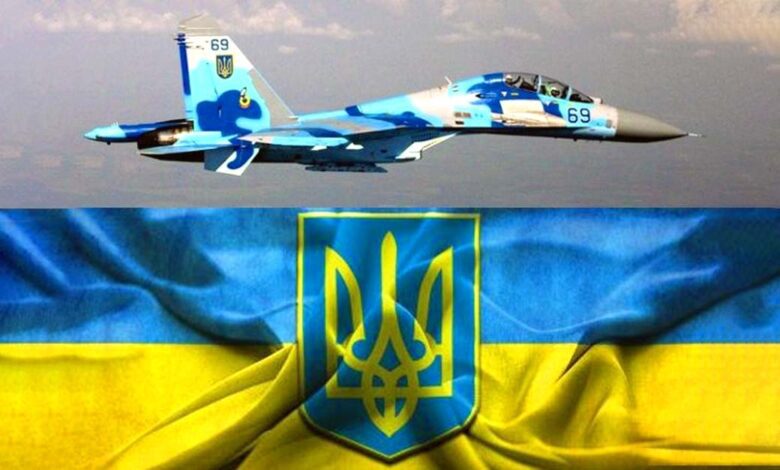
On August 3, Ukraine celebrates the Day of the Air Force of the Armed Forces of Ukraine, and in the world – International Day of Forgiveness, World Watermelon Day and Sisters’ Day. On this day, in different centuries, events took place that had a significant impact on geopolitics, culture, science, sports, and the technical sphere.
Day of the Air Force of the Armed Forces of Ukraine
Since 2007, Ukraine has celebrated Air Force Day on the first Sunday of August. This is an official professional holiday of all those who serve in aviation structures, anti-aircraft missile forces, radio engineering units and air defense units. It was established by Presidential Decree with the aim of uniting all components of the Air Force under a single name and abandoning a separate air defense holiday.
The Air Force includes fighter, bomber, attack, transport aviation, anti-aircraft missile and radio engineering forces, as well as units of special and rear support. The main task is to protect the airspace of the state, cover troops, facilities, cities, strategic infrastructure, and support ground troops from the air.
Since 2014, the role of the Air Force has significantly increased: from airstrikes against enemy positions in the Donetsk and Luhansk regions to complex air cover of the entire territory of the country during a full-scale war. Ukrainian fighters, anti-aircraft guns, air defense operators and technicians have become one of the key players in deterring Russian shelling and attacks by drones, cruise missiles and ballistic missiles.
After February 24, 2022, the Air Force operates daily in combat mode. Anti-aircraft missile units shoot down Kalibrs, Iskanders, Daggers and kamikaze drones, aviation supports the Defense Forces in offensive and defensive operations, and radio engineering troops record every movement in the airspace.
Little known facts
In the first days of a full-scale invasion in 2022, Ukrainian pilots flew 5-7 sorties per day, despite the numerical superiority of Russian aviation. Conditions — extremely low flight altitude, enemy air defense, lack of technical resources.
The oldest combat aircraft still in use by the Air Force of Ukraine is the Su-24M, which is more than 40 years old. Despite this, it remains effective in spot-kicking tasks.
The first downed Russian Kinzhal missile from the Kinzhal complex in the world was recorded by the Ukrainian Air Force in May 2023 — by the forces of a brigade armed with the Patriot system.
Over 90% of all enemy “shaheeds” over the past six months have been able to be shot down by the Air Force thanks to the coordinated work of air defense units, mobile fire groups and intelligence.
The Air Force includes a separate system for countering the enemy’s radio-electronic means, in particular EW, which allows not only to shoot down drones, but also to change their trajectory or “jam” in the air.
International Day of Forgiveness
On the first Sunday of August, many countries celebrate the International Day of Forgiveness — a day dedicated to a deep inner decision to leave behind a grudge and give a chance to release from heartache. It was started by Robert W. Plath from California, calling on society to pay attention not to gestures, but to a deep psychological act – forgiveness as a resource for inner transformation.
Forgiveness, in this sense, is a conscious choice to let go of the poisonous attachment to anger, pain, and hatred that destroys the one who is offended in the first place. It is a process that often takes years and requires strength, clarity and the courage to admit one’s vulnerability.
In psychotherapy, forgiveness is seen as a tool for healing trauma. Research shows that people who are able to forgive have lower levels of anxiety, depression, body pain, and are less prone to cardiovascular disease. Forgiveness, according to psychologists, does not return what was lost, but changes the future.
Forgiveness occupies a special place in culture: from the biblical parable of the prodigal son to the literary images of Dostoevsky or Tolstoy. In history, there are cases when people publicly forgave the perpetrators of terrible crimes. All of these are examples of superhuman inner work that does not always elicit a clear response, but opens space for coexistence when justice cannot be restored.
Interesting facts
The famous psychiatrist Carl Jung believed that forgiveness is part of the “individuation process”, that is, personal development. A person who cannot forgive remains dependent on his past, and therefore cannot fully live in the present.
In Rwanda, after the 1994 genocide, special “public forgiveness courts” (gacaca) were created, where the killers publicly confessed their guilt, and the families of the victims had the opportunity to forgive – not legally, but morally. This experience remains unique in world practice.
In Christian monasteries, the rite of “requested forgiveness” is practiced, when a monk says to his brothers every day at the evening service: “Forgive me, brothers.” It is an act of humility and a reminder of human imperfection.
In one of the studies from the University of Sussex, it was proven that expressing forgiveness in writing (even without delivering this letter to the addressee) significantly reduces stress levels and improves sleep. This shows that forgiveness has an impact even without external contact.
In many cultures, from Buddhism to Sufism, forgiveness is not considered an ethical act, but an exercise for the spirit. There is no dualistic division between the good and the guilty: there are only those who have not yet known peace within themselves.
World Watermelon Day
On August 3, the world unofficially celebrates World Watermelon Day – the day when this sweet, watery berry becomes the hero of August. It is at the beginning of August that the peak of ripening and harvesting of watermelons falls in most countries of the Northern Hemisphere. Although the holiday does not have an official status in the UN or UNESCO calendars, in many countries it has turned into a popular information drive, a festival day and simply a symbol of summer prosperity.
Watermelon is one of the oldest crops known to man. Its homeland is the Kalahari desert in Africa, where wild forms of this plant still grow. Already in Ancient Egypt, watermelons were grown more than 4 thousand years ago: their images were found in tombs, and the fruit itself was part of the funeral gifts.
Today, the largest producers of watermelons are China, Turkey, India, Iran, as well as Ukraine. Until 2022, the Kakhovsky district of the Kherson region was one of the key centers of watermelon cultivation in Europe. Due to the war, many plantations have been destroyed, logistics have been disrupted, but individual farmers continue to grow — in particular, in central and northern Ukraine.
Watermelon consists of 92-94% water, which is why it has a reputation as an ideal summer product. It contains lycopene, an antioxidant that gives the pulp a red color and is associated with the prevention of cardiovascular diseases. It also contains citrulline, which affects vascular tone and even potency, which is why watermelon is sometimes called a natural “Viagra”.
Interesting facts
The first watermelons, which were grown in Ancient Egypt, had a bitter taste and were not dessert at all. They were used primarily as a source of water during desert travel.
The heaviest watermelon in the world was recorded in the USA: in 2013, farmer Chris Kent from Tennessee grew a fruit weighing 159 kg.
Square watermelons are cultivated in Japan – they are grown in special forms for convenient transportation and storage. Often they are not eaten, because they are grown for aesthetics, not taste.
Watermelon belongs to the gourd family and is a berry from a botanical point of view. However, it is often mistaken for a fruit or a vegetable – in some countries (such as Israel) it is served with salty cheese and vegetables.
In South Korea, watermelon is considered an expensive and prestigious gift. During summer holidays or visiting relatives, watermelon is given as a gift, wrapped in gift paper.
Sisters’ Day
On the first Sunday of August, many countries celebrate Sisters’ Day, an unofficial but symbolic holiday dedicated to special family ties. It is not only about blood kinship, but also about relationships, which are often formed deeper than any words. This day is a reminder of the importance of women’s support within the family.
Sisterhood is a unique combination of childhood memories, rivalry, tacit understanding, conflict, and unconditional presence. It is sisters who often become the first witnesses of how we grow up, make mistakes, win or break down. And even after quarrels and distances, the feeling remains: she is her own, her own.
Psychologists note that emotional closeness with a sister contributes to better emotional regulation, reduces anxiety and promotes the development of empathy. Sisterhood, for all its ups and downs, often has something that other types of relationships lack—a shared childhood as a deep point of support.
In culture, the image of sisters often becomes a symbol of both support and conflict. From the classic stories of Lisa and Anna in Frozen to the bittersweet dramas of Chekhov, sisterhood is portrayed as a microcosm of human emotions, from jealousy to sacrifice.
Interesting facts
In many ethnic cultures, it is the sister, not the mother, who often takes part in raising younger children after marriage, especially in communities with large families. This bond often lasts a lifetime.
In one long-term study from Harvard Medical School, it was proven that men who had a sister were more likely to show emotional sensitivity in adulthood, compared to those who grew up without sisters.
In Sri Lanka, there is a tradition in which the older sister symbolically conveys a blessing to the younger sister on her wedding day by touching her forehead as a gesture of protection and guidance.
In a number of South American tribes, there is a concept of “social sisters” – girls who grow up together and are considered sisters not by blood, but by experience. This phenomenon is supported ritually and is considered equivalent to a blood family connection.
Historical events on this day
1492 – The Spanish navigator Christopher Columbus set out from the port of Palos on his first expedition, with the aim of finding a western sea route to India. There were three ships under his command: “Santa Maria”, “Pinta” and “Niña”. He did not yet know that the discovery of a new continent lay ahead.
1778 – In Milan, the opening of the “La Scala” theater took place – one of the future centers of the world opera scene. The theater was built on the site of the church of Santa Maria della Scala, in honor of which it got its name.
1795 – A conservatory was founded in Paris, which later became one of the main centers of academic music education in Europe. Among her pupils are Berlioz, Bizet, Debussy.
1882 – The U.S. Congress passed a law that imposed severe restrictions on immigration: the ban applied to sleepwalkers, people with mental illnesses, convicted felons, and — for 10 years — Chinese immigrants. It was the first major discriminatory initiative in the field of US immigration policy.
1904 – Members of the British expedition were the first Europeans to enter Lhasa, the sacred city of Tibetan Buddhism. This happened in the context of the British military campaign in the region and caused international tension around Tibet.
1911 – Italian troops during the conflict with the Ottoman Empire in Libya used airplanes for military reconnaissance for the first time in history. This was a turning point in the development of military aviation.
1921 – The St. Petersburg Cheka arrested the poet Mykola Gumilyov. A few weeks later, he was shot – without trial, on the charge of participating in a conspiracy against the Soviet authorities. This was the beginning of systematic terror against the intelligentsia.
1922 – On the radio in New York, a sound effect was used for the first time live: two wooden bars were used to imitate a knock on a door. This started the tradition of creating special effects in radio and television programs.
1929 – In Rostov-on-Don, the first automatic telephone exchange in the USSR was put into operation. It served 6,000 subscribers and was built with the participation of the Swedish company “Ericsson”.
1935 – In the Ukrainian SSR, the subject “physical education” was officially introduced into the educational program of schools. It was part of a campaign to prepare a “healthy body” to serve the Soviet state.
1940 – The Republic of Lithuania was officially incorporated into the USSR as a Union Republic. This happened after the ultimatum, the Soviet occupation and the establishment of a puppet government.
1943 – Soviet partisans launched a large-scale sabotage operation behind German troops, known as “rail war”. They destroyed railway tracks, bridge structures, destroyed transport connections in the occupied territories.
1949 – The National Basketball Association (NBA) was founded in the USA, today the most powerful professional basketball league in the world.
Also on this day, the Statute of the Council of Europe — the key intergovernmental body for the protection of human rights, democracy and the rule of law in Europe — entered into force.
1952 – The XV Olympic Games were solemnly opened in Helsinki. For the first time in history, athletes of the USSR took part in them, in particular the team of the Ukrainian SSR, which laid the foundation for the “Soviet sports empire”.
1957 – The Soviet Union successfully launched the first R-7 intercontinental ballistic missile. The project was managed by Serhiy Korolev. This launch was an important milestone in future space programs.
1988 – The German Mathias Rust, who in 1987 landed his light engine plane near the Kremlin, was released early from a Soviet prison after 432 days of imprisonment. His “air antics” became an international scandal and influenced personnel purges in the Soviet armed forces.
1990 – The Verkhovna Rada of the Ukrainian SSR adopted the Law on Economic Independence. The document referred to the republic’s exclusive right to manage its own economy, resources and finances. It was one of the first steps towards actual independence.
1993 – 4-year-old American Sidney Dittman received a patent for her own invention — a device that helps open round door handles. She became the youngest person in US history with a registered patent.
2000 – The Supreme Court of Chile decided to remove the parliamentary immunity of the former dictator Augusto Pinochet. This opened the door to his prosecution for crimes under the military junta.
2003 – Former absolute world boxing champion Mike Tyson has officially declared himself bankrupt. Despite earning tens of millions of dollars, his financial losses, debts and lavish lifestyle led to his complete collapse.


