
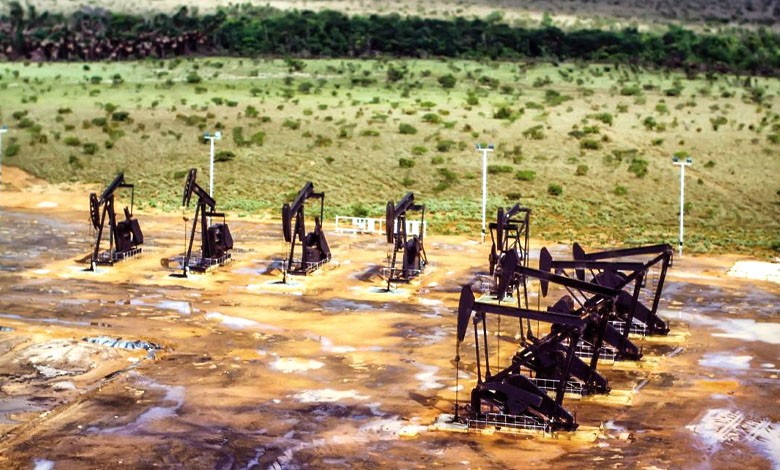
IA “FACT” already told about the modern phenomenon of the “hydrocarbon man” and using the example of Venezuela illustrated the paradox that a country with inexhaustible reserves of fossil fuels, due to the irrational use of resources, an authoritarian regime and the absence of effective democratic institutions, turned from one of the richest states in the world to one of the most backward.
The acquisition of the Pacto de Puntofijo, “Bolivarian missions” and the absence of a sovereign fund
So, the protests of “El Caracaso” due to economic measures led to the rise of Chávez. “Bolivarian missions” provided the population with medical care, free medical care, affordable housing for the poor, as well as food subsidies.
However, like his predecessors, Chávez continued to focus the economy on oil dependence. His time coincided with a period of record price growth for oil in the 2000s, when the price of a barrel reached a ceiling of almost $150 in 2008. However, like many authoritarian leaders, he did not take the chance to create a sovereign wealth fund that would ensure Venezuela’s financial stability in the event of a drop in oil prices. Such a fund, similar to the Norwegian GPFG or the Saudi PRF, could provide the country with a “gold reserve”. At the same time, Chávez sought to keep the country’s oil sector under his control, he did not like the fact that foreign companies, mainly American ones, were profiting from Venezuelan oil. However, the problem was that these companies possessed the necessary knowledge and technology to efficiently extract oil.
It is worth mentioning the prerequisites that made it possible for the Chávez regime to come to power. According to Puntofijo Pact – the agreement signed back in 1958 between the three political parties of Venezuela laid the foundation for a democratic government in the country. Although the Pact contributed to political stability, it was later criticized for creating a closed political system that excluded smaller parties and civil society from political life, which also contributed to the emergence of populist movements such as Hugo Chávez’s.
Pacto de Puntofijo protected Venezuela from military dictatorships, but at the same time limited the participation of new political forces, strengthened the ruling elite and promoted corruption. In 1976, President Peres nationalized the oil sector, establishing PDVSA, which controlled the entire industry. Although PDVSA had to cooperate with foreign companies on terms of controlling 60% of the shares, its operation was different from, say, Saudi Aramco, the largest oil producer in Saudi Arabia and one of the largest and most profitable oil companies in the world, where an autocratic regime ensured effective management. Instead, in Venezuela, PDVSA was used to finance political projects, which contributed to the enrichment of those in power.
Excessive control of the Chavez regime over the oil industry
So, Chávez set out to eliminate American companies. Although Venezuela has significant reserves of “black gold”, its extraction and processing are quite difficult due to the low quality. Venezuelan oil has an excess of impurities, in particular sulfur, which provokes corrosion and destruction of wells. The high amount of sulfur makes Venezuelan oil more difficult to use, especially in view of the possible transition to green energy resources, where this type of oil may become undesirable.
Oil classified in its lightness and purity, and the key indicator of quality is the API (American Petroleum Institute): the higher the API, the easier the oil is to extract and refine. Venezuelan oil has an API of 16 to 30, indicating its heaviness, while Saudi oil is much lighter and has an API of 28 to 51. This means that refining Venezuelan oil requires significantly more resources and expertise. But during the rule of Chávez and his successor Maduro, Venezuela was not ready to allow foreign companies access to its deposits, which significantly limited the possibilities of processing.
By excluding foreign partners from working with oil fields, Chávez effectively lost access to the necessary resources and technologies. It is no coincidence that Venezuela’s oil production peaked before Chávez came to power in 1998, when the country was among the world’s top five producers (for comparison, it has now fallen to 21st place). During Chávez’s rule, the national debt of the Bolerian Republic increased by approximately 300%. In addition, Chávez entered into a conflict with workers in the oil sector, which led to mass layoffs at the state-owned oil company PDVSA. Of course, this dealt a blow to the country’s economy, significantly reducing oil production in the following years.
Venezuela under Maduro: oil industry collapse and hyperinflation 2,000,000%
Chávez did not live to see the true collapse of Venezuela’s oil industry and economy, as he died of cancer in 2013, handing over the country to his vice president, Maduro. The latter became a worthy successor to Chávez, limiting freedom of the press, political diversity, putting pressure on the judiciary and limiting the opportunities of private business. Many private companies that provided key services were nationalized, making the country even more dependent on oil.
It is worth noting that Chavez was a charismatic personality and earned the reputation of a “simple, good leader.” This cult of personality was closely linked to the oil wealth that provided the country with stability under his rule, bolstered by Venezuela’s lucrative 2007 oil deal with China.
Instead, his successor lacked neither charisma nor luck. Maduro became president when oil prices plummeted in 2014, causing a major crisis in the country Venezuela, despite economic growth under Chávez and a GDP growth of 6% in 2012, suffered a catastrophic decline in the following 7 years: from 2014 to 2020, its economy shrank by 75%. Caracas is among the cities with the highest hyperinflation in the world, which reached 2000000% in 2018! In the following years, inflation remained at the level of 190%.
With falling oil prices and sanctions from the EU, the United Kingdom and the US in 2023, the country faced an increase in crime. A natural consequence of the crisis was mass emigration: since 2013, 8 million people have left the country, mostly to neighboring countries, the USA and Europe.
Venezuela, which does not have the privileges of Saudi Arabia, which maintains a strategic partnership with the United States that provides it with protection and funding, has faced opposition from America. As a result, Caracas chose an alliance with the US’s geopolitical rivals – Russia, Cuba and China, which worsened relations with Washington.
In addition, in 2015, US experts discovered large oil deposits off the coast of Guyana, which, although smaller than Venezuela’s, contained higher-quality oil with a high API and low sulfur content, which made extraction easier. Caracas instantly renewed its territorial claims to the Essequibo region, which occupies most of Guyana, and to the shelf where the Starbuck field, now being developed by Exxon Mobil, was expelled from Venezuela. However, an invasion of Guyana would subject Venezuela to new sanctions and a possible US response. Already struggling with economic crisis, poverty, crime and political instability, Venezuela risks falling even deeper. That is why Maduro, despite public outrage, continues the policy that is destroying the country.
What can Venezuela do to rise from the bottom
Oil wealth has become the bane of Venezuela, and even Maduro’s ouster will only be the first step on the difficult road to rising Venezuela from the ashes. For decades, the country has become increasingly dependent on the oil needle, and now that those revenues are disappearing, the system is collapsing. At the time of the discovery of oil, Venezuela was politically unprepared for such wealth, unlike, say, Norway. The latter, despite smaller reserves of fossil fuels, managed to extract more oil and gas than Venezuela, confirming the important role of strong institutions and elite consensus for their management in the development of the country.
Metaphorically speaking, Venezuela is like a young man who won the lottery jackpot and quickly spent his sudden wealth without worrying about the future. Gradually, the supplies ran out, and his family began to beg. Norway, on the contrary, as a conscious mature person, received its profit after decades of work and invested it wisely, continuing to develop other industries.
Currently, the average Norwegian is 20 times richer than a Venezuelan. The roots of Venezuela’s problems lie not only in the regime of the odious Maduro: there are signs of a decade of corruption and inefficient management. So removing the dictator from power is only the first step; the country needs radical reforms. In addition, Venezuela will face the challenge of a green transition and divestment from oil, which, while threatening its economy, could be an opportunity for radical change.
To restore lost opportunities, Caracas could probably take several steps under the condition that the new independent government – in the event of Maduro’s removal – would seek real changes, and not lobbying for the interests of individuals. First of all, Venezuela should remove restrictions on the activities of foreign companies, allowing them to invest in the oil sector. It would also be advisable to leave OPEC in order to catch up with the production and export of “black gold”, making the most of the period of high prices. This will require a radical change in the course of relations with Washington and the Eurozone.
It can be expected that the exit from OPEC causes dissatisfaction of competitors – Saudi Arabia or Russia, but geographical distance gives Venezuela a certain security. With US support, Venezuela could increase oil production to 10 million barrels per day, strengthening its role in the market. It would also allow the Americans to control prices and profitability. Even if production costs in Venezuela are slightly lower than in the US, the price of oil could fall, which would not please the big oil players.
Venezuela’s oil industry should focus on long-term growth of national welfare, not quick profits. This requires a sovereign wealth fund for reinvestment from oil revenues. Although Venezuela will have to share revenues with Western partners, Caracas could expect them to help build effective institutions and invest in non-oil industries. If Western capital feels stable, it can contribute to the diversification of the economy.
In addition to oil, Venezuela has another great potential – its picturesque landscapes, which creates unique conditions for the development of tourism in the future. Despite high crime rates hampering tourism, Venezuela could follow the example of Colombia, which has rebuilt its tourism industry after decades of criminal and political problems.
Tetyana Viktorova


