The Kharkiv region’s preparation for the next heating season includes not only critical infrastructure facilities, but also medical institutions, on whose continuous operation people’s lives and health depend. This is of particular importance for perinatal centers, where babies are born every day, and any interruptions in heat or electricity can create additional risks for newborns and mothers in labor. In front-line Kharkiv, which continues to live under the threat of attacks, the issue of reliable heat supply to such institutions remains one of the key ones.
Preparing for winter in conditions of constant risks
The issue of the upcoming heating season was one of the topics of the working meeting of the leadership of the Kharkiv region with a delegation of the United Nations Children’s Fund led by UNICEF Deputy Executive Director Ted Chaiban.
During the discussion, attention was focused on increasing the resilience of the region’s critical infrastructure. For the Kharkiv region, which remains one of the regions closest to the front line, the stable operation of heat, water and electricity supply systems has a direct impact on the functioning of hospitals, schools and other socially important institutions.
One of the areas of this work was the decentralization of heat supply systems. This approach allows medical institutions to continue working even in cases of damage to centralized networks or long-term interruptions in the supply of energy carriers.
A medical institution where the most complex births are accepted
The Kharkiv Regional Clinical Perinatal Center is one of the key medical institutions in the region. The institution is designed for 170 beds and specializes in providing assistance to women who need increased medical support during pregnancy and childbirth.
More than 800 births are accepted here every year. A significant part of patients are admitted to the center due to a complicated pregnancy or the presence of medical risks that require the participation of highly qualified specialists and the use of modern equipment.
The medical institution is not only visited by residents of Kharkiv and the region. Pregnant women from frontline communities in neighboring regions are regularly sent here, where the possibilities of specialized medical care are limited or significantly complicated due to the security situation.
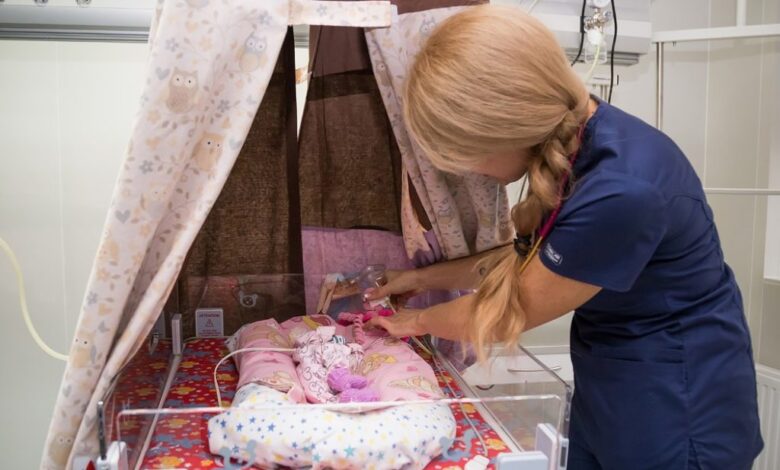
For hundreds of children, the Kharkiv Perinatal Center becomes a place where life begins in wartime. The first days after birth are among the most important periods of a child’s development, so maintaining the necessary temperature regime in the wards is of particular importance.
Newborns, especially premature babies or babies who require intensive care, remain extremely sensitive to any changes in their living conditions. Continuous heat supply ensures the operation of wards, baby care units, ventilation systems and other equipment on which the quality of medical care depends.
In front-line Kharkiv, where the risks to the energy infrastructure remain high, the presence of backup heat sources creates an additional level of protection for the youngest patients. For children born during the war, this means the opportunity to receive the necessary care regardless of external circumstances.
New boiler room for autonomous operation of the center
With funds from UNICEF and the regional budget, a solid fuel boiler room with a capacity of 1.6 megawatts was built on the territory of the perinatal center.
In the event of interruptions in centralized heating, the new facility will be able to fully provide heat to the buildings of the medical institution. This will allow maintaining the necessary conditions for the operation of departments, childbirth, postpartum care and treatment of patients.
The presence of a separate source of heat supply reduces the hospital’s dependence on external factors and increases its readiness for possible crisis situations during the cold period of the year.
A separate advantage of the new system is the possibility of autonomous operation for a long time. The formed fuel reserve allows the boiler room to operate from ten days to several weeks.
Such a resource is especially important for an institution that operates around the clock and does not have the opportunity to postpone or postpone the provision of medical care. Childbirths, surgeries, newborn monitoring, and treatment of women in labor are ongoing, so stable heat remains a necessary condition for the work of all structural units.
The installation of an autonomous boiler house was part of a broader effort to ensure the uninterrupted operation of hospitals in the Kharkiv region. Previously, with the support of UNICEF, a number of key medical institutions in the region have already received modular boiler houses, which were used during previous heating seasons and helped maintain the operation of institutions during periods of long power outages.
For the perinatal center, the new heat source is of particular importance, since the safety of women and children born in one of the regional centers of Ukraine closest to the front depends on its stable operation. New residents of the region are born here every day, and creating reliable conditions for their birth remains one of the important tasks of the regional healthcare system.