
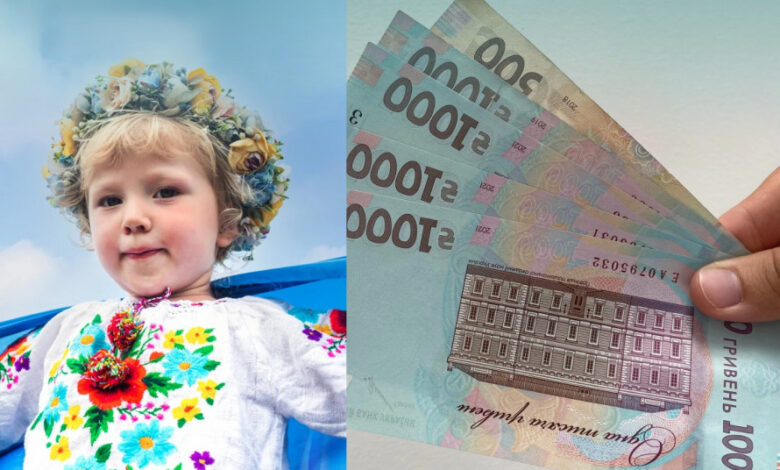
In times of war, supporting families with children is of particular importance, as the birth and upbringing of a child take place against a backdrop of instability, relocation, loss of income, and constant strain on parents. For children growing up during war, state assistance becomes part of the family’s basic security, as it allows them to cover daily needs, maintain access to care, and reduce financial pressure during the most vulnerable period of life.
Updated family support system
A renewed system of child benefits continues to operate in Ukraine, which has already been used by almost 170,000 families since the beginning of 2026. State support covers several areas: assistance in connection with pregnancy and childbirth, payment at the birth of a child, monthly assistance for caring for an infant up to one year old, and the “e-Nursery” program.
According to Yulia Svyrydenko, the goal of this system is to accompany the family from the period of pregnancy until the moment when parents can return to work. This approach is especially important for families raising wartime children, because a stable payment in the first months of a child’s life helps to plan expenses for at least the most necessary things.
Payment upon birth of a child
Since the beginning of the year, almost 28 thousand women have received a one-time payment of 50 thousand hryvnias upon birth of a child. This amount is intended for the first expenses that arise after the birth of a baby: medical care, basic necessities, food, hygiene products, and arranging a space for the child.
For families who have experienced displacement, job loss, or a reduction in income, such a payment is of practical importance, because the first weeks after the birth of a child require the greatest one-time expenses.
Assistance during pregnancy and childbirth
A separate area of support provides for payments in connection with pregnancy and childbirth. About 20 thousand women have already received such assistance, and its amount is 7 thousand hryvnias per month.
For expectant mothers, this payment is important at a time when the costs of medical care, preparation for childbirth, and household needs are increasing. In wartime, when some women are forced to change their place of residence or seek help far from home, regular support gives the family more predictability.
The most popular payment
Most families use assistance for caring for a child up to one year old. Since the beginning of 2026, more than 114 thousand families have received it, and the amount of the payment is 7 thousand hryvnias per month during the first year of the child’s life.
This program has become the most widespread, since the first year after birth requires constant care, and one of the parents often temporarily drops out of the labor market. For children of war, such support has additional weight, because it helps the family focus on the care, health, and stable development of the child in difficult circumstances.
The e-Nursery Program for Parents to Return to Work
The e-Nursery Program is aimed at families whose parents plan to return to work and need assistance with paying for care or educational services for their child. Under this program, more than 5,280 families receive 8,000 hryvnias per month.
For families raising young children during the war, such a payment can be an important condition for returning to employment, as paying for care often becomes an obstacle for one of the parents to work. The support allows you to partially cover these expenses and reduce the family’s dependence on a single source of income.
Further digitalization of payments
The government plans to simplify the processing of child benefits by integrating services into “Diya”. It is also planned to introduce a single card for receiving benefits, which should make access to funds more convenient for parents.
For families with children, especially those who often change their place of residence due to the war, the digital format is of practical importance. If the application process becomes completely online, it will be easier for parents to submit applications, track the status of payments, and receive assistance without unnecessary administrative barriers.


