
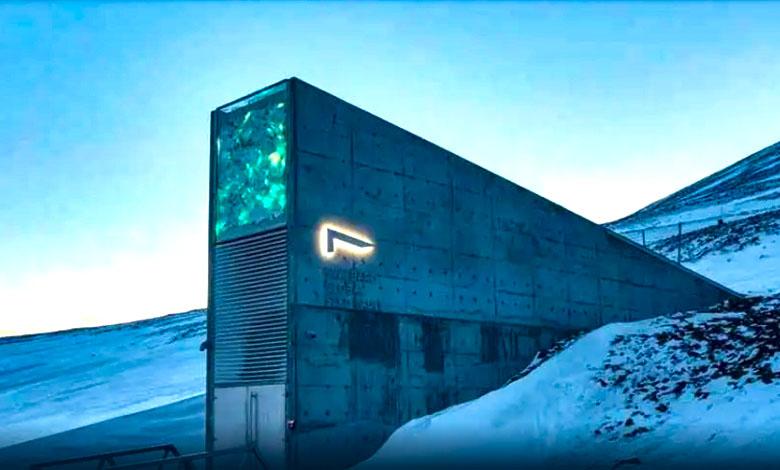
In the very heart of the Arctic, among the permafrost of the Svalbard and Svalbard archipelagos, there is a hidden treasury, which in the event of natural or man-made disasters will become a guarantee of food security for mankind. The World Seed Vault, known as the Doomsday Vault, recently celebrated its 17th anniversary and once again received replenishment – more than 30 thousand samples from 21 countries of the world.
This subterranean outpost of biodiversity houses over a million seed specimens and more than 6,000 plant species. The samples come from over a hundred countries and are duplicates from national and international genetic banks.
One day the genetic codes of thousands of crops may save civilization from hunger. After all, the storage facility was created in case of worst-case scenarios: nuclear war, climatic disasters, natural or man-made crises. And while the world is full of geopolitical upheavals, there is silence, stability and a mission that goes beyond modern conflicts.
This time among the new ones income this “noah’s ark of flora” – rare varieties of sorghum from Sudan, traditional cultures of Bolivia, vegetables and legumes from the Palestinians. Even in war zones, amid ruins and blockades, people continue to collect, select and send seeds that have a chance to survive all cataclysms.
Storage as an “insurance policy” for global food security
In the world exists more than 1,700 genetic banks, but many of them are vulnerable to natural disasters and wars. Thus, the National Seed Bank of the Philippines was destroyed after a flood and fire, and the banks of Afghanistan and Iraq lost all their collections.
The idea of creating a World Seed Storage in Svalbard to protect global biodiversity arose in the 1980s, when scientists and environmentalists began to recognize the threats posed by climate change, political instability, and military conflict.
Thus, agriculture is under threat due to increasingly frequent droughts, floods and other natural disasters. Wars, in particular in Iraq, Syria, and Afghanistan, led to the destruction of local genetic banks in which unique seed samples were stored. Global pandemics and economic crises have shown how fragile global food supply chains can be. All this seriously threatened the food security of mankind
In 2004, the Norwegian government decided to invest in the construction of the World Seed Storage. The project aimed to create a reliable reserve bank for the preservation of genetic material of agricultural crops from around the world. For this purpose, the largest island of the Arctic archipelago Svalbard – Svalbard was chosen. Its stable geography, low seismic activity, remoteness from military conflicts and cold climate made it an ideal place for the realization of such an idea.
Despite its Arctic remoteness, Svalbard has developed infrastructure. The main settlement of the archipelago – Longyearbyen – has an international airport that provides regular connections with mainland Norway. This simplifies the transportation of seeds to storage from anywhere in the world.
A key factor for seed preservation is a stable temperature. Svalbard’s arctic climate and permafrost ensure consistently low temperatures even in the event of power outages. This guarantees the long-term preservation of samples.
“Doomsday Repository” located 120 meters deep into the rock and 130 meters above sea level. Thanks to this location, the probability of its flooding or melting of permafrost in the near future is minimal. The complex is equipped with strong concrete walls, airtight doors, airlocks and motion sensors. To get inside, you have to go through several levels of security with combination locks.
The construction of the warehouse began in 2006, and in February 2008 it officially opened its doors. The total estimate of the project was 9.6 million dollars. The main financial donor was Norway, but international charitable foundations and corporations, including the Rockefeller Foundation, the Bill Gates Foundation, the Monsanto company, and others joined the implementation.
The Norwegian government not only ensures the stable operation of the facility, but also finances its modernization. So, after the entrance was flooded in 2016, $13 million was allocated for reconstruction.
The Global Crop Diversity Trust (Crop Trust), an international organization that takes care of the long-term support of the repository and coordinates cooperation between genetic banks of different countries, also plays an important role in financing. Funding comes from governments, charitable foundations and private donors. The Food and Agriculture Organization of the United Nations (FAO), which is responsible for transporting seeds to storage and promotes the development of international food policy, also joins.
First to Norway arrived seven thousand samples from 36 African countries. 330 kilograms of samples contained cowpea, corn, soybeans and Bambari peanuts. Later on to the program joined Indian, Mexican, Colombian, Ethiopian, Peruvian, Philippine and Syrian genetic banks.
Ukraine handed over more than 2,500 samples of wheat, chickpeas, lentils, beans, and other crops were sent to the Doomsday Vault. The shipment was made by the National Plant Genetic Resources Center in Kharkiv, which preserves domestic agricultural biodiversity. Currently, the National Genebank contains 136,200 samples of 1,197 species, of which Ukrainian varieties make up a third.
“Doomsday Storage”: a guarantee of food security or a vulnerable reserve for the future?
Fortunately, no global catastrophe has yet occurred. However, 10 years ago, Syria turned to with a request to return drought-resistant wheat, oat and grass seeds. Syrian scientists used to use the genebank in Aleppo, but because of the war in 2012 it was moved to Beirut, and the stocks dwindled. For their restoration, 130 boxes were returned out of 325 stored in Svalbard before the conflict.
This precedent demonstrated the practical value of the World Seed Bank as a guarantor of food security in the face of unforeseen crises. He also emphasized the need for international cooperation and preparation for possible global challenges that may threaten biodiversity and the sustainability of agriculture.
Today, the World Seed Repository in Svalbard is the world’s largest genetic bank of agricultural crops. The seeds are stored in vacuum containers at -18°C, and each bank sending samples receives a copy of their materials. In the event of war, natural disasters, or technical failures, countries and organizations can turn to the repository to restore lost supplies.
A sample of each type of plant contains 500 seeds. The total storage capacity is 2.25 billion grains, which allows to accommodate all unique samples from the world’s genebanks, as well as future acquisitions. When fully filled, it will become the largest seed repository in the world. Currently, 860,000 samples from every corner of the world are stored there.
The duration of seed storage depends on the species. For example, peas remain viable for 20-30 years, while cereals and sunflowers remain viable for tens or even hundreds of years. However, over time, the similarity still decreases. To prevent this, part of the samples are periodically planted, obtaining new seeds to replace the old ones and ensuring their long-term storage.
Priority is given to varieties of sustainable agriculture, in particular drought-resistant crops. This is especially important for countries with critical food security. The preservation of agricultural diversity is also significant. Throughout the history of mankind, about 7,000 types of plants have been used for food, but today there are only one and a half hundred, and only a dozen prevail in the daily diet. Greater diversity contributes to better adaptation of agriculture to changes. Varieties are also important: yes, there are approximately 100,000 types of rice in the world. That is why seeds of food crops are sent to the storage as a priority.
The repository functions as a “black box” – samples can be removed only in case of loss of original collections due to natural disasters, wars or other emergency situations. They can be used only in case of loss of original samples. Ownership remains with those who donated the seeds, and access without their permission is prohibited, even for the Norwegian authorities. The warehouse is opened only for replenishment, which happens several times a year.
It is worth noting: the Arctic climate, which provided natural cooling of the storage, is undergoing rapid changes due to global warming. In 2016, abnormally high temperatures caused the permafrost to melt, causing the storage entrance tunnel to flood. Although the seeds were not damaged, the incident revealed the facility’s vulnerability to climate change.
Scientists warn, that unless global warming slows down, the permafrost may lose its cooling properties and the repository will no longer have natural protection.
The repository is technically equipped with an artificial cooling system, but its energy dependence becomes a new threat: what will happen if, due to geopolitical or economic upheavals, the electricity supply is disrupted?
… Svalbard is not just an ice island in the Arctic Ocean. It is a symbol of hope, the last bastion of humanity’s food heritage. In a world where wars, climate change and disasters destroy national genetic banks, this repository remains the guarantee that even in the worst times, humanity will not lose its food future.
It is not just waiting for the end of the world – it is already working as an insurance against famine and crises. About a million seed samples are stored here, which can save agricultural systems after any disaster. And the more countries join this initiative, the stronger this protection becomes.
Tetyana Viktorova


