
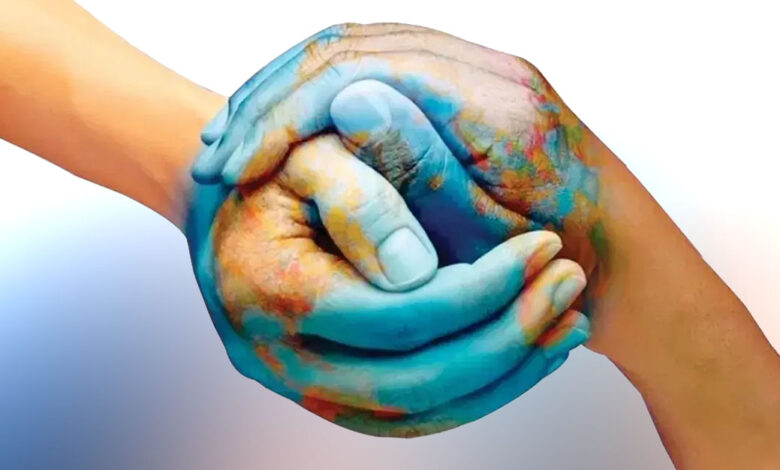
February 4th is celebrated as International Human Fraternity Day, World Cancer Day, World School Play Day and Facebook’s Birthday. In different eras, important political decisions were made on this day, cultural premieres and scientific discoveries took place that influenced the development of entire countries and cities.
International Human Fraternity Day
This day was introduced by the UN General Assembly at the end of December 2020. It is timed to coincide with the signing of the Document on Human Fraternity, which was signed in Abu Dhabi in 2019 by Pope Francis and Grand Imam Ahmad al-Tayyeb.
This day is designed to remind people of the importance of respect between people regardless of nationality, religion or origin, as well as the need for cooperation between communities to reduce discrimination and intolerance. UN documents emphasize the maintenance of peace, the development of education, the protection of human rights and the prevention of conflicts arising from hostility and prejudice.
Interesting facts
In 2019, the Document on Human Fraternity was signed in the UAE capital Abu Dhabi during the first-ever visit of the Pope to the Arabian Peninsula.
The name of the day was officially established by the UN General Assembly resolution A/RES/75/200, adopted on December 21, 2020, which established February 4 as an annual date.
In 2021, the UN first presented the Human Fraternity Prize, and among its first laureates were António Guterres and Moroccan activist Latifa Ibn Ziaten, who created an organization against the radicalization of youth after the death of her son in a terrorist attack.
In Abu Dhabi, there is the Abrahamic Family House complex, where a mosque, a church and a synagogue are located nearby – this is one of the most famous modern symbols of the idea of coexistence of different religions, connected with the spirit of the 2019 document.
The document on human fraternity contains a separate paragraph on the protection of places of worship, emphasizing that attacks on temples, churches, mosques and synagogues are a crime that must be condemned at the international level.
In Ukraine, one of the most famous historical traditions of coexistence of different cultures is associated with multinational cities, in particular Odessa, Chernivtsi and Lviv, where Orthodox, Catholic, Jewish and Muslim communities operated side by side at different periods.
Chernivtsi is considered one of the most multicultural cities in Ukraine: here in the 19th and 20th centuries, Ukrainian, Romanian, Jewish, German and Polish cultural communities developed in parallel, and the city had a reputation as a “little Vienna” in Eastern Europe.
Lviv had one of the largest Jewish communities in the region before World War II, and the city was an important center of Jewish education, religious life, and printing, which left a noticeable mark on the city’s history.
The Crimean Tatars, the indigenous people of Crimea, have a unique tradition of hospitality and mutual assistance, and Crimean Tatar culture was formed over centuries in contact with Ukrainian, Greek, Armenian, and Turkish environments.
In the 1920s, Ukraine had a state policy of “indigenization” that supported the development of the languages and cultures of national communities, including schools and publishing houses, which became one of the largest examples of official support for multilingualism in the history of the region.
Kyiv has preserved monuments that show the city’s multi-confessional nature: alongside Orthodox shrines, there were Catholic churches, Karaite kenas, and synagogues, which shaped the religious map of the capital since the 19th century.
One of the most famous examples of saving people during the Holocaust is the story of Metropolitan Andrey Sheptytsky and his brother Klymenty, who helped save Jews during the Nazi occupation, hiding them in monasteries and providing documents.
Ukraine is on the list of countries where the contribution of the Righteous Among the Nations is officially recognized, and hundreds of Ukrainians have this title for saving Jews during the Holocaust, which is one of the highest rates in Europe.
In the international context, the idea of human brotherhood is partly based on the historical experience of interreligious contacts in the Mediterranean, where in different eras cities could be simultaneously centers of Christianity, Islam and Judaism, maintaining trade and education even in times of conflict.
In some countries, there are laws that are directly related to the principles of brotherhood and equality, for example, norms that oblige public institutions to provide access to services in several languages for national communities, and this practice has become one of the foundations of modern integration policies.
In the 20th century, the term “human brotherhood” was actively used not only in religious texts, but also in documents of the human rights movement after World War II, when the concept of universal human rights was formed as a response to mass crimes and genocides.
World Cancer Day
This day was established to unite efforts in combating cancer. The date is associated with the adoption of the Paris Charter against Cancer in 2000, which called on states to actively develop prevention, diagnosis and access to treatment.
This day emphasizes the importance of early detection of cancer, patient support and the development of modern medicine, including chemotherapy, radiotherapy, targeted therapy and immunotherapy. A significant part of oncological diseases is associated with risk factors that can be reduced, in particular smoking, obesity, physical inactivity, alcohol consumption and infections that provoke the development of tumors.
Interesting facts
Cancer is not a single disease, this word unites more than 200 different oncological diagnoses, and even tumors in the same organ can have a completely different nature, growth rate and response to treatment.
Some types of cancer can be caused by viruses, and this is a proven fact: for example, the human papillomavirus (HPV) can cause cervical cancer, and the hepatitis B and C viruses significantly increase the risk of liver cancer.
Vaccination really reduces the risk of oncology: vaccinations against HPV and hepatitis B are considered one of the few medical methods that directly prevent the development of certain types of cancer before the disease appears.
Immunotherapy has become one of the most high-profile breakthroughs in modern oncology, because it does not attack the tumor directly, but “teaches” the immune system to recognize cancer cells and destroy them, although it is not suitable for all diagnoses.
One of the most unusual treatment methods in the history of oncology is associated with accidental observations: back in the 19th century, doctors noticed that tumors in some patients shrank after severe infections with high fever, which later became one of the impetuses for the development of the idea of immunotherapy.
Cancer can even occur in animals, and in the wild it is not uncommon: for example, mammary tumors are common in dogs, and in Tasmanian devils there is a unique case of contagious cancer transmitted through bites.
There are hereditary forms of oncology that are associated with gene mutations, such as BRCA1 and BRCA2, which significantly increase the risk of breast and ovarian cancer, and in such cases, prevention may include increased medical monitoring or even preventive surgery.
The most common cause of lung cancer in the world is smoking, but there is another important factor: radon, a naturally occurring radioactive gas that can accumulate in basements and homes and increase the risk of cancer.
Some tumors can be asymptomatic for years, which is why screening is crucial: colon cancer, cervical cancer, or breast cancer can often be detected before pain or obvious problems appear.
Cancer in children occurs much less frequently than in adults, but pediatric oncology has its own characteristics: leukemia and brain tumors occur more often in children, and many of them are better treated than similar diagnoses in adults.
Ukraine is one of the countries where the problem of late detection of oncology remains one of the most acute, because a significant part of patients consult a doctor already at stages when treatment becomes more difficult and expensive.
In Ukraine, one of the most famous oncology centers is the National Cancer Institute in Kyiv, which has been operating since the first half of the 20th century and is a basic institution for the treatment of complex cases and the training of specialists.
After the accident at the Chernobyl nuclear power plant in Ukraine, the number of cases of thyroid cancer among those who were children or adolescents in 1986 increased significantly, and this is one of the best-documented examples of the impact of radiation on cancer statistics in the world.
Ukraine has a bone marrow transplantation system, which is critically important for the treatment of some forms of leukemia, and in recent years the number of such operations has gradually increased, although the need is still much greater than the possibilities.
Oncological diseases are often accompanied not only by physical, but also by psychological consequences, and it has been proven worldwide that the support of psychotherapy and palliative care improves the quality of life of patients even when the disease cannot be completely cured.
In medicine, there is a concept of “remission”, and it does not always mean final recovery: some types of cancer can return after years, so patients often remain under the supervision of doctors for life.
Scientists have discovered that some tumors have specific genetic “signatures”, and this is what has allowed the development of personalized medicine, when treatment is selected not only by the affected organ, but also by specific mutations in cells.
Some cancers have very high survival rates when detected early, such as cervical cancer or skin cancer, but can be fatal if detected late, which is one of the reasons why screenings can really save lives.
Skin cancer can be linked to sun exposure, and melanoma is one of the most aggressive types of cancer, often starting as a small spot, so being aware of changes in moles is an important part of self-monitoring.
Modern cancer treatments include high-precision radiation therapy, which can “highlight” the tumor almost in a jewel-like way, reducing damage to healthy tissue, which was almost impossible a few decades ago.
World School Play Day
This day was created as a reminder that play is an important part of childhood and a necessary condition for normal development. On this day, attention is drawn to the fact that schoolchildren often have an excessive academic load, and free time gradually disappears due to clubs, additional classes and constant monitoring of performance.
The idea of this day is to return to children the opportunity to play freely without grades and clear rules, because it is during the game that social skills, imagination, the ability to work in a team and make decisions independently develop. For many children, the game becomes a way to relieve stress, and also helps them adapt more easily to learning and communication in a team.
Interesting facts
World School Play Day originated in the USA as an initiative of teachers and parents who opposed the fact that schools had less and less time for breaks, outdoor games and ordinary children’s communication.
This day does not have a fixed date in the UN calendar, and schools in different countries choose the day for it themselves, but most often it is celebrated on the first Wednesday of February.
One of the main principles of World School Play Day is the complete rejection of adult control over play: teachers do not organize activities, do not offer scenarios or set rules, and children decide for themselves what and how to play.
Educators who support this initiative emphasize that play should not be a “reward” after studying, but a natural need that directly affects the development of the brain, speech and emotional stability.
In many countries around the world, the length of school breaks has been reduced over the past decades, and the amount of homework has increased, and this is one of the reasons for the emergence of such a day.
Studies in educational psychology show that children who regularly have the opportunity to play freely are more likely to show initiative, adapt faster to the team and resolve conflicts more easily without adult intervention.
Free play differs from clubs or sections in that it does not have the goal of “achieving a result”, which is why it is especially useful for reducing anxiety in children who live in a constant evaluation mode.
In Scandinavian countries, play is an important part of school culture, and in many schools, children have long breaks during which they are outdoors regardless of the weather, which is considered the norm for healthy development.
In Japan, traditional school games are often associated with collective outdoor games, and there is a whole culture of team games in the yards, which are passed down between generations of students without the participation of teachers.
In Ukraine, the culture of yard and school games has long been a part of everyday life, and many popular games, such as “kvach”, “rubber bands”, “classics”, “knockout” or “hide and seek”, have existed for decades as an informal tradition that children spread among themselves.
After 2022, attention to the psychological state of children in schools has increased in Ukraine, and game activities are increasingly used as a way to reduce stress and tension, especially among children who have experienced evacuation or life in front-line regions.
In pedagogy, there is a concept of “game competence,” and it means a child’s ability to independently invent rules, negotiate with others, and maintain the plot of the game, and modern teachers increasingly recognize that this skill is no less important than academic knowledge.
In some schools around the world, children are specifically allowed to play with “imperfect” materials — boxes, ropes, branches, old fabrics — because such things stimulate imagination much more than ready-made toys with a clear purpose.
Neuropsychologists note that during active play, a child’s brain trains the same mechanisms that are later needed for learning: concentration, reaction speed, spatial thinking, and the ability to plan actions in advance.
World School Play Day is often compared to a “silent protest” against excessive control of childhood, since its idea is not to add another event to the school calendar, but to return to children the right to be children for at least one day.
Facebook Birthday
On February 4, Facebook was launched – one of the most influential social networks in the world. The platform was created in 2004 by Mark Zuckerberg together with several students from Harvard University and initially operated as a closed network only for students of this educational institution.
Over time, Facebook became a global service that significantly influenced Internet culture, communication, news, advertising and political processes. The social network was the first to popularize the idea of a “feed” as the main way to consume content, and also turned personal pages into a digital business card that stores photos, events, contacts and a person’s activity history.
Interesting facts
The first name of the platform was TheFacebook, and only in 2005 was the article removed from the name, after which the service became known as Facebook.
The domain facebook.com was purchased for $200,000, which was a huge sum for a student startup at the time, but it was this move that helped make the brand recognizable around the world.
At first, registration required a university email address, and only Harvard students had access, but within a few weeks the network had spread to other prestigious US universities.
Initially, Facebook had no news feed or likes; users simply visited friends’ pages, viewed profiles, and left messages on their “walls.”
The news feed didn’t appear until 2006, but it caused a wave of outrage because people believed that Facebook was showing their activity to other users too much.
The “Like” button was launched in 2009, and it became one of the most influential elements of digital culture, essentially changing the way people express support and evaluate content on the Internet.
Facebook initially considered an “Awesome” button, but ultimately scrapped the idea because the word could sound too emotional and wasn’t appropriate for all situations.
In the early years, there was a “Poke” feature that was almost meaningless, but it became a popular way to get attention without a message and even became a kind of Internet joke.
One of the most unexpected changes Facebook has made is that it has transformed from a network for friends into a large-scale platform for business, media, and political campaigns, and advertising has become its main source of income.
In 2012, Facebook acquired Instagram, which at that time seemed risky, but later the purchase became one of the most successful deals in technological history.
In 2014, Facebook bought WhatsApp for about $ 19 billion, and this amount was shocking even for the IT market, because the service had minimal monetization, but a huge audience.
Одна з найвідоміших історій про ранній Facebook пов’язана з тим, що спочатку Марк Цукерберг створив сайт Facemash, де студенти оцінювали зовнішність інших студентів, і цей проєкт швидко закрили через скандал із приватністю.
Facebook став одним із перших сервісів, який масово запровадив алгоритмічну стрічку, коли користувач бачить не всі публікації друзів, а лише ті, які система вважає найбільш цікавими.
Україна довгий час була однією з небагатьох країн Європи, де Facebook не був головною соцмережею, оскільки значну частину аудиторії утримували російські платформи «ВКонтакте» та «Одноклассники».
Після блокування російських соцмереж в Україні у 2017 році Facebook різко збільшив свою популярність і став основним майданчиком для новин, волонтерських зборів, громадських ініціатив та публічних дискусій.
Під час Революції Гідності Facebook відігравав важливу роль як інструмент самоорганізації, поширення інформації та координації дій, ставши однією з ключових платформ для громадянської активності.
Facebook став однією з перших соцмереж, де в Україні масово почали розвиватися локальні спільноти за інтересами — від міських груп до волонтерських ініціатив, і це суттєво вплинуло на культуру онлайн-комунікації.
У 2021 році компанія Facebook офіційно змінила назву на Meta, але сама соцмережа Facebook залишила стару назву і продовжила існувати як окремий продукт у складі корпорації.
У Facebook існує функція «On This Day», яка показує спогади за минулі роки, і вона стала одним із найемоційніших механізмів платформи, бо часто нагадує людям про події, які вони давно забули або не хотіли згадувати.
Деякі з найпопулярніших мемів та інтернет-трендів 2010-х років починалися саме у Facebook-групах, а не в TikTok чи Twitter, хоча зараз це часто забувають через зміну цифрових платформ.
Історичні події в цей день
960 — на престол зійшов Чжао Куан’їнь, який заснував китайську династію Сун і став одним із правителів, що започаткували новий етап централізації держави. Його прихід до влади ознаменував завершення періоду роздробленості й став стартом тривалого політичного та культурного розвитку Китаю.
1690 — собор Російської православної церкви проголосив анафему так званій «хлібопоклонницькій єресі», а також засудив низку богословських праць українських авторів, серед яких були Петро Могила, Кирило Ставровецький, Іоаникій Галятовський, Лазар Баранович, Антін Радивиловський та Єпіфаній Славинецький. Це рішення стало прикладом того, як церковні постанови використовувалися для боротьби з інтелектуальним впливом української духовної традиції.
1703 — в Едо 47 самураїв-ронінів здійснили сепуку після того, як виконали помсту за смерть свого господаря. Ця історія перетворилася на один із найвідоміших сюжетів японської культури, який став символом відданості, честі та суворого кодексу бусідо.
1708 — відбулося перше виконання кантати Йоганна Себастьяна Баха Gott ist mein König (BWV 71), яка стала особливою в його творчості, адже була надрукована за життя композитора. Твір написали для урочистої події в Мюльгаузені, і він відразу засвідчив рівень Баха як майстра складної музичної архітектури.
1789 — у Філадельфії виборці, які представляли 10 з 11 штатів, що ратифікували Конституцію США, одноголосно обрали першого президента Сполучених Штатів. Джордж Вашингтон отримав 69 голосів, що стало важливим моментом формування американської державної системи та її політичних традицій.
1793 — відбувся Другий поділ Речі Посполитої, внаслідок якого Волинь і Поділля були приєднані до Російської імперії. Ця подія стала частиною масштабного знищення польсько-литовської державності та змінила історичний шлях українських земель на десятиліття вперед.
1859 — німецький дослідник Костянтин Тішендорф виявив у монастирі святої Катерини на Синаї один із найцінніших рукописів християнської традиції — Синайський кодекс. Знахідка стала сенсацією для біблійної текстології, адже рукопис містив ранні варіанти біблійних текстів грецькою мовою.
1906 — поліція Нью-Йорка офіційно ухвалила рішення застосовувати відбитки пальців для встановлення особи злочинців. Це стало важливим кроком у розвитку криміналістики та закріпило метод, який згодом перетворився на стандартну практику в правоохоронних системах усього світу.
1941 — було запатентовано тефлон, який згодом став одним з найвідоміших синтетичних матеріалів XX століття. Його унікальні властивості — стійкість до високих температур і хімічних впливів — зробили тефлон важливим не лише для побуту, а й для промисловості та космічних технологій.
1943 — у Цюриху відбулася прем’єра п’єси Бертольда Брехта «Добра людина із Сезуана», яка стала однією з ключових робіт драматурга. У творі Брехт досліджував моральний вибір людини в суспільстві, де чесність часто перетворюється на небезпеку.
1944 — у Парижі вперше поставили «Антігону» Жана Ануя, яка стала одним із найпомітніших переосмислень античного сюжету у XX столітті. П’єса прозвучала особливо гостро в умовах окупованої Франції, коли тема спротиву та особистої позиції набувала реального політичного змісту.
1945 — у Лівадії в Криму розпочалася Ялтинська конференція, на якій зустрілися лідери США, Великої Британії та СРСР. Переговори визначили ключові принципи завершення Другої світової війни й окреслили модель післявоєнного світу, яка фактично заклала основу майбутнього поділу Європи.
1948 — британська колонія Цейлон отримала незалежність у складі Співдружності націй. Цей день став початком нової державної історії країни, яка згодом отримала назву Шрі-Ланка.
1961 — з Анголи почалася колоніальна війна Португалії проти африканських національно-визвольних рухів. Конфлікт став одним із найтриваліших у процесі деколонізації Африки та поступово виснажив ресурси Португалії, наблизивши падіння її колоніальної системи.
1969 — Ясір Арафат очолив Організацію визволення Палестини, ставши ключовою фігурою палестинського політичного руху. Його керівництво визначило стратегію ОВП на десятиліття й зробило організацію впливовим учасником близькосхідної політики.
1970 — було засновано місто Прип’ять, яке будували як сучасний населений пункт для працівників Чорнобильської АЕС. За короткий час воно стало одним із наймолодших і найперспективніших міст УРСР, а згодом перетворилося на символ катастрофи та покинутого життя.
1971 — британська компанія Rolls-Royce оголосила про банкрутство, що стало шоком для економіки країни та промислового сектору. Причиною стали фінансові проблеми під час розробки авіаційних двигунів, і держава була змушена втрутитися, щоб зберегти стратегічне виробництво.
1974 — після двох років навчання шимпанзе на ім’я Нім Чимскі в США написав перше слово в межах експерименту з вивчення мовної поведінки приматів. Дослід став відомим у світі, але згодом викликав гострі дискусії щодо меж тваринного мислення та етики таких експериментів.
1992 — Уго Чавес здійснив спробу державного перевороту у Венесуелі, яка завершилася провалом, але зробила його відомим на всю країну. Саме після цієї події він перетворився на політичного лідера, а в 1999 році став президентом.
1998 — у Брюсселі в обличчя Білла Гейтса влучили тортом під час публічного заходу, і цей інцидент миттєво став медійною сенсацією. Випадок часто згадують як приклад протестної культури кінця 1990-х та ставлення до великих технологічних корпорацій.
2005 — Верховна Рада України затвердила Юлію Тимошенко на посаді прем’єр-міністра України. Це рішення стало важливою подією після Помаранчевої революції та вплинуло на подальшу політичну конфігурацію країни.
2021 — у Запоріжжі сталася пожежа в обласній клінічній інфекційній лікарні, внаслідок якої загинули четверо людей, ще двоє постраждали. Трагедія набула широкого розголосу й стала одним з найболючіших випадків, пов’язаних з безпекою медичних установ.


