February 5 is celebrated as the Day of the State Special Transport Service, the International Day of the Optimist and the Day of the Erudite. In different years, this day became the date of decisions, discoveries and tragedies that significantly influenced politics, culture, science and the life of entire countries.
Day of the State Special Transport Service
By the Decree of the President of Ukraine No. 14/2025, a new professional holiday was officially introduced in Ukraine – the Day of the State Special Transport Service, which will be celebrated annually on February 5. The date consolidates state recognition of the work of the service, which is responsible for performing special transport tasks and supporting the transport system in conditions of increased risks.
The State Special Transport Service is involved in work related to ensuring the functioning of communication routes, transport infrastructure facilities and organizing transportation in critical situations. During the war, the role of the service became a practical necessity, since the stable operation of transport directly affects logistics, evacuation, supply and restoration of damaged areas.
Interesting facts
Units of the State Special Transport Service of Ukraine perform tasks not only on the railway: they can work with highways, bridges, access tracks, crossings, as well as objects without which the stable movement of goods and equipment is impossible.
Ukrainian railway bridges are one of the most difficult objects to repair during hostilities, because even minor damage to supports or spans can completely stop traffic on a strategic route. In such cases, temporary restoration of traffic becomes critical – sometimes at the expense of workarounds and quick engineering structures.
Railway logistics remains the most effective for mass transportation: one freight train can replace hundreds of trucks, which significantly reduces the load on the roads, fuel consumption and delivery time over long distances.
Ukraine has one of the largest railway networks in Europe, but its peculiarity is the wider gauge of 1520 mm, which differs from the European standard of 1435 mm. Because of this, it is necessary to either change wagon bogies or reload goods on the western border, which makes border infrastructure strategically important.
There are sections of railway in Ukraine where, in critical situations, temporary detours can be quickly created or short technical branches laid to preserve the supply route, even if the main line is damaged.
Railway tracks are often repaired faster than road bridges, because damaged rails and sleepers can be replaced modularly, and restoring the roadbed usually requires more materials and time to compact the base.
There are special military transport units in the world that are able to restore the railway literally while the front is moving. In some countries, special repair trains with cranes, workshops, a supply of rails and sleepers that can operate autonomously are used for this.
During World War II, the speed of restoring railways often determined the pace of the armies’ offensive, because it was the railway that provided a massive supply of ammunition, fuel and food. Because of this, railway junctions and bridges were one of the main targets for strikes.
In Europe, there are bridges that have hidden structural elements for quick closing or undermining in case of threat to stop the enemy’s advance. Such solutions were laid back in the 20th century and were preserved as part of the defense infrastructure.
The longest railway tunnels in the world were built for decades, but during emergencies, even small tunnels can become critical objects, because their repair is much more difficult than repairing an open section of track due to ventilation, groundwater and the risk of collapse.
In Ukraine, there are railway stations and junctions that are of strategic importance due to the possibility of redistributing flows between different directions. In the event of damage to one route, such junctions allow you to quickly organize bypass transportation without completely stopping logistics.
Field crossings and temporary bridges can be assembled from ready-made sections in a matter of hours or days, depending on the conditions and length of the span. In the world, modular systems are used for this, which are transported by truck or rail and are installed without a complex foundation.
Railway switches are one of the most vulnerable elements of infrastructure, because they are more complex than a regular track and have moving mechanisms. Their damage can paralyze the operation of the station even when the rails themselves on the approaches remain intact.
In some countries, there are special units that are engaged not only in repairing tracks, but also in demining railway sections. This is a separate level of work, since explosive objects on the tracks can be disguised and pose a threat even after the resumption of traffic.
During major disasters in the world, there have been cases when railway routes became the main means of evacuation, because highways were blocked or destroyed. In such situations, the restoration of even one bridge or span could affect the salvation of tens of thousands of people.
In modern warfare, transport infrastructure has become part of the struggle for the stability of the state, so repair and engineering services actually operate in a constant state of readiness. This often requires not only construction resources, but also clear coordination of traffic so as not to stop transportation completely even during repairs.
International Optimist Day
This is an unofficial international date associated with the idea of supporting positive thinking, faith in one’s own strength and the ability of a person to find solutions even in difficult circumstances.
On this day, initiatives aimed at supporting young people are carried out in different countries: volunteer programs, training sessions, mentoring projects and practical classes that help develop skills, confidence and motivation. Most often, such activities are organized by communities that work with adolescents and young people.
Interesting facts
In psychology, optimism is considered not as a character trait, but as a style of thinking: a person can learn a more optimistic way of evaluating events, even if he was previously inclined to pessimism.
There is a concept of “optimistic bias” – the tendency of people to believe that negative events are less likely to happen to them than to others. Because of this, people often underestimate risks, even when they have enough information.
In the 1980s, psychologist Martin Seligman formulated the concept of “learned optimism”, proving that optimistic thinking can be trained by changing internal explanations for failures.
Optimists tend to stay motivated longer during difficult tasks, but pessimists sometimes overestimate danger, so in critical areas, a cautious mindset may be more effective.
Studies show that moderate optimism is often associated with better academic and career outcomes, as people with this mindset are more likely to try again after making mistakes.
Excessive optimism can be harmful: it can lead to reckless financial decisions, gambling, and neglecting disease prevention.
In Ukraine, during a full-scale war, psychologists often use techniques that combine optimism with realistic planning. This is called “realistic optimism,” when a person recognizes the problem but focuses on what they can control.
Optimism is connected to physiology: in some studies, an optimistic mood has been associated with lower levels of stress hormones and better resistance to prolonged psychological stress.
In many countries, the word “optimist” has become part of the names of youth movements and clubs, but historically the term comes from the Latin optimum — “the best,” reflecting the very idea of striving for the best result.
Optimism is often confused with naivety, although psychologists distinguish between these concepts: an optimist recognizes difficulties but expects that they can be overcome, while naivety ignores real threats.
In sociology, optimism is considered an important factor in trust in society: people with more optimistic views are more likely to participate in volunteering and community initiatives.
In the history of science, many discoveries were made by people whom contemporaries called overly optimistic: for example, the idea of human flight was long considered a fantasy, but it was the belief in the possibility of the result that pushed engineers and inventors to work for decades.
A well-known paradox is that optimists are better at surviving failures, but pessimists are more likely to prepare a backup plan. Because of this, in teamwork, the combination of optimists and pessimists sometimes gives the most stable result.
In many languages of the world there are proverbs about optimism and pessimism, but the most common image — “the glass is half full or half empty” — became popular only in the 20th century, when psychologists and motivational authors began to actively use it.
Erudite Day
This is an unofficial date dedicated to people with a broad outlook, good memory and the ability to think systematically, combine knowledge from different fields and quickly find the necessary information.
The holiday is associated with respect for education, reading, self-education and intellectual work. It is remembered as an occasion to remind about the value of knowledge in everyday life, as well as the importance of developing critical thinking and the ability to analyze facts, and not just accumulate information.
Interesting facts
The word “erudite” comes from the Latin eruditus, which means “educated”, “learned”, “one who has been taught”. Originally, this was the name given to a person who had undergone thorough training in the sciences and arts.
Eruditeness is not the same as high IQ: a person can have a brilliant memory and a huge store of knowledge, but not be a genius in logic or mathematics. In psychology, erudition is more often associated with the so-called “crystallized intelligence”, which accumulates with experience.
One of the most famous examples of a universal erudite in history is Leonardo da Vinci, who simultaneously worked in painting, engineering, anatomy, architecture and mechanics. His notes contain hundreds of drawings and observations that were ahead of the technology of his time.
In the 17th and 18th centuries, there was an image in Europe of the “encyclopedia man” – a scientist who sought to know everything. Later, science became so complex that completely universal erudites became a rarity.
Ukraine has a strong tradition of universal education since the time of the Kyiv-Mohyla Academy, where students studied rhetoric, philosophy, mathematics, languages, and theology. It was one of the most powerful educational institutions in Eastern Europe.
Ivan Franko is considered one of the greatest Ukrainian erudites: he wrote works of fiction, was engaged in translations, literary studies, philosophy, ethnography, economics, and political journalism. He left behind thousands of texts and scientific works.
Mykhailo Hrushevsky was not only a historian, but also an organizer of science, a publicist, and a political figure. His multi-volume “History of Ukraine-Rus” became one of the most extensive works created by a Ukrainian scholar.
Boris Paton, the long-time head of the National Academy of Sciences of Ukraine, had a unique scientific heritage in the field of welding and materials science. His works were used in industry, energy, and even in space programs.
In the 20th century, many erudites became famous thanks to encyclopedias: in the Soviet period, the “Ukrainian Soviet Encyclopedia” was one of the main sources of systematized knowledge, and dozens of scientists worked on its materials.
Erudites often have a special style of thinking: they quickly create associations between different topics, so they can find non-standard solutions that are not obvious to narrow specialists.
There is a phenomenon in the world of “knowledge for the sake of knowledge”, when a person accumulates information without practical need. This can be a manifestation of curiosity, but sometimes it turns into an addiction to facts and constant reading of news or reference books.
In medieval Europe, knowledge was often stored in monasteries, and the most erudite people were monks who copied books by hand. A single copyist could work on a single volume for months or even years.
One of the most famous libraries of antiquity, the Library of Alexandria, was not just a repository of books, but a scientific center where mathematicians, astronomers, and philologists worked. It is believed that its collections could contain hundreds of thousands of scrolls.
In the modern world, erudition is often associated with the ability to filter information: knowing a lot has become easier than distinguishing between fact and fiction. Therefore, a modern erudite is usually strong not only in facts, but also in checking sources.
People who regularly read fiction usually have a better vocabulary and stronger language skills than those who read only short texts. That is why many erudites are formed through the habit of reading from childhood.
In some countries, television and radio quiz shows are popular, where participants demonstrate broad erudition. In such formats, it is often not those who know more who win, but those who quickly recall the necessary fact and do not get lost under the pressure of time.
Historical events on this day
1494 — the “eternal peace” was concluded between the grand princes of Lithuania and Muscovy, Alexander Jagiellon and Ivan III, which ended the Lithuanian-Muscovite border war of 1492-1494. The agreement fixed a change in the balance of power in Eastern Europe, and also became an attempt to temporarily stabilize relations between the two states, which were already competing for influence over the Rus’ lands.
1585 — the Assumption Stavropigian Brotherhood was founded in Lviv. It became one of the most famous Ukrainian bourgeois organizations of the early modern period, supporting the Orthodox community, engaged in education, book printing, and protecting the cultural rights of Ukrainians in the Polish-Lithuanian Commonwealth.
1597 — 26 early Japanese Christians were crucified in Nagasaki by order of Toyotomi Hideyoshi. This execution became a symbol of the beginning of the harsher persecution of Christianity in Japan and a telling signal that the authorities viewed the new religion as a political threat and a possible channel of foreign influence.
1783 — an earthquake struck Calabria in southern Italy, lasting almost two months. Powerful tremors and a tsunami destroyed Reggio di Calabria and about 180 other settlements, and the total death toll reached approximately 60,000. After the disaster, the situation was worsened by epidemics caused by the destruction of infrastructure and poor sanitation.
1816 — The premiere of Gioacchino Rossini’s opera The Barber of Seville took place in Rome. Despite the fact that the first performances had an ambiguous reaction from the public, the work quickly became a classic and later turned into one of the most famous comic operas in the world repertoire.
1818 — after the death of Charles XIII, Charles XIV Johan, former Marshal of France Jean Baptiste Bernadotte, became King of Sweden and Norway. This was a unique case for Europe, when a French military man and Napoleon’s ally actually founded a new royal dynasty that still rules in Sweden.
1850 — the American company Felix patented the arithmometer — a desktop mechanical calculating machine. Such devices became an important step on the way to the automation of calculations, and later to the emergence of computer technology.
1859 – Alexandru Ioan Cusa united the princely titles of Moldavia and Wallachia. This decision was a key political step towards the formation of a single state, which later became modern Romania, changing the map of the region.
1861 – In Philadelphia, Coleman Sellers patented the kinematoscope. Such inventions were among the early attempts to create devices for reproducing moving images, which became the basis for the development of cinema as a mass art.
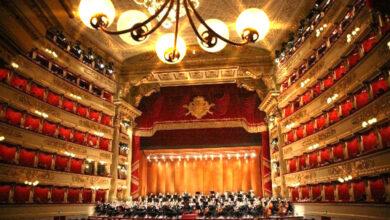
1887 – Giuseppe Verdi’s opera Otello premiered at La Scala in Milan. It was one of the composer’s most powerful late works, proving that Verdi was able to combine classical Italian opera with the drama of Shakespearean plots.
1899 — during the Philippine-American War, the Battle of Manila ended in a US victory. The event became part of a larger conflict that arose after the Philippines came under American control and led to a long war with great human losses.
1904 — US troops left Cuba after six years of occupation. Cuban President Thomas Palma publicly thanked the American side, but US influence on the island’s politics remained significant for a long time and actually determined many decisions of the Cuban government.
1913 — in Lviv, Ukrainian academic societies organized a large academic ball in the hall of the Ukrainian People’s House. This was one of the notable manifestations of the active student and cultural life that was then shaping the future intellectual elite of Western Ukraine.
1917 — the current Constitution of Mexico was approved, which became the first in the world to enshrine social rights at the level of the basic law. The document contained provisions on labor guarantees, land reforms, and restrictions on the influence of large landowners.
1918 — in Kyiv, the Council of People’s Ministers of the UNR approved a plan to create a registered “Free Cossacks”. The idea was to form local internal security structures that were to maintain order in the counties in conditions of war and instability.
1918 — the commander of the troops of the People’s Secretariat of the Ukrainian SSR, Mykhailo Muravyov, gave the order for a general offensive on Kyiv. That day, the assault on Pechersk began from several directions, the working-class neighborhoods were occupied, and some units were able to break through closer to the central districts of the city.
1918 — the UNR troops left the Kozyatyn station. It was an important transport hub, the loss of which complicated the logistics and movement of troops in the central part of Ukraine.
1918 — The Central Executive Committee of the Rumcherod Soviets published a resolution declaring a state of war with Romania and announcing the mobilization of volunteer units and a transport flotilla in Odessa and a number of counties. The document demonstrated the level of conflict in the south of the former empire after the revolutionary events.
1919 — The first regular passenger airline in Europe, Deutsche Luft-Reederei, opened in Germany, connecting Berlin and Weimar. The event was an early step in the transformation of aviation from an experimental industry to commercial transport.
1919 — Under pressure from the Bolshevik forces, Ukrainian troops, in particular the Sich Rifle Corps, finally left Kyiv. This became one of the turning points in the struggle for control of the city during the Ukrainian Revolution.
1919 — A delegation from the Kyiv Soviet of Workers’ Deputies arrived in Brovary under the banner of the Red Cross, announcing the abandonment of Kyiv by the UNR troops. On the same day, regiments under the command of Mykola Shchors and Bozhenko entered the capital, marking a change of power.
1919 — In Kharkiv, the RNK of Ukraine adopted the Provisional Regulation on the Organization of Local Bodies of Soviet Power. The document determined that the highest local authority should be the provincial, district, and volost congresses of soviets.
1919 — Charlie Chaplin, Mary Pickford, Douglas Fairbanks, and David Work Griffith founded the United Artists film studio. This was an important step in the struggle of actors and directors for control over their own films and income in an industry dominated by large studios at the time.
1924 — The BBC began transmitting precise time signals from the Greenwich Observatory. This helped standardize time for transport, industry, and radio broadcasting, which was of great importance for the development of modern synchronization systems.
1926 — An armed attack on Soviet diplomatic couriers T. Nette and I. Mahmastal occurred in Latvia, during which Nette was killed and Mahmastal was wounded. The event became the basis for a separate day of remembrance for diplomatic couriers who died in the performance of official duties.
1928 — German chemist Adolf Windaus first synthesized vitamin D. This was an important achievement in medicine, since vitamin D deficiency is directly related to the development of rickets and impaired bone formation.
1935 — in New York, the organizers of professional boxing adopted a rule that championship fights could not last more than 15 rounds. This decision was related to the danger of excessive exhaustion of athletes and the increase in deaths in sports.
1936 — in the USA, Charlie Chaplin’s film “Modern Times” was released. The film became one of the sharpest satires on industrialization, unemployment and mechanization of labor, as well as one of Chaplin’s last great silent and sound experiments.
1946 — the treaty between the USSR and Poland on the Soviet-Polish state border came into force. It legally fixed the post-war changes that led to mass resettlement and a radical revision of the ethnic map of the region.
1952 — New York became the first city in the world to use three-color traffic lights in a modern format. This significantly influenced the standardization of traffic, which was later adopted by other countries.
1953 — Disney’s cartoon “Peter Pan” premiered at New York’s Roxy Theatre. The film quickly became an animation classic and one of the studio’s most successful projects of the mid-20th century.
1956 — The VII Winter Olympic Games in Cortina d’Ampezzo ended. These competitions were among the first to receive wider television coverage and established the Winter Olympics as a major media project.
1958 — During military exercises off the coast of Georgia in the United States, a hydrogen bomb was lost after a plane crash. It was never found, and this case still remains one of the most famous episodes of the disappearance of nuclear weapons in history.
1960 — a resolution was adopted to establish the Peoples’ Friendship University in Moscow, which since 1961 has been named after Patrice Lumumba. It became one of the main centers for training students from Asia, Africa, and Latin America for the Soviet system of influence.
1971 — the NASDAQ stock index appeared, which became one of the first large-scale examples of an electronic quotation system. Later, NASDAQ became the main platform for companies in the technology sector.
1977 — the leaders of the Ukrainian Helsinki Group, Mykola Rudenko and Oleksa Tykhyi, were arrested. This was part of another wave of repressions against the Ukrainian human rights movement, which tried to act legally, referring to the international agreements of the USSR.
1979 — Argentina opened the Antarctic research station Belgrano II. It became one of the southernmost stations in the country and an element of the struggle of states for a presence in the Antarctic region.
1982 — the British government imposed economic sanctions against the USSR in connection with the events in Poland. This was part of the political pressure of the West on the Soviet bloc during the aggravation of the Cold War.
1986 — the USSR adopted resolutions on the creation of cooperatives in the sphere of consumption, public catering and services. This decision became one of the signals of economic restructuring, allowing limited forms of private initiative in a system where it had long been prohibited.
1989 — the pan-European Eurosport television channel began broadcasting. It became one of the first major sports media projects that worked for an audience of many countries at once and helped to popularize European tournaments.
1991 — the capital of Kyrgyzstan, which had been called Frunze for 65 years, was renamed Bishkek. Such renamings were typical of the post-Soviet space as a symbolic break with the Soviet legacy.
1992 — Ukraine established diplomatic relations with Norway. This was part of the formation of the foreign policy network of an independent state and the search for partners in Europe after the collapse of the USSR.
1994 — a 120-mm mortar shell exploded at the Markale market in Sarajevo, killing 68 people and injuring another 144. The shelling became one of the most resonant episodes of the Bosnian War, and the issue of responsibility for it remained politically sensitive for a long time.
1998 — in Simferopol, the Deputy Chairman of the Council of Ministers of Crimea, Alexander Safontsev, was mortally wounded in an explosion. The incident became one of the most high-profile criminal episodes of the late 1990s in the region.
1999 — Mike Tyson received a year in prison for beating two people after a traffic incident. Although he served only a few months, the case once again confirmed his reputation as an athlete with constant problems with the law.
2000 — St. Petersburg riot police carried out a mass murder of civilians in Chechnya, killing dozens of people. This tragedy became one of the most serious crimes associated with the second Chechen war, and is still remembered as an example of the brutality of power operations.
2005 — The Crimean Tatar radio station Meydan went on the air for the first time. This was an important step for the development of media in the Crimean Tatar language and support for the cultural identity of the people.
2009 — Somali pirates released the ship Faina after receiving a ransom of $3.2 million. There were 17 Ukrainians on board, and the capture of the ship became an international scandal due to the cargo and the long-term captivity of the crew.