
How Ukrainian teenagers resisted in the Russian “re-education” camp and did not break

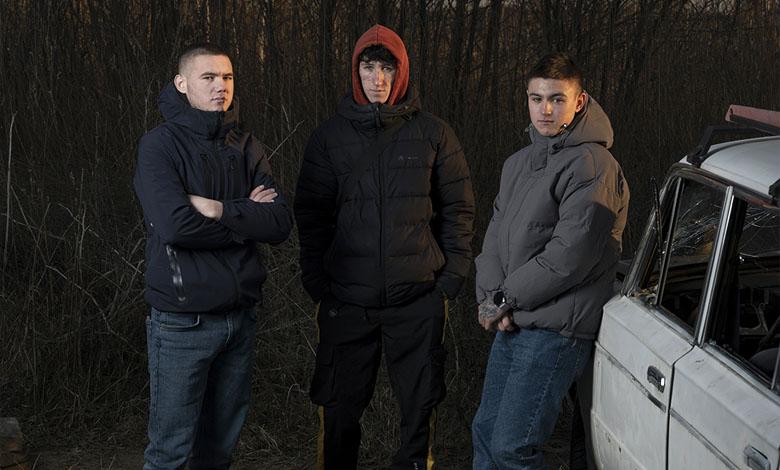
More than three years of war in Ukraine are not only stories of battles, occupations and liberations. These are also the tragedies of children who were torn from their families, schools and homes by the war. According to official data, over 19,000 Ukrainian children were forcibly deported by Russia from the occupied territories. Some of them – under the guise of “evacuation” or “rehabilitation”, some – without the consent of the parents. Children were placed in Russian families, boarding schools, special institutions, where they tried to break their identity. The most conscientious ones were re-educated in camps where there was an atmosphere of pressure, isolation and coercion to the “Russian world”. About this informs Political.
Camp “Druzhba” in Crimea
A fictional world where “Ukraine no longer exists”, children were forced to sing the national anthem of the Russian Federation, flags, propaganda videos, attempts to change their names, to force them to take Russian passports. But many teenagers did not give in. They organized riots, defaced the symbols of the Russian Federation, refused to sing someone else’s national anthem, and even slept in bathrooms so as not to go to exercise. They were isolated, intimidated, transferred to psychiatric hospitals and military schools. But they were not silent. And when they could, they ran away. This is what happened to Vlad, Denis, Sergey and Rostyk. Their story is one of the few that ended with a return home. But it was a long, dangerous and difficult struggle – for my own childhood, for my memory, for myself.
It all started when the Russian military took teenagers from Kherson to the Druzhba camp in Yevpatoria. They called it “rest”, but the children quickly realized that they would not be allowed back. Vladyslav Rudenko, Rostislav, Denys and Serhii — they all ended up in one of the hundreds of Russian “places of re-education”. About 600 Ukrainian children were already there.
In November 2022, 16-year-old Vlad tore down the Russian flag from the stage in the camp’s assembly hall. In its place, he hung up his underwear, and he tore the flag of the Russian Federation and flushed it down the toilet. The next morning, the whole camp was buzzing because of the “profanation of the state symbol.” Vlad managed to avoid exposure for several days, but on the fourth he was betrayed by his roommate. Camp guard Valery Astakhov forced Vlad to choose: the police or solitary confinement. Vlad chose the isolation ward. He was kept for six days in a room 2 by 2 meters, without a phone, with a barred window. They threatened a mental hospital, gave pills. He could not stand the isolation, knocked on the walls, shouted, begged his mother on the phone: “I feel bad here. I can’t do it anymore. Do something.”
When he was released, he was as if in prostration. A few days later, he took down the flag of the Russian Federation again. Counselors moved him to younger children to isolate him from his friends. There, he heard how at night the children shouted “Mom!”, and they were ordered to be silent.
Transfer to the Luchystiy camp
In December, everyone was transferred to the Luchystiy camp. The resistance continued: the boys turned on the national anthem of Ukraine and Zelensky’s address from the balconies. One of them, Denis, slept in the bathroom to avoid charging. The boys understood that they would not be back soon, but they wanted to at least not be silent. For trying to escape or turning to international organizations, they could end up in a boarding school, mental hospital or colony.
At the same time, the pressure continued on families. Parents were openly told: “If you want a child, come yourself.” But, for example, Denys’ parents were hearing impaired and were afraid of a conflict with armed Russians at checkpoints. Serhiy’s parents had health problems. According to the occupation authorities, Rostyk’s mother was in a psychiatric hospital.
The college in Kerch is a new level of control
Then the boys were transferred to the Kerch Maritime Technical College. Rostyk and Serhiy lived in the same dormitory, Denys in another, Vlad even further away, in a military school. Now they came to them with Russian passports. They offered 100 thousand rubles, apartments, scholarships. Rostyk refused – his scholarship was cut. He and Serhiy were locked up in a dormitory for two weeks. Without a passport, one could neither live, nor study, nor work, nor receive payments in Russia. But agreeing meant betraying oneself. A Russian passport opened the way to adoption, name change, and after 18 years – to mobilization.
Escape home
After six months in captivity, the boys were on the brink. But in Ukraine, their families together with the Save Ukraine fund were preparing a rescue operation. Serhiy’s mother, Iryna, agreed to go to the Crimea for all three – her son, Denis and Rostyk. But in order to take the others out, she needed to arrange guardianship over them – after all, Denys’ parents were declared incompetent, and Rostyk’s mother disappeared.
Documents were collected for two months. At the beginning of June, Iryna came to Kerch. Serhii burst into tears when he saw his mother. Denis was also given away. Rostika – no. The occupiers insisted that his mother should come for him. Irina was forced to leave him. Rostyk returned by himself – after a few months. Exactly how is unknown.
When the boys crossed the border with Ukraine through Belarus, they stopped, took out Russian migration cards and burned them.
In the trap into which the war threw these children, they did not lose their dignity. They fought for every shred of their identity — over the flag, over refusing to sing the national anthem, over spending the night in the bathroom. They tried to change them, intimidate them, isolate them, make them part of someone else’s system – but they could not. And that is why their story is about the true strength of Ukrainian children.


