Hungary plans to create an anti-Ukrainian bloc with the Czech Republic and Slovakia

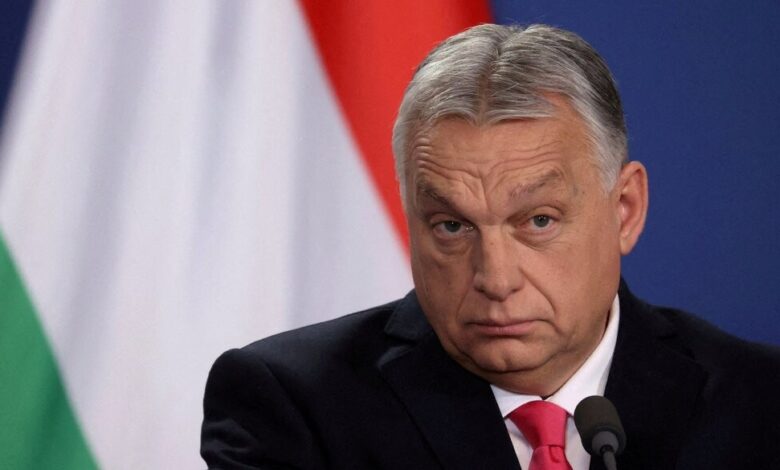
Hungary is looking to join forces with the Czech Republic and Slovakia to form an alliance within the European Union that is skeptical of Ukraine, according to Balazs Orban, political director and advisor to Prime Minister Viktor Orban, Politico reports.
Viktor Orban is seeking to work with Andrej Babis, the leader of the right-wing populist party that recently won the Czech parliamentary elections, as well as with Slovak Prime Minister Robert Fico. The goal is to coordinate positions before meetings of EU leaders, in particular during the summit.
“I think it will happen – and it will be increasingly noticeable”, said Prime Minister Balazs Orban’s political director, answering a question about the possibility of creating a skeptical alliance towards Ukraine, which could start acting as a bloc in the European Council.
The unification process may take some time, as Robert Fico, re-elected as Prime Minister of Slovakia in 2023, has so far refrained from a formal alliance with Orban on political issues, and Andrij Babis has still not formed a government after his party’s victory. Politico emphasizes that although the creation of a strong alliance is still far from being achieved, its formation could seriously complicate the EU’s efforts to provide financial and military assistance to Ukraine.
Balazh Orbán noted that this is actually a matter of reviving the activities of the “Visegrad Four” group – Hungary, the Czech Republic, Slovakia and Poland. Previously, this format was actively operating after 2015, when the Eurosceptic “Law and Justice” party was in power in Warsaw.
According to the Hungarian official, it was this format that showed effectiveness during the migration crisis. At that time, the “Visegrad Four” promoted a policy of strengthening the EU’s external borders and opposed the mandatory distribution of migrants between member states. However, after Russia’s full-scale invasion of Ukraine, the alliance effectively fell apart: Poland took a hardline anti-Russian stance, while Hungary acted in the opposite direction.
The new Visegrad Alliance can consist of only three states, as it is unlikely that the current Polish Prime Minister Donald Tusk, who openly supports Ukraine, would agree to any alliance with Viktor Orbán.