International Junk Food Day
On July 21, the world celebrates the International Junk Food Day. This day was created as an opportunity to enjoy favorite, but not always healthy foods, such as fast food, sweets, chips and other delicacies. These foods are often called “empty calories” because they are high in fat, sugar, and salt, but low in nutrients such as dietary fiber, vitamins, and minerals. These foods include candy, hamburgers, sugary drinks, pastries, French fries, and other snacks. Despite the harmfulness, there is a special day when you can allow yourself to deviate from the rules of healthy eating and treat yourself to something useless, but tasty.
Interesting Facts:
Burgers, one of the most popular types of fast food, were invented in the United States at the beginning of the 20th century. The first burger was served in 1904 at the World’s Fair in St. Louis.
Sodas were invented in the 18th century in England, and since then their popularity has skyrocketed. Coca-Cola, created in 1886, has become one of the most famous brands in the world.
Chips were invented by accident in 1853 in New York. Chef George Crum made them when one of the restaurant’s customers returned the potatoes, claiming they were cut too thick.
Chocolate as we know it today began as a drink in Mesoamerica. Only in the 19th century, thanks to technological innovations, chocolate became available in solid form.
Although pizza originated in Italy, modern pizza in its current form was popularized in the United States. Pizza “Margherita” was created in 1889 in honor of the Queen of Italy Margherita of Savoy.
Popcorn was known to North American Indians thousands of years before the arrival of Europeans. Today it is one of the most popular snacks, especially while watching a movie.
Donats, or fried patties, are of Dutch origin and were brought to America by Dutch settlers. The first donation machine was created in the 1920s.
French fries, often associated with France, were actually popularized in Belgium. The Belgians prepared it back in the 17th century.
Marketing and advertising play an important role in promoting junk food. For example, famous characters such as Ronald McDonald contributed to a significant increase in the popularity of fast food.
National Day of Belgium
Belgium celebrates National Day on July 21, one of the country’s 12 national holidays. This date has been celebrated since 1890 in honor of the coronation of Leopold I, the first king of Belgium, which took place in 1831 and established the country’s independence from the Netherlands.
Historical events
- 356 BC – Herostratus burned the Temple of Artemis in Ephesus, one of the seven wonders of the world.
- 365 — an earthquake partially destroyed the Alexandria lighthouse, which was finally destroyed by an earthquake in 1375.
- 1542 — Pope Paul III founded the Congregation for the Doctrine of the Faith to combat Protestantism.
- 1773 — Pope Clement XIV issued a bull banning the Jesuit Order.
- 1774 — the Kyuchuk-Kainardzhii peace treaty was signed, which established the independence of the Crimean Khanate.
- 1822 — the First Mexican Empire was created.
- 1831 — the coronation of Leopold I, the first king of Belgium.
- 1940 — the newly elected communist parliaments of Latvia, Lithuania and Estonia declared their countries republics of the USSR.
- 1944 — Joseph Stalin signed a decree on the deportation of Meskhetian Turks from the Caucasus.
- 1954 — the Geneva Agreement was signed, which ended the First Indochina War.
- 1992 — the patrol ship of the Black Sea Fleet SKR-112 raised the Ukrainian flag and went to Odessa to join the Navy of Ukraine.
- 2007 – the final seventh book about Harry Potter – “Harry Potter and the Deathly Hallows” – was released.
- 2011 — the last flight of space shuttle Atlantis ended, and the Space Shuttle program was officially closed.
- 2013 — King Philip I of Belgium ascended the throne.
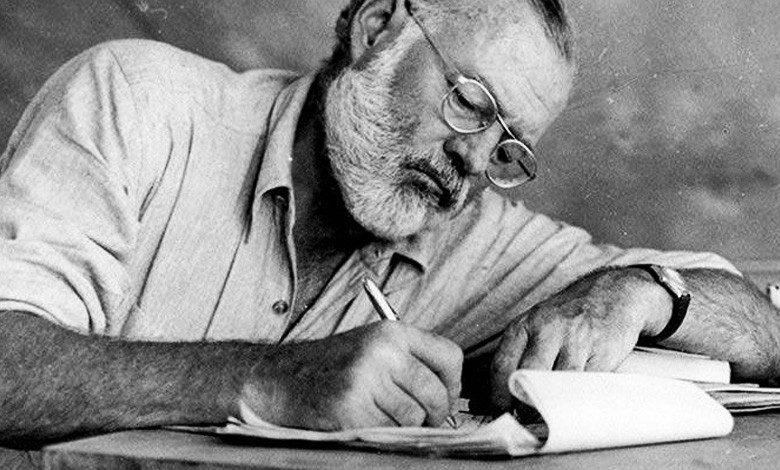
Ernest Hemingway was born on July 21, 1899 in the town of Oak Park, Illinois, USA. He is one of the most famous American writers who has had a significant impact on world literature. His writing style, known for its brevity and use of simple but powerful sentences, became a kind of standard for many subsequent generations of authors. However, Hemingway’s life was no less fascinating and complex than his works.
Hemingway grew up in a wealthy family, and from an early age he was fond of reading and writing. After leaving school, he worked as a reporter for the Kansas City Star newspaper, where he learned to appreciate short, crisp sentences, which influenced his writing style.
After participating in the First World War, where he served as an ambulance driver on the Italian front and was wounded, Hemingway began seriously writing. His first novel “And the Sun Rises” (1926) immediately gained popularity and established him as a talented writer.
In 1954, Ernest Hemingway received the Nobel Prize for Literature. One of his most famous works is The Old Man and the Sea, which also won him the Pulitzer Prize in 1953. This short novel tells about the struggle of the old fisherman Santiago with a giant fish and has become a symbol of courage and resilience of the human spirit.
Interesting facts about Hemingway
- Love of adventure: Hemingway was an avid hunter, fisherman and traveler. He spent a lot of time in Africa on safari, caught big fish in Cuba and participated in bullfights in Spain.
- Military experience: In addition to World War I, he also served in the Spanish Civil War as a correspondent, and served in the Navy during World War II.
- Privacy: Hemingway was married four times, and each of his marriages left its mark on his work. He had three sons.
- Physical and psychological injuries: Throughout his life, Hemingway suffered numerous physical injuries, including serious injuries in wars and plane crashes. In addition, he suffered from depression and other mental disorders.
- Tragic ending: In 1961, Hemingway committed suicide at his home in Ketchum, Idaho. His death was a great blow to the literary world.
Ernest Hemingway left behind a rich literary legacy that still inspires and fascinates readers. His works have been translated into many languages and are studied in schools and universities around the world. His writing style, distinguished by its simplicity and power, continues to influence writers today.
Hemingway believed that a true writer should live a full life, not just write about it. His life became a confirmation of this philosophy, and his works are an immortal testimony of his talent and courage.
Some of his most famous works include:
Novels:
- “The Sun Also Rises” (1926) – tells about the life of American and British emigrants in Europe after the First World War.
- “A Farewell to Arms” (A Farewell to Arms) (1929) is a novel about the tragic love between an American ambulance officer and a British nurse during the First World War.
- “For Whom the Bell Tolls” (1940) – tells about the events of the Spanish Civil War, where the American Robert Jordan fights on the side of the Republicans.
- “To Have and Have Not” (1937) – a story about smuggler Harry Morgan, operating during the Great Depression in Cuba.
- “The Old Man and the Sea” (The Old Man and the Sea) (1952) – a novella about an old fisherman, Santiago, who fights with a giant fish in the sea.
Short stories
- “The Snows of Kilimanjaro” (The Snows of Kilimanjaro) (1936) – a story about the writer Harry, who remembers his life during an illness in Africa.
- “Men Without Women” (Men Without Women) (1927) is a collection of short stories that includes The Killers and A Very Short Story.
- “The Fifth Column and the First Forty-Nine Stories” (The Fifth Column and the First Forty-Nine Stories) (1938) is a collection containing many of his best-known short stories.
Nonfiction and Memoirs
- “Death in the Afternoon” (Death in the Afternoon) (1932) is a book about bullfighting that combines a description of a bullfight with reflections on life and death.
- “Green Hills of Africa” (Green Hills of Africa) (1935) – a story about Hemingway’s safari in Africa.
- “A Moveable Feast” (A Moveable Feast) (1964, posthumous) – a memoir about his time in Paris in the 1920s, where Hemingway describes his life among writers and artists.
Other Works
- “Truth at First Light” (True at First Light) (1999, posthumous) is a semi-biographical novel based on Hemingway’s diaries during his last safari in Africa.
- “Islands in the Stream” (1970, posthumous) is a novel that covers the life of artist Thomas Hudson before, during, and after World War II.
These works reflect the variety of topics that interested Hemingway and demonstrate his mastery of different genres of literature. His legacy continues to influence readers and writers around the world.