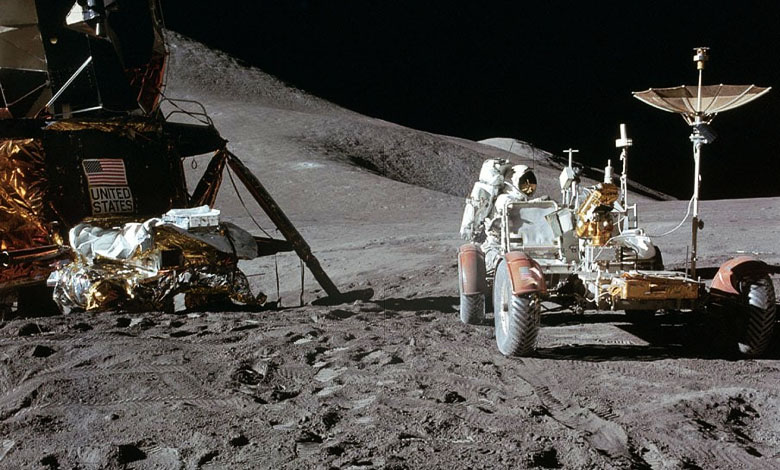
On July 31, the International Day of Commemoration of Rescuers, the Day of Unusual Musical Instruments, and the World Ranger Day are celebrated. Also, on this day, the first automobile trip to the moon was made.
The first automobile trip to the moon
On July 31, 1971, American astronauts David Scott and James Irwin made the first ever automobile trip around the moon on a four-wheel all-wheel drive Lunar Rover Vehicle. They spent three days on the moon, and the duration of three exits to the surface was 18 hours and 30 minutes. During this time, they traveled 27.9 km and collected 77 kg of lunar soil samples.
After the flight, the Apollo 15 mission was called one of the most successful from a scientific point of view, and the samples collected by the expedition were the “rich catch” of the entire program. The rover was left on the moon.
It is interesting that Aristotle, Plutarch, Democritus and Anaxagoras described times when the moon was not in the sky. Colombian indigenous people also remember these times. The symbols on the Puerta del Sol indicate that the moon entered orbit about 12,000 years ago.
According to Zulu legend, the moon was brought by the reptilians, two brothers in spacesuits, Wovane and Mpanku, who stole the egg-shaped moon from the “Great Fire Dragon” and rolled it across the sky to Earth, causing catastrophic events.
According to the official version, the Moon appeared about 4.5 billion years ago as a result of the “Giant collision between the Earth and the planet Theia.
Some science fiction claims that the moon is an alien spaceship. NASA and the US government launched the Clementine rover to the moon, which took several million pictures, but only 5% of them were made publicly available.
The ancient Slavs believed that the Moon is the gateway to the Causal World, to the Spirit, the One, the earthly Family, hidden from mortal eyes. They believed that the moon is the way to immortality.
International day of honoring rescuers
International Lifeguard Day, celebrated annually on July 31, is an important event dedicated to those who sacrifice their lives and health to save others. This day reminds us of the courage, dedication and professionalism of rescuers who work in difficult and dangerous conditions to ensure the safety and protection of people during natural disasters, man-made accidents and other emergency situations.
Rescuers belonging to various services and organizations such as fire brigade, rescue service, medical services and others deserve our deep gratitude and support. They are always ready to risk their lives to save others, often working without rest and in very difficult conditions.
The day is also an opportunity to raise public awareness of the importance of the work of rescuers, as well as to promote safety measures that help prevent emergencies and reduce their consequences. Honoring rescuers helps to strengthen the bond between the community and those who protect it, as well as to emphasize the need to support and develop the rescue services.
Various events such as award ceremonies, educational trainings, community events and promotions are held on the International Day of Remembrance of Lifeguards. This is an opportunity for all of us to express our gratitude and respect to those who keep us safe every day.
Day of unusual musical instruments
Unusual Musical Instruments Day is a great opportunity to discover new musical horizons and learn more about how you can create music using unconventional instruments. They prove that music has no boundaries, and every sound can become part of a large musical canvas.
Each musical instrument has its own unique story and sound that fascinates listeners. However, there are many instruments in the world of music that only a few people know about. Their sounds go beyond the usual ideas, creating new musical dimensions. The Day of Unusual Musical Instruments is a great opportunity to immerse yourself in this amazing world and get to know instruments that impress with their originality.
Termenvox: sounds created by gestures
Termenvox is one of the first electronic musical instruments, created in 1920 by the Russian inventor Lev Termen. Its feature is that the sound is created with the help of hand movements in an electromagnetic field. The musician, without touching the instrument, changes the pitch and volume of the sound. This makes the theremin an incredibly expressive instrument for creating atmospheric and fantastic melodies.
Glucophone: sounds that resemble bells
Glucophone is a metal instrument that looks like a bell with several reeds, which are played with hands or sticks. Its sound is pure and meditative, making it ideal for relaxation and meditation. Glucophone is used in various genres of music, from ethnic to electronic.
Kalimba: an African melody in every finger
The kalimba, also known as the mbira, is a traditional African instrument made of a wooden body and metal reeds. The kalimba is played with the fingers, which allows you to create melodic and rhythmic sounds. This instrument is easy to carry and can be used for both solo and ensemble performance.
Hang: music of the spheres
Hang is an instrument created in Switzerland in the early 2000s. It consists of two interconnected steel bowls that emit soft and harmonious sounds when struck. The sound of hanga is often described as cosmic and meditative, and it quickly gained popularity among musicians and lovers of relaxing music.
Kryotar: The Magic of Icelandic Folklore
The kriotar is an ancient Icelandic musical instrument that looks like a harp with a small body. Its sound is reminiscent of the Scandinavian nature with its cold winds and icy expanses. Playing the cryotar allows you to convey all the diversity of Icelandic folklore.
Cat piano
In the world of musical instruments, there are specimens that can seem absolutely incredible and even fantastic. One such instrument is the cat piano. It is an instrument that combines music and humor, and its history still inspires wonder and interest.
The cat piano, or “katzeklavier” (German: Katzenklavier), was first described in the 17th century. According to legend, this instrument consisted of a number of cages, in each of which there was a cat. The piano keys were connected to the cats’ tails in such a way that when the keys were pressed the cats meowed in different tones. This instrument was supposedly used to treat depression in patients, because its sound caused laughter and relief.
Although the cat piano is often seen as a myth or satirical fiction, the instrument has become a symbol of eccentric experimentation in music. There is very little evidence that the cat piano was actually used. However, the history of this instrument reminds us that human imagination knows no bounds, especially when it comes to music.
The idea of a cat piano, of course, raises many ethical questions and criticisms. Using animals to create music is considered cruel and unethical in today’s world. Rather, this instrument serves as an example of how far people’s imagination can go in search of new musical experiences, and also emphasizes the importance of humane treatment of animals.
World Ranger Day
On July 31, the world celebrates World Ranger Day to honor and show gratitude to those on the front lines of protecting our nature. This day reminds us of the important and dangerous work of rangers who protect national parks, reserves and wilderness areas, preserving nature’s riches for future generations.
World Ranger Day was launched in 2007 by the International Ranger Federation (IRF) to raise awareness of the importance of rangers in wildlife conservation and to commemorate those who have died in the line of duty. Since then, this day has become a symbol of international solidarity and support for rangers in their difficult work.
Rangers perform a wide range of tasks that include:
- Patrolling territories to prevent poaching and illegal deforestation.
- Protection of rare and endangered species of animals and plants.
- Conducting ecological studies and monitoring the state of ecosystems.
- Work with local communities to increase environmental awareness and education.
- Providing assistance to visitors of national parks and nature reserves.
The work of a ranger is often associated with great risk. Poachers, illegal loggers and other criminals often pose a serious threat to their lives. In addition, rangers often face difficult working conditions, including remoteness, harsh climates and insufficient funding.
Historical events on this day:
- 1498: Christopher Columbus discovered the island of Trinidad during his third voyage to America.
- 1703: Louis-Sebastien Lenormand made the first known parachute jump in France.
- 1837: Ceremonial dedication of the Red Building of Kyiv University.
- 1919: The Army of the Ukrainian People’s Republic and the Ukrainian Galician Army occupied Kyiv. Also on this day, the Weimar Constitution was adopted in Germany, which turned Germany into a republic.
- 1924: The Polish government has banned the use of the Ukrainian language in state and self-governing institutions in Western Ukraine.
- 1941: In Lviv, Kost Pankivskyi was elected as the head of the General Secretariat of the Ukrainian National Council.
- 1965: The first commercial Early Bird satellite call is made between New York and London.
- 1971: For the first time, a man drove around the moon on a special module, the Lunar Rover Vehicle.
- 1975: The Conference on Security and Cooperation in Europe opened in Helsinki, at which the Final Act containing a chapter on human rights was adopted.
- 1981: The premiere of the film “An American Werewolf in London” took place in New York.
- 1991: The Verkhovna Rada of Ukraine adopted a decision to transform the State Hydrometeorological Committee into the Ukrainian Hydrometeorological Center.
- 1994: Serhiy Bubka set a world record in pole vaulting – 6.14 m.
“Red Friday”
July 31, 1925 went down in history as “Red Friday” – the day when British miners won a victory over mine owners who, in the midst of a crisis in the coal industry, sought to lower workers’ wages and eliminate their fixed minimum.
In 1925, the mine owners of England, under the pressure of the economic crisis, announced the termination of labor contracts for a month. The Federation of Mineworkers of Great Britain refused to accept this and appealed to the workers and trade unions to put pressure on the owners. It was decided to stop all forms of activity related to the coal mining industry.
Faced with the threat of an all-union strike, Stanley Baldwin’s government was forced to make concessions. The government has decided to subsidize the coal mining industry so that miners’ wages remain at the previous level. The amount of subsidies amounted to 23 million pounds.
This day was called “Red Friday” because the union of all workers made it possible to win. Before that, there was “Black Friday” – the trade unions could not unite and were defeated.
Great Britain was one of the countries where the coal mining industry was key in the development of the economy for several centuries. The tradition of open pit and mine coal mining began as early as the 12th century. At the beginning of the 20th century, the country produced 292 million tons of raw materials per year, occupying about 22% of the world market.
The wise leadership of the country drew conclusions, and the “Iron Lady” Margaret Thatcher played a decisive role in the adoption of unpopular measures at that time. She called the events “the second Falklands war” and put 170 operating coal mines on the “black list” to be liquidated. They provided jobs for 170,000 people. Miners were offered either to go for downsizing with compensation and retain the right to a pension, or they were simply fired.
On December 18, 2015, the last deep coal mine was closed. Three thousand miners came out to celebrate it, organizing a city holiday.
Great Britain now prefers to import coal for its power plants. By 2025, all UK coal-fired power stations without equipment to reduce CO2 emissions are due to shut down. By 2030, the country will completely abandon coal in favor of more modern low-carbon energy sources.
“Black glass”
July 31, 1970 was marked as the day of the “black glass”. For centuries, sailors in the British Royal Navy would gather on deck at noon in anticipation of an admiralty glass of rum. On this day, the issuing of rum stopped.
The last glass was raised in honor of the queen, after which the vessels were thrown overboard. The sailors donned mourning black armbands, and one of the training centers organized a solemn funeral with a black coffin, drummers and a flutist.
At first, the favorite drink of English sailors was beer, because water in the sea spoiled quickly. However, even beer could not withstand the high temperature. Therefore, a rum was chosen that could withstand time and temperature, as well as increase the bravery of sailors. Sailors received a glass of rum every day, which they could drink with lemon or lime juice to prevent scurvy, or use to pay off debts. The quality of rum was checked by setting it on fire.
In 1740, Admiral Edmond Vernon introduced the rule of diluting rum with water, which led to the appearance of “grog”. It was issued two portions a day. However, this did not add to the sobriety of the sailors, and in the end it was decided to limit the consumption of rum.
The Admiralty decided to refuse the daily issue of rum due to concerns that under the influence of alcohol, sailors would not be able to properly operate complex weapons and navigation systems.