
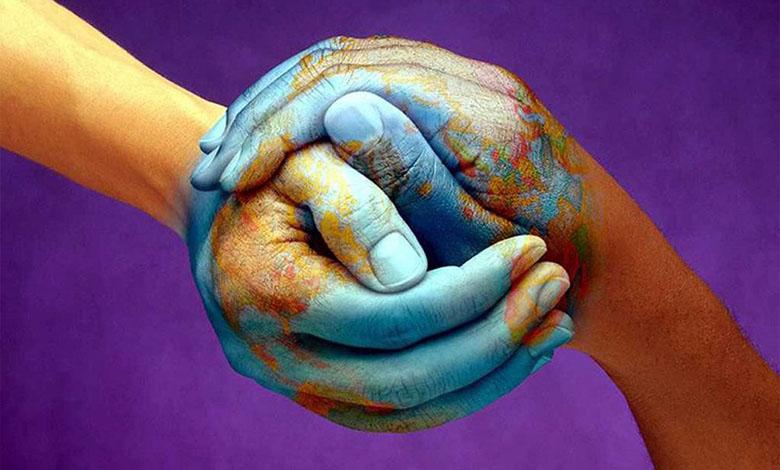
May 16 is the International Day of Peaceful Coexistence, International Day of Light and World Endangered Species Day. This day is full of events that influenced the course of history, art, politics and culture. In different years, this date witnessed both heroic changes and fateful personal decisions, victories and upheavals.
International Day of Peaceful Coexistence
This is a young, but extremely relevant holiday for humanity. It is intended to remind about the importance of tolerance, respect, mutual understanding between people of different cultures, nationalities, religions and beliefs. This holiday gained special importance in the conditions of deep global turbulence, new wars and a surge of xenophobia.
The International Day of Peaceful Coexistence was officially established by the resolution of the UN General Assembly on December 8, 2017. This day became a logical continuation of the policy of the United Nations Organization to establish peace, prevent conflicts and support dialogue between civilizations. The text of the resolution emphasizes that “peaceful coexistence” is not only the absence of armed conflicts – it is an active process of recognizing and accepting otherness, building bridges between communities and developing a culture of peace.
The establishment of this day was a response to the challenges facing humanity in the 21st century: mass migration, religious extremism, ethnic conflicts, social polarization and the spread of hate speech. The General Assembly called on states, international organizations, civil society, the media and every individual to take action to strengthen peaceful coexistence throughout the world.
For Ukraine during the war, the theme of peaceful coexistence is of particular importance. It includes not only the idea of a just peace based on international law, but also the task of internal cohesion, overcoming the consequences of war, integration of displaced persons, preservation of unity in the diversity of regions, languages and cultures.
In a global context, the International Day of Peaceful Coexistence is a reminder of the value of cultural dialogue, the need to recognize the rights of minorities, overcome discrimination and establish societies where everyone can live freely without fear of violence, harassment or isolation.
Interesting facts
The idea of peaceful coexistence as a political doctrine arose in the 20th century, especially in the context of the Cold War, when great powers sought to maintain peace despite ideological differences. However, today this term has acquired a new meaning – as the basis of peaceful multicultural coexistence in everyday life.
This day is often celebrated through art events, school initiatives, interreligious dialogue forums, solidarity marathons and actions in support of victims of discrimination. Many cities in Europe hold marches against racism and xenophobia on this day.
In 2023, as part of the International Day of Peaceful Coexistence, a special UNESCO round table was held in Paris, dedicated to the role of education in the formation of a culture of peace. The participants emphasized that “peaceful coexistence should not start with politicians, but with textbooks and children’s games.”
In some countries, this day is integrated into national strategies of interethnic harmony: for example, in Kazakhstan, the days of unity of peoples are held in May, and in Canada there are annual projects on intercultural exchange focusing on the theme of tolerance.
International Day of Light
This day is a tribute to science, technology and that invisible resource that determines the quality of our lives – light. It was initiated by the United Nations Educational, Scientific and Cultural Organization (UNESCO), officially approved on November 14, 2017.
The date of the celebration was not chosen by chance. It was on May 16, 1960 that the American physicist Theodore Maiman created the first working ruby crystal laser in the Hughes Research laboratory. This was a breakthrough in physics, which laid the foundation for a new era – the era of photonics, optical technologies and high-precision control of light energy. Since then, lasers have become the heart of telecommunications, medicine, industry, military systems, barcode reading, 3D scanners, navigation, and more.
Light is not only a physical phenomenon, but also a metaphor for knowledge, discoveries, and progress. UNESCO created this holiday as a successor to the 2015 International Year of Light to remind humanity each year of the role of light technologies in sustainable development, health, energy, communication, education and culture. The organization emphasizes that it is access to light — literally and figuratively — that is a condition for development, equality and innovation.
The UNESCO resolution specifically emphasizes the importance of expanding access to energy and lighting in regions where millions of people still do not have electricity. At the same time, it is also about light as a technology of the future: from the optical Internet to quantum cryptography.
Interesting facts
Theodore Maiman created the first laser in May 1960, using a ruby rod and a photoflash—his device emitted red monochromatic light with a high energy concentration.
Laser is an abbreviation for Light Amplification by Stimulated Emission of Radiation (light amplification due to forced radiation). Its principle was predicted by Albert Einstein back in 1917.
In 2014, Isamu Akasaki, Hiroshi Amano and Shuji Nakamura won the Nobel Prize in Physics for the creation of the blue LED, a technology that revolutionized energy saving.
Today, laser technologies are used not only in industry or medicine, but also in archaeology, protection of cultural heritage, space research and art.
World Endangered Species Day
This is an important event in the ecological calendar, which makes us think about the price of progress, the responsibility of man before the planet and the future of living nature. This is not just a symbolic date, but a call to action aimed at preserving biodiversity, which directly depends on the stability of ecosystems and the very survival of humanity.
The purpose of this day is to draw attention to the critical state of wildlife, highlight the reasons for the disappearance of animals and plants, and update the issue of preserving rare and endangered species.
Today, more than 44,000 species in the world are classified by the International Union for Conservation of Nature (IUCN) as endangered. This means that almost a quarter of all the studied biodiversity of the planet may disappear in the coming decades if effective measures are not taken.
The most damaging factor is human activity: deforestation, plowing of natural areas, climate change, ocean pollution, poaching, illegal trade in wild animals, invasive species that displace local fauna. Over the past hundred years, the rate of species extinction has increased 1000 times compared to the natural background.
For Ukraine, the topic of extinction of species is also extremely relevant. According to the latest edition of the Red Book of Ukraine, more than 1,600 species are listed, including the golden eagle, monk seal, forest cat, saiga, curly pelican, gray crane, as well as dozens of endemic plants of the Carpathians and Crimea. A full-scale war increased the pressure on natural ecosystems: due to hostilities, birds die, forests are destroyed, rivers are thinned, mined areas became a trap for wild animals.
Environmentalists warn that due to the war, Ukraine may lose some local populations of red-listed species, which will not be able to recover naturally without large-scale environmental rehabilitation.
Interesting facts
Each year, an average of 17 species disappear completely from the Earth—that’s about one species every three weeks.
The dodo, a large flightless bird that disappeared in the 17th century only a few decades after the discovery of the island of Mauritius by Europeans, became a symbol of species extinction.
One of the most touching cases happened in 2018, when Sudan, the last male northern white rhino, died. Now there are only two females left on the planet, and the revival of the species is possible only through complex artificial insemination.
Scientists believe that the Earth has entered a sixth mass extinction, similar to the one that wiped out the dinosaurs 65 million years ago, but this time the cause is not a meteorite, but the activities of Homo sapiens.
Some extinct species were “returned” thanks to the efforts of scientists. For example, the black-footed ferret is successfully bred in captivity in the United States, and the Arabian oryx disappeared in nature, but was fully restored and returned to the wild.
In 2024, the World Wide Fund for Nature (WWF) named the hippopotamus as its animal of the year, whose population has declined by 30% in the past two decades due to hunting for meat and teeth.
In 2025, World Endangered Species Day focuses on freshwater fish — according to research, about a third of the world’s freshwater fish species are threatened with extinction due to dams, river pollution and climate change.
Historical events on this day
1648 – near the Yellow Waters, the Ukrainian Cossack army led by Bohdan Khmelnytsky won an important victory over the army of the Polish-Lithuanian Commonwealth led by Stefan Potocki. It was one of the first and brightest battles of the beginning of the national liberation war, which marked the beginning of a large-scale armed confrontation for the rights and will of the Ukrainian people.
1836 year – American writer, master of Gothic style and psychological drama Edgar Allan Poe marries his 13-year-old cousin Virginia Clem. This marriage, despite the significant age difference, was deeply emotional and influenced Poe’s work, particularly his poems of melancholy, despair and loss.
1920 year – almost five centuries after her execution, Joan of Arc is canonized by the Roman Catholic Church. The French national heroine, who in the 15th century led the resistance against the English occupation, was burned as a heretic, but was later rehabilitated and recognized as a saint. This act became a historical correction and recognition of her role in the national memory of France.
1929 year – the first “Oscar” award ceremony is held in Hollywood. At the Roosevelt Hotel, the event, which lasted just 15 minutes, celebrated the best films of 1927-1928. Since then, this award has turned into the main international award in the film industry, which has become not only a symbol of success, but also a mirror of social, cultural and political trends.
1954 year – the Kenghir Uprising begins – a mass demonstration of prisoners in the Gulag camp in Kazakhstan. The prisoners, among whom there were many Ukrainians, built a self-governing community within the zone with Ukrainian symbols, flags, and even a church. The uprising was brutally suppressed by Soviet troops, using tanks. This event remained one of the largest and most heroic attempts to resist the Gulag system.
1966 year – China officially announces the beginning of the so-called “cultural revolution”. The campaign initiated by Mao Zedong was intended to purify the ideology, but in practice it resulted in massive persecution of intellectuals, destruction of cultural heritage and deep trauma for Chinese society.
1975 year – Japanese mountaineer Tabei Junko is the first woman in history to climb the world’s highest peak, Everest. Her ascent became not only a sporting achievement, but also a symbol of female strength, endurance and determination in a field that was considered “male” for a long time.
2004 year – on the stage in Istanbul, Ukraine wins the first ever victory at the Eurovision Song Contest. Ruslana Lyzhichko conquers Europe with the song “Wild Dances”, gaining 280 points based on the results of television voting from 36 countries. This was not only a cultural victory, but also a powerful international image breakthrough for Ukraine.
2008 year – Ukraine officially becomes the 152nd member of the World Trade Organization (WTO). After many years of negotiations, our country gets full access to the global trade system, committing to comply with international economic norms. This became an important step in the direction of integration into the world market and approximation to European standards.


