
Residence permit for Ukrainian students in Germany: how to apply for a transition from §24 to §16b

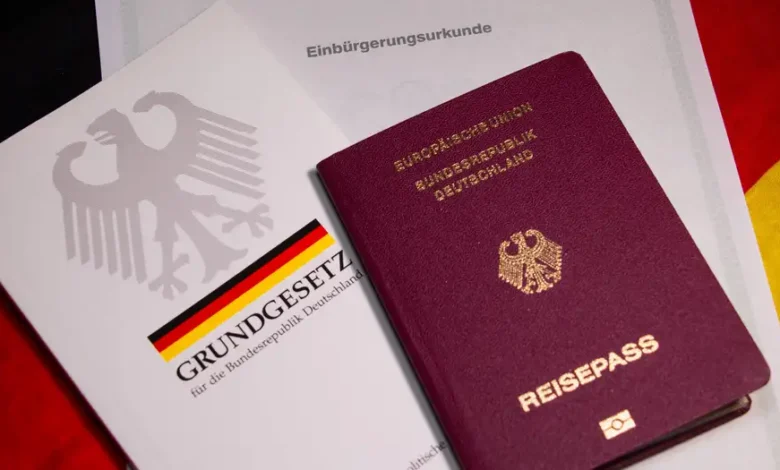
Temporary protection in Germany gives Ukrainians the right to live legally in the country, but for many it has already ceased to be the answer to the main question about the future, because after the first years of forced relocation, education, a professional path and the opportunity to consolidate one’s position on clear legal grounds become increasingly important. Therefore, the transition from §24 to a student residence permit under §16b is a real way to transfer one’s stay in Germany from the temporary protection regime to a longer educational trajectory, which gives a stable status for the period of study, the right to work within the established rules and the prospect of further building a life without being tied only to military circumstances.
What changes after the transition to a student permit
For Ukrainians who have §24 AufenthG, the transition to a student residence permit in Germany has become easier: without a blocking account and without standard visa restrictions. At the same time, the time left for processing is less than it might seem.
This route has an important feature that favorably distinguishes Ukrainians with a valid §24 from most other foreigners: they do not need to start their journey with a student visa, go through the consular circle outside Germany and open a blocking account in the form that is usually considered a standard requirement for admission. This is why the procedure looks simpler, but only at first glance, since in practice it requires a very clear sequence of actions, attention to deadlines and an understanding that admission, language training, recognition of documents, insurance, housing and applying to the migration office must be collected in one chain without failures and delays.
After receiving §16b, a person enters a status that is no longer tied to temporary protection, but to studying at a higher education institution. Such a permit gives the right to legally stay in Germany for the entire period of study, work within the established workload and further plan their stay not as a forced extension of military status, but as part of an educational and professional route. For many Ukrainians, this has not only legal but also practical significance, as student status better corresponds to the situation of those who have already integrated into the German environment, are learning the language, are preparing for admission, or have already decided on a major.
At the same time, such a transition should not be perceived as an automatic replacement of one permit with another, because the migration office does not consider the general intention to study, but a specific package of documents, which should make it clear which institution a person is entering, on what grounds he will study there, where he will live, how he will cover his expenses, and whether he has full health insurance suitable for student status. Therefore, the advantage of Ukrainians with §24 is not that the requirements disappear, but that the entire process can be completed within the country, without leaving Germany and without returning to the starting point.
Where does the transition process begin?
This process should not begin with a trip to the Ausländerbehörde, but with the choice of a university and a program, because it is the admission that determines all further logic. A person must first understand where exactly he is submitting documents, in what language the studies are conducted, what requirements a particular university sets for previous education, whether his certificate or diploma is enough for direct admission, and also what deadlines they accept applications for the chosen semester. Without this, any talk about the transition to §16b hangs in the air, since the migration office does not issue student status on the basis of a general desire to study.
At this stage, the first mistake most often occurs: a person searches for a long time for the “ideal” program, reads dozens of descriptions, postpones the decision and at the same time imperceptibly loses time, which for admission to Germany often weighs no less than a full package of documents. If we are talking about the winter semester of 2026, the key application deadlines fall in July, so postponing the decision means not improving the choice, but risking missing the admission cycle and losing another academic year.
Recognition of education as a separate stage that should not be postponed
As soon as there is a more or less clear understanding of the program, the next step is the recognition of prior education. For foreign applicants in Germany, this is one of the basic stages, because the university or an authorized body must determine whether the Ukrainian education document meets the requirements for admission to a specific level of study. Depending on the situation, this is done either through uni-assist or through the document recognition procedure associated with the Zentralstelle für ausländisches Bildungswesen, and this is where many people waste time by postponing the application until everything else is ready.
The problem is that the recognition of documents does not occur in a few days and often takes from one to three months, and sometimes even longer, if there are questions about translations, apostilles, the structure of the document or the type of education completed. That is why this process should be started as early as possible, without waiting for perfect clarity regarding all the other details. The logic here is simple: the university program can still be specified, the language certificate can be prepared, but the time lost on nostrification can then be almost impossible to make up for without risking the entire admission.
Language as the main transition filter
For most state programs in German, the decisive barrier is not enrollment itself, but the language level. In practice, this means that without a B2 certificate or another level required by a specific university, all preliminary preparation loses its meaning, because the admission file remains incomplete. That is why language preparation should not take place somewhere in the background of the entire process, but at its very center, since without it there will be neither a full-fledged submission nor a real transition to student status.
For Ukrainians with §24, this stage is somewhat easier because language courses through the BAMF or local Volkshochschule are often available for free or for a nominal fee. However, the mere presence of a course does not mean readiness for admission, because achieving B2 requires time, discipline and regularity, not just registration in the system. On average, native speakers of Slavic languages need many months of intensive study to reach this level, so admission for the next semester should be planned not out of a romantic belief that “somehow you will have time”, but out of a cold calculation of your own pace.
Application to the university and a document without which there will be no further movement
After the program has been selected, the recognition of documents has been started and the language requirement has been approximated, the moment of actual application comes. For most foreign applicants in Germany, this route becomes uni-assist, through which the main package of documents is submitted, compliance with the basic requirements is checked and the case is sent to the university. The fee for such a submission is relatively small, but the significance of this step is much greater than the amount itself, because it is after successful consideration that a person receives a Zulassungsbescheid – official confirmation of enrollment or admission to study.
This document is central to the transition to §16b, because it is it that translates the intention to study from an abstract plane to a legally understandable one. While it is not there, you can prepare, consult, look for housing and plan a budget, but without it, the migration office will not see any reason to change the status to student. That is why other elements should already be prepared by the time you receive the enrollment letter, so as not to lose precious weeks after a positive response from the university.
Registration of residence and the role of local bureaucracy
Since the entire process takes place within Germany, local registration of residence is of great importance. If a person moves to another city for studies, they need to register in time at the local Bürgeramt or Einwohnermeldeamt, because without an up-to-date address registration, it is no longer possible to work fully with the Ausländerbehörde, open individual contracts, confirm the place of residence for the university, or correctly assemble a package for a new status. In practice, this means that moving to a university city is not a minor technical change, but a separate organizational stage that also requires planning.
At this stage, many are let down by the German housing reality: finding a room, dormitory, or apartment in a university city is often much more difficult than passing a language test or collecting diploma documents. Because of this, students often lose momentum after receiving their enrollment, because they cannot quickly arrange housing and, accordingly, complete registration. In such a situation, the issue of housing should not be postponed until the last minute, as it directly affects the ability to bring the case to the submission of §16b.
What is needed to apply to the Ausländerbehörde
After receiving the letter of enrollment, registering for a place of residence and preparing financial and insurance documents, the stage of applying to the migration office comes. It is here that it is important not to wait for a “convenient moment”, because in many cities the registration for admission is stretched for a long time, and a postponement even for several weeks sometimes creates unnecessary pressure on the entire process. In large cities, the queues are especially noticeable, so it is worth registering as early as possible, as soon as it becomes clear that admission is realistic and the package of documents is being completed.
To apply, you usually need a valid status under §24, a document confirming enrollment at the university, confirmation of housing, health insurance, financial confirmations and local registration. The state fee for issuing a student permit is relatively moderate, but the real difficulty lies not in paying, but in ensuring that all documents are coordinated with each other and do not contradict each other. If, for example, the insurance remains at the level of the previous status, and the student fund has not yet been registered, this can stop or postpone the decision.
The issue of money without a blocking account
One of the most noticeable advantages for Ukrainians with §24 is that they are not required to have a blocking account in the classic form, which for other foreigners often becomes a difficult financial barrier. However, this does not mean that the issue of money disappears. The migration office still needs to see that a person is able to cover the costs of accommodation, education, insurance and everyday life, and therefore confirmation of funds, scholarships, family support or other legal source of funding is required.
In this case, the false impression that §24 automatically makes the transition to §16b almost free should be avoided. Even without a blocking account, a person faces a number of expenses: nostrification, submission of documents, language exam, state duty, sometimes translations, photos, copies, travel, housing deposit or down payment for a dormitory. In total, this often amounts to several hundred euros, and in some cases even more if the language certificate or housing situation requires additional expenses.
Health insurance as a detail that breaks many cases
Health insurance requires special attention, because this is where many people make the mistake of perceiving it as a technical addition to the entire process. In fact, student status requires insurance that is suitable for studies, and not just any valid policy that was sufficient within the framework of temporary protection. Therefore, after enrollment, it is worth immediately contacting one of the student funds, for example TK, AOK or Barmer, to arrange the correct insurance format without delay.
This requirement seems like a small thing until it comes to submitting it to the migration office, where such a “small thing” can stop the entire procedure. In the German bureaucratic system, a document is important not as a symbol of intention, but as concrete proof of compliance with the status, so insurance for §24 and insurance for §16b are not the same thing, even if the difference seems insignificant on the surface.
How long does the transition take
In most cases, the entire path from preparation to obtaining a student permit takes from six to twelve months. This period is explained not by the slowness of any one agency, but by the fact that the entire process consists of several long segments that partially overlap each other: choosing a program, language preparation, recognition of documents, submission, waiting for a response, finding housing, registration, registration with the Ausländerbehörde, insurance. That is why an attempt to go through everything “in a hurry” usually ends not with acceleration, but with an accumulation of errors.
Where a person acts consistently and begins to prepare in advance, the route is quite real. Where decisions are postponed until the last weeks before the deadline, even strong motivation is no longer of any help, because the process rests not on a lack of desire, but on the calendar and queues. In this sense, the main advantage is not the one who thinks longer, but the one who launches all the key stages on time.
The most common mistakes that cost a year
The most typical mistake is that a person spends too long looking for a program that seems perfect, and therefore misses the application deadline. In the German education system, it is much more reasonable to submit a well-prepared application on time than to waste a whole year trying to bring the choice to imaginary perfection. It is no less dangerous to launch nostrification only after the admission letter arrives, because then the entire calendar starts to crumble, and university admission can turn into an unrealized chance.
Another common problem is the underestimation of the queue at the Ausländerbehörde. Many mistakenly believe that after enrollment, you can calmly do other things and deal with the migration office later. In fact, this is where the risk of delays arises, especially in large cities, where the registration is scheduled for a long time in advance. Added to this is the confusion with insurance and housing, and as a result, a person finds himself in a situation where the main documents are already there, but it is not possible to collect them into a completed file due to organizational failures.
Where to look for support if the process reaches a dead end
Although the path to §16b is quite real, it is not worth going through it at random, especially if there are doubts about the recognition of education, the suitability of a language certificate, the correct type of insurance or the conditions of a particular migration office. In such cases, the most reasonable solution is to contact consulting structures that work specifically with issues of admission, student status and adaptation in the German system. These can be DAAD, BAMF, local AWO, Caritas, Diakonie, as well as Studentenwerk in the city of study, where they help with housing, documents, scholarships and household issues.
It is important to understand that help in this process is needed not because it is extremely complicated in itself, but because each of its stages is associated with a different institution, and therefore with different logic, deadlines and requirements. It is precisely where a person tries to pull everything out only by intuition that most often delays arise that could have been avoided by one timely request for advice.
The transition from §24 to §16b is for Ukrainians in Germany an attempt to build a longer, more predictable trajectory in a country where temporary protection cannot remain the only answer to the question of the future. That is why student status should be considered as a serious decision that requires concentration, precise calculation and understanding that success here depends not on one certificate, but on the correct sequence of all steps.
For those who are ready to act in time, this route is quite feasible: without leaving Germany, without the classic blocking account and without the consular circle, which for other students often becomes the most difficult stage. However, this relative simplicity should not be misleading, because the decisive factor is not the mere fact of the presence of §24, but the ability to turn its advantages into a well-prepared admission and migration case.


