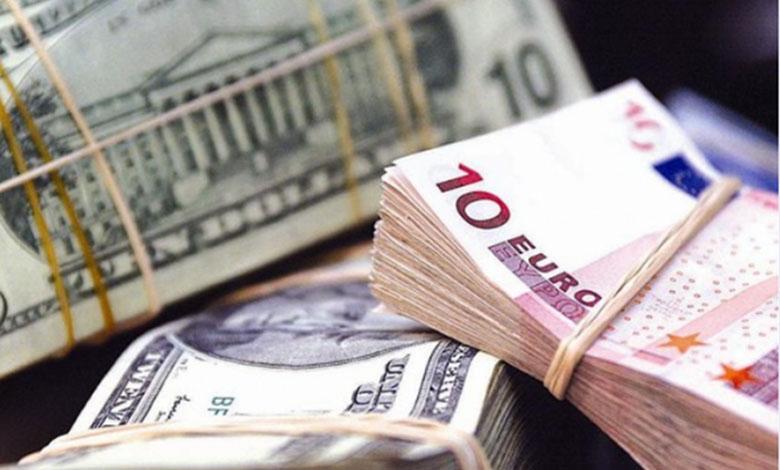
IA “FACT” already wrote that during the war the Ukrainian economy suffers from large-scale withdrawal of currency abroad due to non-return of foreign exchange earnings and fictitious imports. Deputy Chairman of the NBU Dmytro Oliynyk emphasized: exporters often do not receive payment for supplies, then disappear or close, and fictitious imports allow currency to be transferred abroad without actual delivery of goods. In 2023, Ukraine lost more than 8 billion dollars due to these frauds, including 1.8 billion dollars in the grain industry.
National Bank strengthened currency controls: banks can no longer complete supervision without actual currency receipts, and closing accounts does not exempt from liability. At the same time, on-site inspections of banks were introduced, financial monitoring rules were updated, and inspections of foreign economic operations were expanded. The problem remains systemic and affects not only business, but also public procurement, and funds are most often withdrawn to Poland, Hungary, Turkey, the UAE and offshore.
The fight against currency withdrawal schemes in Ukraine is entering an acute phase
From now on, for non-return of foreign exchange earnings and fictitious imports threaten real sanctions. Companies and their managers may be fined up to 100% of the amount of the transaction that was not conducted properly. And in some cases, there is also criminal liability under Article 222-1 of the Criminal Code of Ukraine (“Manipulation on the securities market” or “Deliberate evasion of the return of foreign currency proceeds”). Violators face up to 3 years of imprisonment or a fine of up to 17,000 hryvnias with confiscation of property.
There are already high-profile cases that prove that state bodies have taken the problem seriously. In April last year, the SBU jointly with the Bureau of Economic Security exposed large-scale scheme of fictitious import of agricultural products. According to the investigation, about 50 million US dollars were withdrawn through shell companies. In this case, the court has already seized the accounts of 14 legal entities and initiated the process of property confiscation.
Another example: in December 2023, the activities of a large group of companies were blocked worked through offshore in UAE and Seychelles. They drew up fictitious import contracts and withdrew funds under the guise of prepayment for goods that never arrived in Ukraine. The state’s total losses in this case are estimated at over 100 million hryvnias. The movable and immovable property of the organizers of the scheme was seized.
The Bureau of Economic Security reported that, in general, in 2023-2024, only on the facts of non-return of foreign exchange revenue openly more than 200 criminal proceedings. Some of them have been transferred to the court, where there are proceedings regarding the seizure of assets and bringing the culprits to justice.
Ukrainian businesses that export or import goods in 2024-2025 received the new rules of the game are tougher, more meticulous, but necessary in the conditions of war.
Now currency supervision of export operations is ending only when the currency actually entered Ukraine. Transfers in hryvnias no longer save. Banks do not have the right to close currency controls simply because the company “closed the account”. Without the actual receipt of currency, no completion of the procedure.
For agricultural exports, the NBU even a little weakened conditions: in July last year, the deadline for payments for the supply of wheat, corn, sunflower and other goods was increased from 90 to 120 days. This gave farmers more time to receive money from abroad.
At the same time, to close the loopholes for the schemes, the state introduced restrictions on the use of foreign currency loans for the purchase of securities. Now foreign currency loans cannot be used for speculation in the stock market, which could allow indirect withdrawal of money abroad.
There are also innovations for importers. Now Ukrainian companies they can to pay for the import of goods without limiting the terms of delivery, but only if the payment goes through state export credit agencies or foreign countries. A limit has also been introduced: the amount of the monthly transfer cannot exceed 10% of the amount of overdue debt under the contract.
Another change touched repatriation of dividends. To transfer dividends abroad, the company must be registered at least one year before the transfer, and the shares or corporate rights must be owned by the investor for at least 6 months.
Requirements for banks have also increased. They have check foreign economic contracts not only for the presence, but also for the realism of conditions: delivery terms, solvency of counterparties, risks of fictitious agreements. Companies that have previously had problems with non-return of revenue are being especially closely monitored.
Control without stranglehold: How the government protects business during currency restrictions
During the implementation of strict currency restrictions, the state tries not to strangle those who work honestly. The National Bank and the government realize that in times of war it is important to catch violators, but at the same time to protect honest business that keeps the economy afloat.
To avoid mass blocking of payments and pressure on normal companies in Ukraine works the principle of “risk-oriented approach”. This means: banks must carefully check only suspicious transactions — primarily, with dubious counterparties or unclear settlement schemes. For a business with a good reputation, the procedure should be as simple and quick as possible.
If the bank still blocks the payment or refuses to carry out a currency transaction, the business has the right to fight for justice. File a complaint you can through a special form on the NBU website or through the financial ombudsman. The bank is obliged to officially explain the reason for the blocking. If this is not done or the arguments do not stand up to criticism, the National Bank has the authority to hold the financial institution accountable.
The state emphasizes that the unlawful delay of currency payments without valid reasons can be considered as a violation of the rights of consumers of financial services, which entails sanctions for the bank.
There are also positive steps: now business can advance consult with the bank or regulator regarding planned foreign economic contracts. If a company is planning a large import or export, it can check in advance whether there will be any problems with payment or currency control.
Fictitious exports are real poverty: how currency manipulations hit the wallet of a Ukrainian
When Ukrainian exporters do not return foreign exchange earnings, and importers draw up fictitious contracts, this is not just a statistical problem. This is a direct blow to the pocket of every Ukrainian — due to the exchange rate of the hryvnia, foreign exchange reserves and the financial instability of the country.
According to the estimates of the National Bank, only in 2023 due to the non-return of foreign exchange revenue, the economy of Ukraine lost more than 8 billion US dollars. This is a colossal amount – almost a fifth of all international reserves of the country at that time.
What does this mean in practice? When the currency in the country is less than needed, the NBU is forced to spend reserves to maintain the hryvnia exchange rate. Last year, the National Bank regularly sold currency on the interbank exchange to maintain the stability of the hryvnia. According to the NBU, only in March last year more than 2.1 billion dollars of reserves were spent to support the exchange rate.
That is, every dollar that did not return due to manipulations with fictitious exports or imports means additional pressure on the hryvnia. And the devaluation of the hryvnia automatically entails an increase in the price of imports, an increase in prices in stores and a new round of inflation.
In addition, fictitious imports create the illusion that Ukraine purchases more goods abroad than it actually does. This worsens the trade balance and increases the deficit of currency liquidity. As a result, it becomes more difficult even for honest companies to buy foreign currency for real imports, thus creating an artificial shortage of foreign currency in the market.
Economists point out that the NBU was forced to do so due to massive non-return of revenue hold administrative restrictions on the foreign exchange market are longer than planned, and businesses face prolonged deregulation and restrictions on the free movement of capital.
The currency front: how Ukraine, together with the world, stops financial fraud
Ukraine is not struggling with the withdrawal of currency on its own. In this war, international partners — Interpol, FATF, Moneyval, and even the IMF — are working on accounts for every dollar.
In order to effectively detect and stop financial fraud, Ukrainian law enforcement officers actively cooperate with Interpol. For example, in several major cases involving bogus imports and non-return of foreign currency proceeds, the suspects have already been put on international wanted list through Interpol.
Financial intelligence of Ukraine is tight cooperates with the international Moneyval group under the auspices of the FATF, the world leader in the fight against money laundering. According to the results of the latest Moneyval assessment, Ukraine has demonstrated serious progress: it has strengthened control over financial transactions, implemented a risk-oriented approach in the banking sector, and expanded the list of suspicious transactions, which allows for faster detection of attempts to withdraw currency funds.
Cooperation with the International Monetary Fund plays a special role. It was within the framework of the memorandum with the IMF that Ukraine agreed to limit operations with foreign bonds, which were used for legal withdrawal of currency abroad. At the end of last year, the National Securities Commission and the NBU made a decision: from January 1 of this year, the withdrawal of foreign securities outside the depository system of Ukraine is prohibited for the entire period of martial law.
There are also real results of international cooperation. Yes, last year it was a joint effort of the SBU and foreign partners exposed a large scheme for the withdrawal of foreign currency funds through shell companies offshore. Fictitious imports “on paper” allowed the organizers to transfer millions of dollars abroad, and in Ukraine these goods did not even get to customs. Within the framework of this case, it was possible to block dozens of bank accounts and real estate of the participants not only in Ukraine, but also abroad.
Tetyana Viktorova