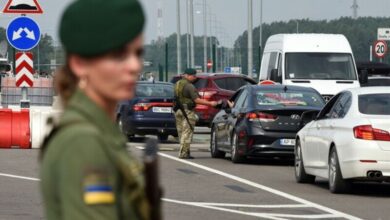
Temporary flight restrictions are being introduced in Poland: what Ukrainian refugees should consider

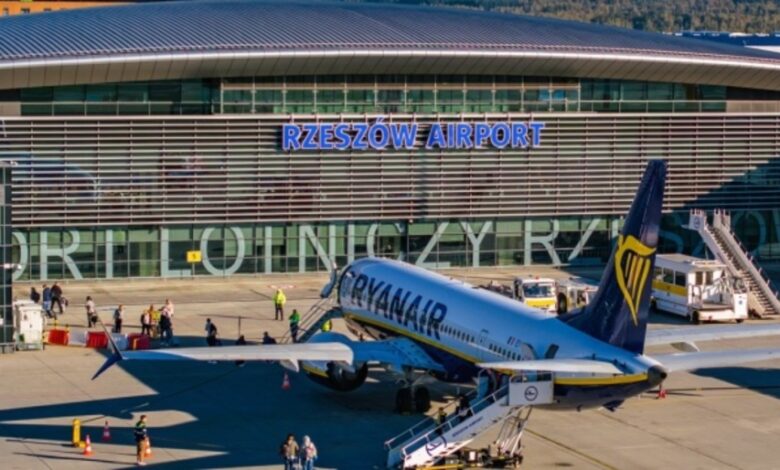
The eastern regions of Poland will soon become a zone of increased airspace control due to new temporary restrictions, which were introduced against the background of a difficult security situation and increased activity of incidents in border areas. This should be taken into account by Ukrainians who are in Poland as refugees or plan to cross the state border in the coming months.
Temporary flight restrictions
From March 10 to June 9, 2026, temporary restrictions on night flights will be introduced in eastern Poland, near the borders with Ukraine and Belarus. According to the Polish Air Navigation Services Agency, this decision was made for national security reasons due to increased tensions in the region.
The new ban will apply to flights at altitudes of up to three thousand meters, and flights at this time will be possible only under special circumstances.
The airspace covered by the new rules covers the territory along the borders with Ukraine and Belarus, from the ground to an altitude of approximately three thousand meters. This means that most large commercial passenger aircraft will continue to fly on normal routes, but private and amateur flights will require careful planning. The restrictions will be in effect from March 10 to June 9, 2026, allowing Polish air navigation services to respond more quickly to potential threats and incidents.
At night, flights in the specified area will be completely prohibited, from sunset to sunrise. Exceptions are made only for military aircraft and flights operating from Depulcy Krulewske Airport after coordination with the Air Operations Center. This measure is aimed at minimizing risks to the civilian population and reducing the likelihood of incidents during the dark hours, when air traffic control is difficult.
During daylight hours, restrictions will be less stringent, but only manned aircraft that have submitted a flight plan, are equipped with a working transponder, and maintain constant contact with air traffic control services will be able to perform flight operations. This allows all aircraft to be tracked and their movements in border areas to be coordinated, reducing the risk of unwanted incidents for civilian and military facilities.
Purpose of introducing restrictions
The Polish Air Navigation Services Agency explains that the temporary restrictions have been introduced to strengthen airspace security on the eastern flank of the country. This region is one of the most sensitive in Europe, and the rise in international tensions, as well as the increase in the number of incidents in the air, necessitate strict control over the movement of aircraft.
For Ukrainian refugees and those planning to travel along the Polish-Ukrainian border, this means that any private flights or flights without appropriate permission will be impossible at night and restricted during the day. It is now especially important to plan trips in advance and take into account the mandatory coordination of flights with the relevant services to avoid legal and security complications.
Separate exceptions are provided for civilian drones, if they do not violate the air defense recognition zones of neighboring countries, as well as for military aircraft. Air ambulance flights are allowed after receiving a special permit from the Air Operations Center, which covers rescue missions, disaster relief, response to threats to human or animal life, as well as other emergencies, including the protection of critical infrastructure.
Temporary restrictions will be in effect until June 9, 2026, after which the Polish authorities will assess the situation and decide whether to extend or change the control regime. For Ukrainians, this means the need to closely monitor updates to air navigation rules and be prepared to adapt routes in the event of continued restrictions.