
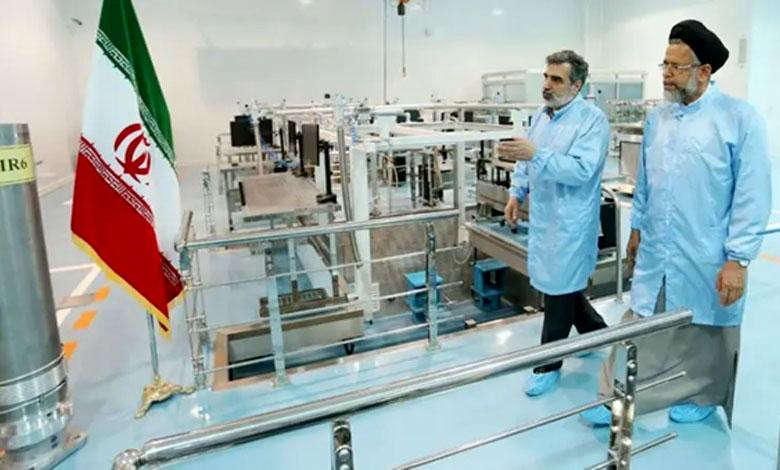
Against the backdrop of a new escalation in the Middle East, Iran categorically refuses direct negotiations with the United States, while agreeing to indirect contacts through the mediation of Oman. Instead, Washington is pressing, offering a dilemma: either a new nuclear deal or bombing. In March 2025, Trump sent a letter to the Supreme Leader of Iran, giving two months to conclude a new agreement. In response, Ayatollah Khamenei said that “threats will not bring Iran to the negotiating table” and threatened a “harsh response” in case of aggression. It is known that Khamenei brought the country’s armed forces to a state of heightened combat readiness.
The US puts forward an ultimatum, Tehran responds with threats
About Tehran’s position on American demands in an interview Reuters a high-ranking Iranian official said. According to him, despite the rejection of direct negotiations, Tehran is ready for negotiations through Oman, the traditional intermediary in communication between the two warring states. “This path is not easy, but the only one, which allows us to understand how serious the USA is about a political solution“, the interlocutor of the agency emphasized.
At the same time, Iran sent a warning to Iraq, Kuwait, the UAE, Qatar, Turkey and Bahrain: any provision of airspace or territory for US attacks would be considered aggression against the Islamic Republic. Against this background, Supreme Leader Ali Khamenei ordered the army to be put on high alert.
The situation in the region is already tense: the war in Gaza, missile strikes on Yemen, escalation in Lebanon, change of power in Syria. Added to this are the Israeli-Iranian skirmishes and the threat of a new major war that could spill over into the entire oil-producing region of the Persian Gulf.
Neighboring countries, in particular Kuwait, are trying to assure Iran of its neutrality. Turkey is officially silent, but admits that the warnings could have been transmitted through other channels.
Against this background, Russia, an ally of Iran, strongly criticized the US ultimatums. Although Tehran itself is not sure how decisively Moscow is ready to defend them in case of war. According to Iranian officials, everything depends on the dynamics of relations between Putin and Trump.
Iran insists: we do not seek to create a nuclear bomb. But at the same time, it enriches uranium up to 60%, which is almost the threshold of weapons-grade uranium (90%). The IAEA confirms that this rate of enrichment is unprecedented for a “peaceful” program.
Tehran is ready to discuss the nuclear issue, but excludes its missile program from the talks and categorically refuses to talk with the US under pressure of threats. Meanwhile, as the commander of the Islamic Revolution Guards Corps, Amir-Ali Hajizadeh, says, American bases in the region are “in the crosshairs” in case of any aggression.
These are not empty words: in 2020, Iran has already launched missile strikes on US bases in Iraq after the assassination of General Qassem Soleimani. It seems that the scenario of a new major war is now being discussed not as a hypothetical but as a real one. And it takes two months to implement this scenario.
Why does Iran not agree to direct negotiations with the United States?
There are a number of historical, ideological, political and strategic reasons for this. Iran’s mistrust of the US has deep historical roots. In 1953, the US (along with Great Britain) staged a coup d’état in Tehran, overthrowing the democratically elected Prime Minister Mossadegh. This left a deep trauma in Iranian society. Later, the US supported the autocratic regime of Shah Pahlavi until 1979, which is associated in Iran with repression and inequality. After the seizure of the American embassy in Tehran and the detention of 52 hostages, the United States severed diplomatic relations. Since then, the countries do not officially have direct communication channels.
There is also a strong ideological component. The Iranian Islamic Republic is built on the idea of ”anti-imperialism”. The USA is constantly depicted in official Iranian rhetoric as the “great Satan” — a symbol of colonialism, aggression and injustice. Therefore, in the eyes of many in the Iranian government (especially among the Islamic Revolutionary Guard Corps), direct negotiations with the United States are perceived as capitulation or compromise with the principles of the revolution.
In addition, Iran believes that the US is using the talks solely to buy time or influence the country’s domestic politics, while not giving up sanctions and financial pressure.
The United States’ unilateral withdrawal from the nuclear deal in 2018 during Trump’s first presidency deepened this mistrust. Iran believes that the agreements with Washington are not worth the paper if a changing administration can violate them.
Iran usually gravitates toward indirect negotiations (through intermediaries — Qatar, Oman, the EU), which allows it to save face and not violate its “principled” position.
Strengthening the US military presence
The United States of America has a significant military presence in the Middle East, which includes hosting military bases, conducting operations, and providing military support to allies. Recently, this presence has been increased in response to growing tensions in the region, including conflicts with Iran and its allies.
April 1, 2025 Pentagon announced on increasing military resources in the region, including the transfer of up to six B-2 bombers to the Diego Garcia air base in the Indian Ocean. These aircraft are equipped with stealth technology and are capable of carrying powerful bombs, such as the GBU-57 Massive Ordnance Penetrator, designed to destroy deeply hidden targets, including Iran’s nuclear facilities. From mid-March 2025, the United States is conducting bombing positions of the Houthis in Yemen in response to their attacks on international shipping. Key Houthi missile technology experts were killed during these operations.
On April 4, 2025, the administration of President Trump approved sale of over 20,000 5.56mm Colt Carbine Assault Rifles to Israel. The deal, worth $24 million, was previously held up by the Biden administration over concerns the weapons could be used by extremist Israeli settlers in the West Bank.
Overall, the US military presence in the Middle East remains significant and continues to adapt to changes in the regional security and political situation.
Iran and the nuclear alarm: how close the country is to nuclear weapons
For decades, the world has been anxiously watching Iran’s nuclear ambitions. After the US withdrew from the international nuclear agreement in 2018, the situation only worsened — Tehran activated production of enriched uranium, and now experts estimate it will take less than a week to accumulate enough material to make a bomb. What exactly is Iran doing?
In 2015, a historic nuclear deal, the Joint Comprehensive Plan of Action (JCPOA), was signed, under which Iran agreed not to enrich uranium above 3.7% and to limit its stockpile to 300 kg. These limits made it impossible to build a weapon—at the time, it would have taken a country 12 months to gather enough material for a bomb. International inspectors confirmed that Tehran complied with the conditions.
But after the United States, led by Donald Trump, in 2018 terminated the agreement and reimposed sanctions, Iran responded by successively dismantling restrictions. Already a year later, the country again began enriching to 20%, and later to 60% – an indicator that technically does not differ much from the military level of 90%.
Infographic: IA “FACT”
As of the beginning of 2025, Iran has accumulated 275 kg of uranium enriched to 60%. This is enough to reach 90% in a short time and get the same 15–25 kg of material from which a simple nuclear warhead can be made. However, getting rich is only part of the way.
In addition to enriched uranium, Iran needs to develop the bomb itself, as well as a means of delivery. According to US intelligence estimates, Iran has the knowledge to create a primitive charge similar to the one the US dropped on Hiroshima in 1945. But it will take years to turn it into a combat weapon that can cover hundreds or thousands of kilometers. In particular, the miniaturization of the warhead for placement on a ballistic missile and the ability to survive re-entry into the atmosphere.
Tehran already has missile technology: the range of some missiles is up to 5,000 km, which is capable of covering all of Europe. But there is no verified data on the successful creation of a nuclear warhead.
Returning to the White House, Donald Trump again chose pressure tactics. He does not rule out negotiations, but at the same time restores tough sanctions, trying to bring Iran’s oil exports to zero. And also – openly talks about the possibility of military intervention.
Will Israel strike?
For Israel, the prospect of a nuclear Iran is an existential threat. For decades, the country has resorted to shadowy countermeasures: alleged involvement in the murders of Iranian scientists, sabotage of enrichment facilities, and cyber attacks. And if Iran approaches the nuclear threshold, Israel, according to its officials, may launch an airstrike.
Such a scenario is complex: Iran’s nuclear facilities are numerous, protected, and located deep underground. A successful operation requires careful coordination, refueling aircraft in the air and the risk of developing into a regional conflict.
In the fall of 2025, international oversight of Iran’s nuclear program will end — along with the possibility of promptly returning sanctions. The world is on the brink of a new nuclear crisis. Iran emphasizes that its program is peaceful. But with each kilogram of 60% uranium, less and less people believe in it.
Who can? Nuclear inequality of the world
Infographic: IA “FACT”
The basis of nuclear diplomacy in the world is the Treaty on the Non-Proliferation of Nuclear Weapons (NPT), which entered into force back in 1970 — during the era of Richard Nixon. This document, which today unites 190 countries, officially established the nuclear status of five states – the USA, Great Britain, France, China and Russia. All others, including Iran, agreed to give up developing a nuclear bomb in exchange for access to peaceful nuclear technology. But the main condition is complete openness to IAEA inspectors, who count literally every gram of enriched uranium.
Meanwhile, several states that already have nuclear weapons — India, Pakistan, North Korea — have never signed the NPT. And Israel, although it has not conducted official tests, has long maintained a policy of nuclear “opacity”: it does not confirm, but it does not deny the presence of a bomb.
In total, nine nuclear powers each year spends to support its $91 billion arsenal — that’s roughly $3,000 every second. Such data is provided by the International Campaign for the Elimination of Nuclear Weapons. The world is paying a steep price for the illusion of containment.


