
Trump’s Alternative “Reality”: How Washington’s Rhetoric on the War in Ukraine Is Changing

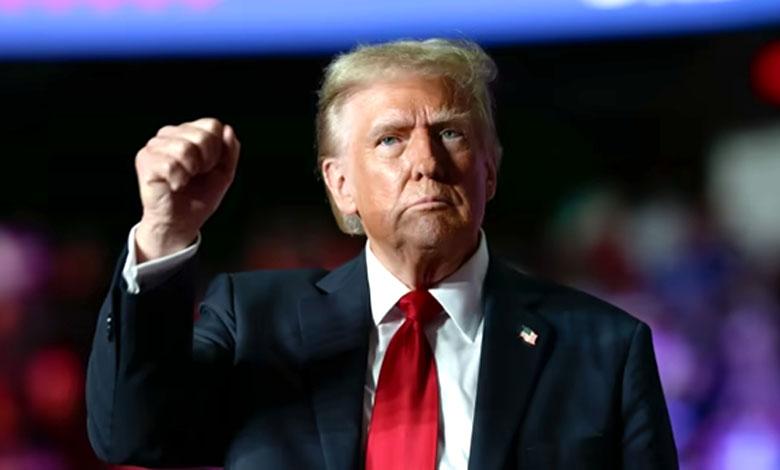
Yesterday’s messages of Donald Trump outraged millions of Ukrainians. After Ukraine and the European Union were excluded from the peace talks between the US and Russia held in Saudi Arabia, US President Donald Trump made a series of statements that distort the reality of the war and the role of Russia as an aggressor in it. During a press conference at Mar-a-Lago, the American president actually delivered rhetoric that resonated with key Russian propaganda narratives. In particular, Trump said that Ukraine started a war and now has to hold elections because President Volodymyr Zelensky has lost legitimacy and support among the population.
The American channel CNN is very apt expressed himself about Trump’s attack on our country: “It would seem that the situation for Ukraine could not become more difficult. But then Donald Trump spoke”.
Europe, which was also excluded from the negotiations in Saudi Arabia, is now even more afraid that Trump may impose a peace agreement on Putin’s terms on Ukraine. It is indicative that the statements of the US president contradict the words of his own Secretary of State Marco Rubio, who after meeting with the Russian delegation assured that any peace agreement would be fair.
Fakes about Zelensky’s rating and the elections
Trump’s attack on Zelensky, who until recently was called a hero in the US for resisting the Russian invasion, demonstrates a striking change in Washington’s policy — from supporting Ukraine to actually rewarding the aggressor. Speaking at Mar-a-Lago, Trump said that Ukraine is under martial law, elections are not being held, and Zelensky’s rating has allegedly dropped to 4%. However, opinion polls show that although the level of support for Zelensky has decreased compared to the beginning of the war, it does not come close to the number that Trump mentioned. As always, he uses “alternative facts” and adjusts “statistics” to fit his messages. Manipulation of numbers is one of Trump’s favorite tricks, which has been evident since his first presidency. The Politifact fact-checking platform of its time refuted Trump’s thousands of false statements.
Fact-checkers noted with irony that they had never met a politician who would so unconditionally ignore requirements for the truthfulness of reports. The PolitiFact organization three times – in 2015, 2017 and 2019 – recognized Trump’s statements as lies of the year, in particular about the crime rate in New York, Hillary Clinton’s involvement in the sale of weapons to Islamists, Biden’s alleged planned tax increase and the record economic success of the United States during his presidency.
In PolitiFact’s truthfulness rating, Trump most often received the lowest rating – “Pants are on fire”, which can be translated in Ukrainian as “burned out lies” or simply “complete fiction”.
It is important to understand that this is not some kind of local lie that is easy to separate from the truth and abstract from it due to its obviousness and counterproductiveness. In Trump, “alternative facts” appear woven into a chain of false cause-and-effect relationships that replace real logic and force one to agree with an alternative reality.
In particular, Trump said that in order for Ukraine to have the “right to vote” in determining its own destiny, it needs to hold elections: “If they want to have a seat at the negotiating table, shouldn’t the people of Ukraine express their opinion?“
Apparently, Trump felt that he would be accused of broadcasting Kremlin narratives, so he hastened to justify himself: “This is not a pro-Russian position, this is my own opinion“.
However, his calls for elections in Ukraine look especially cynical against the background of the fact that Trump himself refused to recognize the results of the 2020 US elections, which he lost.
It looks even more cynical against the background of the fact that Putin himself has been in power for more than two decades, manipulating elections and destroying the opposition.
“Trump lives in a disinformation field. I would like more truth”, – stated Zelensky, commenting on fake statistics regarding his rating during the last press conference.
Putin as a “victim”
Trump said that his meeting with Putin could take place before the end of the month, which further strengthens Russia’s position. His words can also increase the skepticism of European allies regarding the US peace plan, because, according to the American administration, Europe will be responsible for its implementation.
It is not clear what exactly Trump’s peace agreement entails. And this only strengthens the impression that his main goal is to conclude any agreement in order to claim a diplomatic victory. At the same time, critics fear that such a hasty treaty could become a prerequisite for a new war.
Trump even said that he does not rule out the participation of European troops in support of the future agreement, although this idea was rejected by Russian negotiators in Saudi Arabia. At the same time, he did not comment on the statement of British Prime Minister Keir Starmer, who warned that European forces will be able to act in Ukraine only under the condition of American support. Last week, US Defense Secretary Pete Hegseth also emphasized that US troops will not participate in peacekeeping operations in Ukraine. Starmer is expected to arrive in Washington next week, where he will try to mediate between the US and Europe.
However, not all Republicans share Trump’s position on Russia.
The chairman of the Senate Armed Services Committee, Roger Wicker, said that he does not trust Putin and believes that “this war criminal should spend the rest of his life in prison if not executed“.
His colleague John F. Kennedy also spoke harshly about the Russian dictator, saying that “Putin has a black heart and a Stalinist taste for bloodHowever, he refrained from directly criticizing Trump, stressing that he does not believe that Washington has already begun to give way to Moscow.
“I don’t see us taking the pressure off Putin“, Kennedy said.
During the last press conference, President Zelensky criticized the latest US diplomatic moves towards Russia, including their participation in negotiations without Ukraine and the change in rhetoric. He noted that Moscow is happy that Putin is actually being brought out of isolation and is no longer perceived as a persona non grata.
He was especially outraged by the fact that in some of Putin’s statements they even try to portray him as a victim. “Yesterday there were signals that Putin is a victim, this is something new“, Zelenskyy noted. He also drew attention to the change in wording on the part of the United States: earlier, Ukraine fought for the war to be called a war, but now even in America the term “conflict” is being used more and more often. He emphasized that it is important to notice these changes and to be aware of their possible impact on future decisions.
Trump floods the information space
In the network space, there is such a phenomenon – flood, in fact “information flood”, deliberate overloading of forums/groups with unimportant messages. There is a similar term in sports – “flooding the zone”. It comes from a strategy in American football: the attackers overload a certain area of the field, forcing the opponent’s defense to lose control and make mistakes.
In 2018, Steve Bannon, Trump’s former top adviser, said that his real enemy was not the Democrats, but the media. What method of fighting against them did he use? Counter-information to “overload the zone” — in other words, flood the media space with tons of misinformation and distracting noise.
According to experts, this tactic demoralizes opponents, preventing them from focusing on working out a common message.
“Trump doesn’t just shape the agenda, he paves it like a bulldozer”, — stated BBC Evan Nirman, CEO of anti-crisis communications company Red Banyan. — “Flooding the information field with a stream of scandals, he does not leave time to understand any of them. What would destroy any other politician is just another day in the news for him“.
What do we see? Trump and his team have turned the information space into a garbage dump, where criticism simply drowns in an endless stream of sensationalism. The strategy is simple: create so much noise that society loses the ability to distinguish between the important and the secondary. Scandal after scandal, lie after lie – while everyone is trying to understand one thing, the next misleading message is already flying. And in the end, the truth loses its meaning because people just get tired of looking for it.
History has a habit of repeating itself, although we don’t always notice it
Ukrainian journalist of Afghan origin Mustafa Nayem reminded on Facebook an event that resonates with the present. In 2001, after the terrorist attacks of September 11, the United States appealed to its allies to support the “war on terror.” NATO then activated Article 5 on collective security for the first time in history. European countries, including France, Germany, Great Britain and even neutral Sweden, have sent troops to Afghanistan in a show of solidarity with their ally.
Today, when the security of Europe is under threat from Russia, the reaction of the West looks different. If 20 years ago US support was unconditional, now there are calls for “compromise” and “dialogue” with the aggressor.
Comparing these two situations allows us to assess the changes in international politics and ask the question: does the collective West retain the same unity as at the beginning of the 21st century?


