
UberKills: a new market for violence, operating under the rules of the new “cloud platform economy”

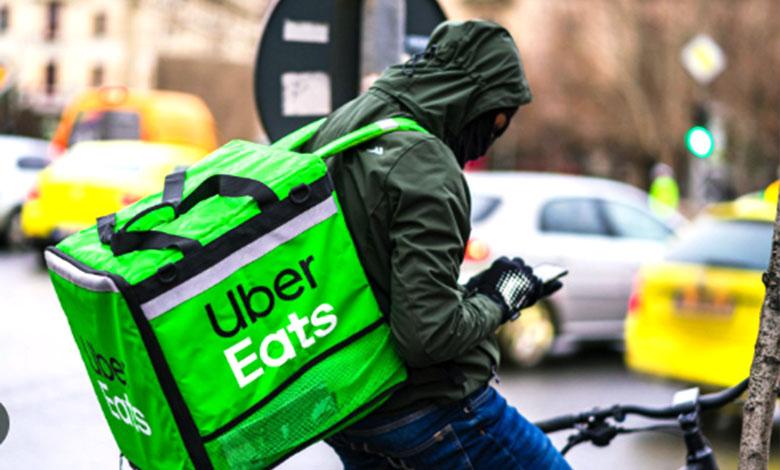
It is unlikely that the founders of Uber dreamed that their brand would one day acquire such a radical and extremist connotation. After all, Uber is currently not just a taxi. It is a symbol of the digital revolution, which turned the economy into a service “at the push of a button”. His name has become synonymous with “uberization”, when work, trust and even morality begin to be distributed not by people, but by algorithms.
Uber is a brand in which the classic models of consumption and service are falling apart, and human relationships are turning into transactions. And this logic has reached human life itself. It was in France exposed The Telegram channel “UberKills” is a platform for contract killings. One message in the chat – and the “manager” gives the executor the coordinates and weapons. The cost of living is determined like a taxi fare. Executors are often minors.
Such a scheme, built on the mechanics of ordering services online, formed the basis of a real crime. In April, 19-year-old Abdel Hakim was shot three times in the head in Val-en-Velain – and footage of the killing instantly appeared on Snapchat. The accused, 18-year-old Mohamed G. already detained The investigation believes that it was UberKills that became an intermediary between the customer and the executor. Death was arranged via messenger like pizza delivery.
This case showed: uberization of good can turn into uberization of evil. Crime ceases to be a drama and takes the form of an accessible, anonymous, almost everyday service. Morality dissolves in push notifications. All that remains is a request, a transaction… and a dead body.
Telegram, what pond platform for UberKills, has been widely criticized for insufficient moderation, closedness to law enforcement officers and blind faith in absolute freedom of speech. After last year’s arrest of Pavel Durov in France, the platform agreed to cooperate with international programs to combat child crime, and opened itself to requests from the French and Belgian police. But isn’t it too late?
The European Union took this scandal as a test: can digital democracy withstand digital lawlessness? Can freedom be protected without allowing it to become a cover for violence? UberKills is not just a Telegram channel, but a symptom of our time. A time when stories from “The Squid Game” go beyond the screens and appear in personal messages.
“Uberization of death”: why minors take up weapons, inspired by Telegram chats
We are used to talking about “digital transformation” as a good thing: it conveniently delivers pizza, taxi or provides banking services. But the digital model has no morality of its own, it is only a tool. And when the same logic of “Uber – press the button and it will come” is transferred to crime, the line between the norm and barbarism disappears.
The thing that happened in France is no exception. When 18-year-old Mohamed G. shoots 19-year-old Abdel Hakim in Vol-en-Velain, and the video ends up on Snapchat, we see more than just “one young criminal”. We see the cogs of the digital factory of death, where the role of courier is played by teenagers, and orders arrive via Telegram in a few clicks.
Why do minors appear so often in such schemes? Because in conditions of digital chaos, they are the most vulnerable group. In most countries of the European Union, in particular in France, the legislation provides for milder criminal liability for persons who have not reached the age of majority. This is actively used by the organizers of criminal schemes, remaining in the shadows. What was once called “raspberry recruitment” in the 1990s, when teenagers were recruited to distribute drugs, is taking on new forms today. Young people are drawn into violence through digital platforms, turning them into executioners. The principle has remained unchanged – only the interface has changed.
It is worth understanding: these teenagers are not carriers of innate evil. They are formed in environments that do not offer real prospects. These are primarily suburbs, immigrant neighborhoods and socially marginalized areas where access to quality education is limited, the labor market is inaccessible, and the sense of justice is replaced by the pragmatics of survival. It is from these communities that the minors used in today’s criminal digital schemes, particularly in cases like UberKills, often come from.
If earlier personal contacts were needed to attract teenagers to illegal activities – through the street, school, district – today this process is digitized. Recruitment takes place through messengers in the form of “quests”, chatbots or contests. The task is presented in a game form – with an attractive promise of status, a gift or a quick profit. This is a new form of digital instrumentalization of youth, stylized according to the aesthetics of TikTok: visually attractive, emotionally exciting, operative.
As a recent UN report on the situation in Colombia points out, the recruitment of children into armed gangs on a massive scale are used TikTok and Discord, and this is already a transnational technology that is quickly being picked up in Europe as well.
In adolescence, a child’s motivation is rarely tied to ideology. Her main need is belonging: to a group, to a community, to someone who is perceived as “her”. Self-assertion at this age is often associated with demonstrative behavior, the desire to impress. If the social environment evaluates a person according to his readiness to act “tough” or “uncompromising”, then digital “rewards” – chat status, moderator approval, quick payment – can become a substitute for family or educational support.
In this case, the teenager does not choose violence as a conviction – he simply fulfills the role that is offered to him. It is not bought, but integrated into a scenario in which violence becomes a form of social recognition. This creates a performer without an idea, without an ideology, but with a function.
And this is where the key question arises: where were the institutions designed to create a protective environment? What role did the school play when the child’s understanding of boundaries disappeared? Why were mental health support systems unable to intervene in time? And most importantly, who formed the information space in which death ceases to be a tragedy and is perceived as a visual effect, like a pixel on the screen?
UberKills – the new death market?
We live in an age where war changes form and crime changes channel. In the 20th century, we fought the mafia, which defended “its” territory. In XXI, we are dealing with “digital platforms of violence” that know no borders. And while the state appeals to the Criminal Procedure Code, the crime is adapted to the Telegram bot.
The case of UberKills in France is not a matter of banal revenge or domestic conflict. A market of violence is being formed before our eyes, which operates according to the rules of the new “platform economy”. There is a customer, an intermediary, an executor and customer support, only instead of discounts on delivery we have a bullet in the forehead.
The typology of customers is not limited to the mafia or the drug business, although they are also present. One of the areas of activity of UberKills was elimination of competitors in the field of drug trafficking in the Rhône region. But along with this, there is another alarm signal – private orders for personal reasons: jealousy, revenge or “clearing” of witnesses. In other words, today you can kill “for a reason”, and tomorrow – without it. Because as soon as the technology is simplified, the reason is no longer needed.
Increasingly, the initiators are teenagers themselves. And not because of ideology. They use the same logic as in TikTok: a like is a reaction, a “quest” is a challenge. In UberKills it is “do it for 500 euros” and you are no longer a schoolboy, but a player.
Telegram is only an interface that works structured network. UberKills is not a single bot, but a chain of chats, channels and admins who act as “dispatchers”. They accept the order, check the performer, transfer the “work”, and then receive a confirmation of execution.
It is about the emergence of a new ecosystem of violence – decentralized in the logic of action, similar to Uber. It lacks a clear control center: the “management” is not identified, instead, the performer – a minor or socially vulnerable – is literally two clicks away from the customer. We are not dealing with a classic hierarchical criminal structure, but with the phenomenon of platformized violence – a crime that functions according to the logic of a digital platform.
In the traditional forms of organized crime, centers, vertical subordination, and authority figures were clearly defined. The modern model is based on something else: an encrypted chat, a cryptocurrency wallet, and a “message history” that is both an order, a proof, and a trace is enough.
While society is still debating about prevention and regulatory regulation, participants in the digital criminal ecosystems are already testing new, improved versions – tentatively “2.0” and “3.0”, adapting the interface, minimizing traces and automating recruitment.
This is already a security problem of a continental scale. And if France, Belgium and Spain do not form a single digital jurisdiction for such cases, the EU will turn into a market not only for work, but also for death.
While you are blocking the site, it is already drifting to a new chat. While you are preparing the request, the customer has already changed the number. While legislators are preparing countermeasures, criminals are building a “rating of the most effective performers.”
UberKills is not just a Telegram channel, but a draft version of a new type of war. This is a model in which violence takes the form of a digital service – accessible, fast and anonymous. If society does not learn to recognize such signals in time – just as it did not recognize the threats in “Mein Kampf” at one time – it will soon have to read other texts: lists of victims. And this time – with a push notification.
Tetyana Viktorova


