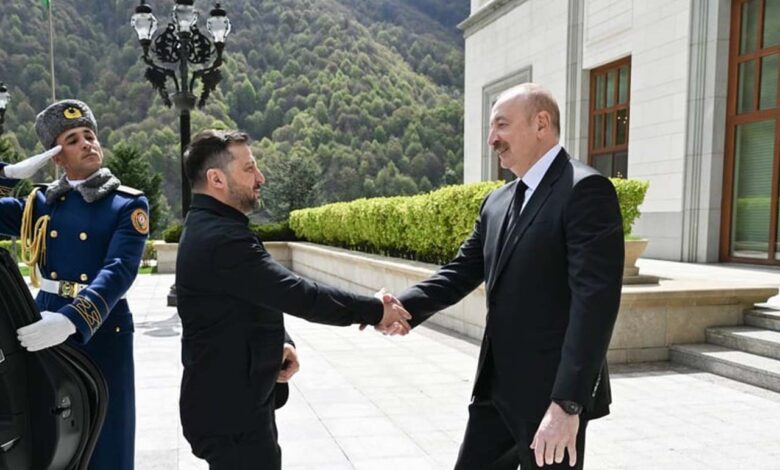
Ukraine and Azerbaijan have officially confirmed their intentions to deepen their strategic partnership by signing six bilateral agreements. The key areas of cooperation are the defense-industrial complex and strengthening the security architecture of both states.
The results of the negotiations were announced by President of Ukraine Volodymyr Zelensky during a joint press conference with his counterpart in the city of Gabala on April 25.
The heads of state paid special attention to the development of military industries and joint production of weapons. President of Azerbaijan Ilham Aliyev emphasized that military-technical cooperation has significant prospects for both countries. The parties seek to use existing opportunities to increase the capabilities of the defense sector and integrate technological solutions.
“Today, the number one direction is security, it is the defense-industrial complex”, — the President of Ukraine emphasized.
The visit to Azerbaijan was part of a large-scale international tour of the Ukrainian leader, which included a visit to Saudi Arabia and participation in the summit of European Union leaders in Cyprus. The intensification of diplomatic efforts in the Middle East and the Caspian region is connected, in particular, with the need to counter common threats in the airspace.
“We see the development of military industries, the defense-industrial complex. In general, we have excellent opportunities in production,” the President of Azerbaijan noted.
Ukraine continues to provide expert support to the countries of the region in the field of air defense. Earlier, the Head of State noted that hundreds of Ukrainian specialists are helping local air defense forces in the fight against Iranian strike drones. Kyiv has already received more than ten requests from Iran’s neighboring states and European partners for security assistance in countering Iranian technologies.
Strengthening relations between Kyiv and Baku is seen by both sides as a significant contribution to regional stability. The signed documents create a legal basis for the implementation of long-term projects that cover not only the defense sector, but also other strategically important areas of economic cooperation.