Ukraine in the hands of creditors: what is happening with government borrowing and what are the scenarios?

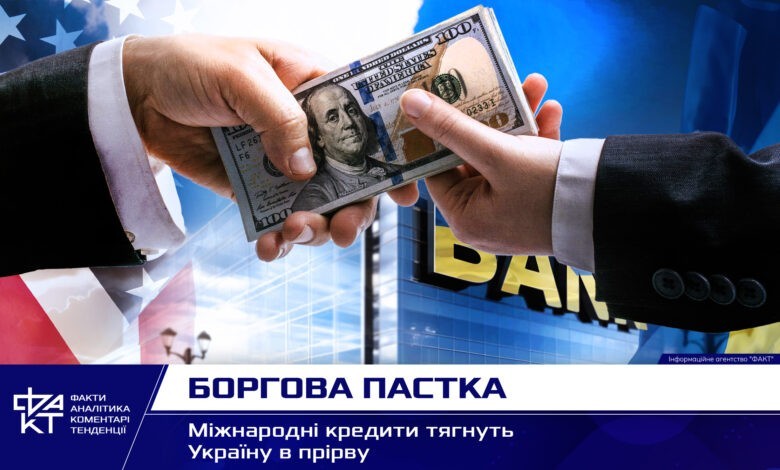
Ukraine has been in a difficult debt situation for many years, but the situation has become particularly tense in recent years. In light of current challenges, the country is forced to seek external and internal sources of funding to support its functioning. The war only increased this dependence on creditors, but is there really a limit to the growth of debt? The Ministry of Finance of Ukraine reports a significant increase in the national debt by 15% in the first eight months of 2024 alone, with the majority of this debt aimed at covering military expenses and maintaining the state apparatus in crisis conditions. Who do we owe and how realistic is it to return these funds in the coming years? Will the rising level of public debt avoid a default in 2025? What scenarios await us?
Dynamics of the size of the national debt of Ukraine
According to official data from the Ministry of Finance of Ukraine, the country’s public debt continues to grow, and this trend has gained momentum in 2024. Despite certain hopes for the stabilization of the economy in the face of external challenges and military aggression, the growth of state borrowing turned out to be too significant. It is important to pay attention to the fact that information about the national debt of Ukraine is made public with a certain delay. The latest data we have is for the first eight months of 2024, and it shows that the debt burden on the economy remains high.
As of September 1, 2024, the total state and state-guaranteed debt of Ukraine reached UAH 6.37 trillion or $154.7 billion in currency equivalent. In particular, the state debt exceeded UAH 6 trillion ($147.5 billion), which indicates a significant increase in the country’s indebtedness. The guaranteed debt, in turn, amounted to UAH 293 billion, or $7.1 billion.
Let’s look at the general dynamics of the national debt of Ukraine in recent years:
- 2014 — 73.2 billion UAH
- 2015 — UAH 69.8 billion
- 2016 — 71 billion UAH
- 2017 — UAH 76.3 billion
- 2018 — UAH 78.3 billion
- 2019 — UAH 84.4 billion
- 2020 — UAH 90.3 billion
- 2021 — 98 billion UAH
- 2022 — UAH 111.5 billion
- 2023 — UAH 161.5 billion
As you can see, the national debt of Ukraine is growing every year. Starting from 2014, when the debt amounted to 73.2 billion dollars, it constantly increased and in September 2024 reached the mark of 154.7 billion dollars (the difference is 81.5 billion dollars). This indicates a tendency to increase the debt burden on the state.
If we take a closer look at the debt structure, external borrowings make up the main part. Thus, as of the beginning of September 2024, Ukraine’s foreign debt is 4.4 trillion UAH, or $106.8 billion. It is interesting to note that since the beginning of 2024, this figure has increased by 22%. This is a significant increase, considering that the domestic public debt increased by only 6% during this period. Thus, Ukraine’s dependence on external financial resources is becoming more and more obvious, which increases the risks for the country’s financial stability in the event of further deterioration of macroeconomic conditions or changes in the global capital market.
As for the domestic debt, the largest liabilities are accumulated under the bonds of the domestic state loan (OVDP). In particular, these are 30-year government bonds in the amount of UAH 257 billion, 15-year government bonds in the amount of UAH 237 billion, and 2-year government bonds, for which the amount of liabilities is UAH 231 billion. It is also important to note that the largest holders of these bonds are banks. The portfolio of OVDP owned by commercial banks exceeds UAH 784 billion. In addition, a significant share is held by the National Bank of Ukraine, on whose balance sheet there are domestic state loan bonds worth more than UAH 677 billion.
Who lends the most to Ukraine
State-guaranteed debt is formed, mainly, from obligations arising to international organizations and commercial structures. Among Ukraine’s external debt obligations, the main creditors are international organizations that provide financial assistance to Ukraine within the framework of programs to support economic stability and recovery. These include the International Monetary Fund (IMF), the European Investment Bank, the European Bank for Reconstruction and Development (EBRD), the European Atomic Energy Community and the Clean Technology Fund, as well as the financial institutions of the European Union. As of September 2024, the total liabilities to these institutions amount to UAH 3.1 trillion, or $74.4 billion. It is also worth mentioning the significant liabilities to the governments of partner countries that provide Ukraine with loans and grants to support its financial stability. The total amount of debt to governments was UAH 318.5 billion, or $7.7 billion. This shows that Ukraine is largely dependent on foreign aid to meet current financial needs and maintain macroeconomic stability.
It should be noted that international financial support in 2024 became a lifeline for Ukraine in the vortex of economic difficulties caused by the war. In the period from January to September, the country received $24.5 billion in external financing, which came from key international partners. This is not just money, but a guarantee of stability in difficult times. However, it is worth looking deeper into who is helping Ukraine, what are the conditions of this help, and what it means for the future of the country.
The largest donor in 2024 was the European Union, which provided Ukraine with $13.1 billion, consisting of both loans and grants. In fact, EU support is the largest in the country’s total international financing, and this confirms the strategic importance of Ukraine for Europe. These funds are used to stabilize public finances, fund social programs and support war-damaged infrastructure. In particular, part of these funds goes to the restoration of the energy system after numerous strikes on critical infrastructure.
The United States also continues to be an important partner for Ukraine, providing $3.9 billion in grants alone. This means that this money will not have to be paid back, which is extremely important for reducing the debt load. Grants from the US are aimed at defense and humanitarian needs, allowing the country to maintain the military’s combat capability and provide vital services to the population.
The International Monetary Fund (IMF) is also actively helping Ukraine, providing $3.1 billion in loans. These funds go to support macroeconomic stability, which is extremely important in wartime conditions. However, it is worth noting that IMF loans, unlike grants, must be repaid, and this adds to the burden on the public debt.
Other key partners, such as Japan ($2.1 billion), Canada ($1.5 billion) and the United Kingdom ($0.5 billion), also contributed to Ukraine’s financial support. It is important to note that most of these funds are provided in the form of loans, which also imposes certain obligations regarding their return in the future.
In August, Ukraine received $8.4 billion in external financing, of which grants amounted to $5.5 billion, and loan funds — $2.9 billion. But in September, international inflows stopped, which shows how volatile the flow of external support can be, depending on political and economic decisions in donor countries. In total, since the beginning of 2024, Ukraine has received more than $6.5 billion in grants and almost $18 billion in loans, which demonstrates a significant advantage of credit resources over grant aid.
For comparison: in 2023, grants accounted for more than 40% of the total amount of international aid, and in 2024 this share decreased to 27%. This shows that donors are increasingly providing assistance in the form of loans, which increases Ukraine’s debt burden.
Regarding the issue of debt payments, in the last quarter of 2024 (October-December) Ukraine must pay UAH 276.3 billion for its obligations. The largest share of these payments falls on the domestic debt — UAH 205 billion. These are obligations under OVDP and other instruments issued by the state to finance budget expenditures. As for the external debt, Ukraine has to repay UAH 71 billion, and although the restructuring of Eurobonds made it possible to significantly reduce this burden, the problem of maintaining a high debt burden remains relevant. At the same time, debt restructuring in August 2024, which made it possible to reduce payments by more than UAH 606 billion, became a temporary relief for Ukraine. This means that these debts have been carried over to future years, in particular to the period 2029-2035. However, it should be understood that the transfer of payments is not their cancellation, and Ukraine will still have these obligations in the future.
Obligations for Ukrainian Eurobonds issued on international capital markets also make up an important share of foreign debts. The amount of debt under Eurobonds as of September 1, 2024 was UAH 627 billion, or $15.2 billion. In addition, a significant share of the guaranteed debt belongs to state and commercial banks, such as Oschadbank, Ukrgasbank, PUMB and Taskombank.
What is the perspective and possible scenarios of the development of events
Looking to 2025 does not bring much optimism from the point of view of the debt burden. In the draft state budget for 2025, it is planned that the amount of state and guaranteed debt will increase to UAH 8.6 trillion, which is 35% more than as of August 31, 2024. The most alarming is the forecast that the ratio of public debt to GDP will reach almost 100%, that is, the amount of debt will be almost equal to the volume of all goods and services produced in Ukraine during the year. This indicates that Ukraine’s financial stability will remain at risk if new solutions for debt management are not found.
In 2025, it is assumed that the total volume of borrowing will reach UAH 2.33 trillion, while debt payments will amount to UAH 0.69 trillion. This means that Ukraine will continue to actively borrow to cover its budget expenditures, which will increase the debt burden on the economy.
The situation with Ukraine’s state borrowing looks like a kind of financial trap, from which the way out is not yet obvious. In 2024, the country received huge amounts of aid from international partners, but the main share of this aid is loans, not grants. As a result, the national debt continues to grow at a frantic pace, and external liabilities are becoming more and more difficult for the budget. It is important to understand that the current financial support, although it allows to keep the economy afloat, is a temporary solution. In fact, Ukraine is “borrowing time”, postponing its main financial problems for the future.
Against the background of these debt obligations, the country found itself in a situation where its economic stability almost entirely depends on international creditors. The European Union, the IMF, the USA and other partners actually hold Ukraine’s financial levers in their hands. Yes, they help the country survive, but they will have to pay for it in the future – and not only with money, but also with political decisions and commitments.
Forecasts for 2025 look even more threatening. The ratio of national debt to GDP will almost reach 100%, which means that the entire Ukrainian economy will be forced to work just to pay off debts. If structural reforms are not carried out and the government does not create effective development strategies, the risks of default will become a reality. It can occur if the country is unable to fulfill its obligations to external creditors in a timely manner due to a lack of financial resources or an unfavorable economic situation.
However, there are several possible scenarios:
- Structural reforms and international support. The government can continue to work with international financial organizations, such as the IMF, for new loans or debt restructuring. This will temporarily avoid default, but will require the implementation of strict economic reforms, cuts in public spending and tax increases.
- Debt restructuring. Ukraine can agree on the restructuring of its debt obligations. This means that payments will be extended over a longer period or partially written off. Such a scenario is possible if the creditors are ready for negotiations and there is significant international support.
- Investment attraction and economic growth. If Ukraine can activate economic growth by attracting investments, developing exports, and stabilizing industrial production, it can increase budget revenues and ease the debt burden.
- Default. If the economic situation does not improve and Ukraine cannot meet its debt obligations, default may become a reality. This will negatively affect the international reputation of the country, lead to a decrease in the credit rating, an increase in the cost of loans in the future, a reduction in investment and a significant decline in the economy.
Therefore, the fate of Ukraine in 2025 will depend on whether it manages to find a balance between external obligations and internal economic reforms. Ukraine’s large foreign debts put significant pressure on the economy, limiting opportunities for investment in infrastructure development, social programs, and defense. Debts will have to be repaid to future generations, and the main burden will fall on taxpayers, small and medium-sized businesses, and public resources. External creditors will continue to dictate their terms, which undermine the economic and political independence of the country. The absence of a strategy to reduce the debt burden will lead to an even greater dependence on international financial assistance and a constant increase in debt obligations, and the obligations postponed as a result of the restructuring of Eurobonds will return as a boomerang in 2029-2035. This is a real challenge for the government, which will have to find a balance between the growing costs of military operations, social support of the population and the need to repay huge amounts of debt. Will Ukraine be able to withstand this financial pressure? The issue remains key and still open to the political and economic agenda.
Oksana Ishchenko