World Refugee Day: Modern Statistics of Forced Displacement of Ukrainians Through Historical Parallels

The annual celebration of World Refugee Day on June 20, initiated by the UN General Assembly at the end of 2000, focuses the attention of the world community on the acute problem of observance of the basic human rights to safe shelter and a dignified life. Global migration processes demonstrate that the loss of homeland becomes a difficult long-term test, forcing millions of families to adapt to complex financial, legal and social realities in different countries of the planet. For Ukraine, this date is of exceptionally painful significance, since the large-scale Russian invasion has turned forced displacement into an everyday harsh reality for a huge number of citizens.
Official data on the scale of Ukrainian evacuation
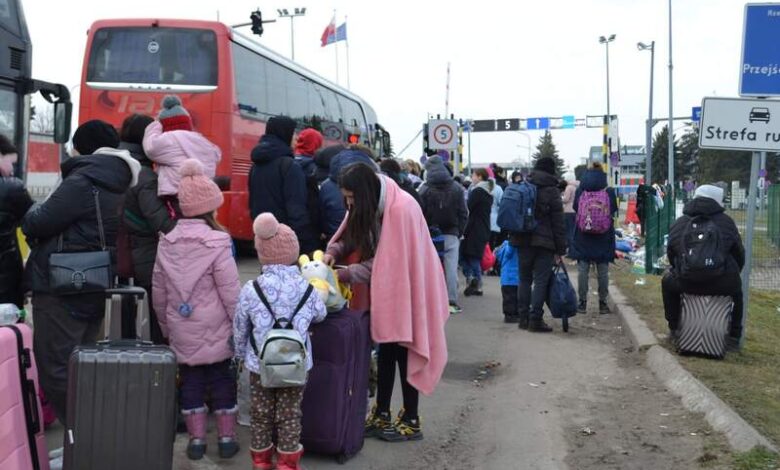
The full-scale war in Ukraine has led to the deepest migration crisis in Europe in many decades, forcing a huge number of people to leave their homes in order to save their lives. The Verkhovna Rada Commissioner for Human Rights Dmytro Lubinets published current data from the Office of the United Nations High Commissioner for Refugees, according to which more than 5.7 million Ukrainian citizens have left their country.
The Ombudsman emphasized that behind the dry mathematical calculations lie dramatic life stories, colossal distances between members of separated families, and daily alarm calls with a single question about safety.
“Behind this number is an experience that divided the lives of millions into “before” and “after”. These are thousands of kilometers between the dearest ones, daily phone calls asking “How are you?” and the colossal strength to live on, keeping Ukraine in their hearts.
We are sincerely grateful to every state, every community and every person who opened their doors to Ukrainians in the most difficult time. You have returned to them a sense of security and human dignity.
And we know for sure: we will return. We will rebuild. We will embrace our own. Because wherever we are, our home is always where Ukraine is,” – noted Lubinets.
Legal mechanisms for ensuring long-term asylum in the EU
The long-term integration of millions of displaced persons requires international institutions to adopt clear regulatory decisions to ensure the legal stability of migrants. An important step in this direction was the recent decision of the Council of the European Union, which officially approved the extension of the temporary protection regime for citizens of Ukraine until March 4, 2027.
This special legal instrument has been successfully operating since spring 2022, guaranteeing people opportunities for legal employment, education, and medical and social support. Based on reports from the European Commission, at the beginning of 2025, the total number of recipients of such status in European countries was recorded at about 4.3 million people, which confirms the unprecedented magnitude of the migration burden on the infrastructure of the successor states.
Historical parallels to the emergence of the global refugee protection system
The devastating aftermath of World War II left more than 40 million displaced persons in the European space, which forced state leaders to develop the 1951 Geneva Convention, which for the first time legally defined refugee status. At the same time, the international community began to create the first coordinated relief programs, trying to provide the affected people with housing, work and basic medical care. The global initiative demonstrated that overcoming the consequences of such a large-scale disaster requires financial solidarity and the long-term joint efforts of many governments.
In the first half of the 20th century, the Norwegian explorer and diplomat Fridtjof Nansen initiated the creation of a special international document that allowed hundreds of thousands of stateless people to travel and work legally.
World history knows many examples when prominent figures of science and culture became forced migrants, including physicist Albert Einstein, actresses Marlene Dietrich and Mila Kunis, singer Freddie Mercury and politician Madeleine Albright. The fastest wave of mass flight was recorded in 1994 during the bloody genocide in Rwanda, when more than two million citizens left the country within a few weeks. The ongoing military conflict in Syria has caused another large-scale humanitarian crisis of our time, forcing millions of people to seek refuge in Turkey, Lebanon, Jordan and Western European countries.
According to the official report of the Office of the United Nations High Commissioner for Refugees (UNHCR Global Trends), published in June 2026, there are 41.6 million refugees in the world. If we talk about the total number of forcibly displaced people (this includes, in addition to refugees, internally displaced persons (IDPs) within countries, asylum seekers and persons under UN mandate), this figure is 117.8 million people.