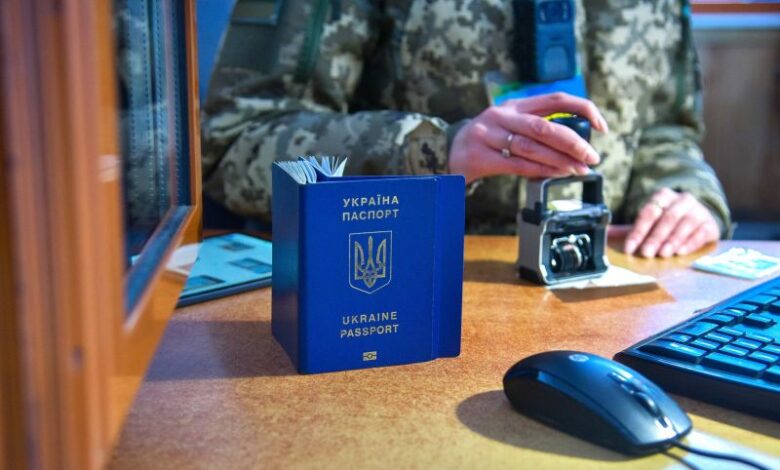
In the conditions of a full-scale war, which has been going on for the third year in Ukraine, more and more citizens are leaving their homes, crossing borders in search of safety, new opportunities, or to visit relatives abroad. This mass emigration became one of the biggest humanitarian and demographic problems faced by Ukraine since its independence.
The Western Regional Department of the State Border Service of Ukraine-Western Border made public the following information:
“Over the past week, 527,000 people and 97,000 vehicles crossed Ukraine’s western borders with the EU and Moldova (in Bukovina).
During the day of January 5, 107 thousand people and 18 thousand vehicles crossed the western borders of Ukraine with the EU and Moldova (in the Chernivtsi region).
50,000 people left Ukraine last day. 33 thousand of them crossed the border with Poland, the rest followed to other EU countries and Moldova.
Over the past day, 57,000 people were followed to Ukraine, 53,000 of them are citizens of Ukraine.”
That is, according to the data of the Western Regional Office of the State Border Service of Ukraine, the largest number of Ukrainians left across the border with Poland — 33,000 people. The rest chose routes through Slovakia, Hungary, Romania and Moldova. At the same time, 57,000 people returned to the country, of which 53,000 were citizens of Ukraine. Most of them are men, indicating that they are returning to perform duties, particularly military or professional.
Unfortunately, the demographic situation is becoming increasingly difficult. The war forced millions of Ukrainians to leave the country. Over the past two years, a significant part of the working population, including young people, who are the basis of Ukraine’s future recovery, left for Europe. This is especially felt in the western regions, which have become a transit corridor and at the same time a region where many temporarily displaced persons remain.
See also With the proliferation of the internet and digital platforms, teenagers' lives are increasingly centred around social media. TikTok, Instagram, YouTube and other platforms are becoming a place to socialise, express themselves and get information. However, these platforms also carry risks associated with uncontrolled access to content that can be harmful, dangerous or even tragic. The recent TikTok scandals in Europe are a reminder that parents should pay special attention to their children's online lives. This issue is especially relevant for Ukraine, where teenagers are also actively using social networks, and the issue of content control is still underdeveloped. Scandal in France: a lawsuit against TikTok In France, seven families filed a class action lawsuit against TikTok after dangerous content in the social network led to tragic consequences. About it writes Reuters. Two 15-year-olds committed suicide, according to the lawyer, after watching videos promoting suicide and other dangerous behavioural patterns. This is the first such case in Europe, with the platform accused of contributing to the tragic events by failing to properly monitor content that reaches underage users. The families' lawyer, Laure Boutron-Marmion, insists that TikTok, as a commercial company providing its product to minors, should be held responsible for the harmful effects of its product. TikTok has not yet commented on the lawsuit, but the company has previously assured its responsibility for the mental health of young users and introduced certain measures to protect them. This situation raises the question of how social media should protect young people from dangerous content. It is also a challenge for parents around the world, including Ukraine, where access to content is less controlled and teenagers may face similar risks. How Ukrainian parents can protect their children The problem of harmful content on social media is a global one, and it can only be avoided if parents are actively involved in the parenting process and use technology to keep children safe. Here are some tips that can help parents keep their children safe from the negative influence of social networks. Regular conversations about internet safety It's important to discuss internet safety with your children and explain that not all content is helpful or safe. Explain why they should be careful and avoid suspicious or dangerous content. Explaining risks and teaching critical thinking Children need to understand that information on the internet can be distorted or manipulative. Teach them to think critically, recognise the signs of false information and avoid content that may cause anxiety or stress. Set limits on time of use Research shows that excessive time on social media leads to stress and depression. Agree with your children to limit the amount of time they can spend online. This will help reduce their addiction and keep them mentally healthy. Set up privacy settings and parental controls Use the privacy features on social networks that allow you to restrict access to content that is inaccessible to children. It's also worth utilising parental control features to monitor your child's activity and block potentially harmful content. Developing trusting relationships Trust between parents and children is the foundation of safe social media use. Let children know that they can share their thoughts and concerns with you, and that you are always there to help. Keep up with news about social media Pay attention to scandals or problems that arise with social media, such as the situation in France. Such cases allow parents to learn about new dangers and react in time. Mental health support Talk to your children about their feelings and experiences and help them cope with emotional stress. If you suspect that a child is being influenced by harmful content, don't hesitate to contact a professional. TikTok, like many other social networks, should ensure the safety of underage users. The problem of dangerous content on social networks is now going global, and companies that provide platforms for teens must step up measures to filter harmful videos and material. Incidents like the French one emphasise the importance of paying attention to children's online lives and demonstrate that parents can and should play a key role in keeping their children safe. Social media can be a useful tool, but only if teenagers are aware and protected. Dialogue with children, setting rules and controlling access to content is the basis for preserving their mental health and emotional stability in the digital world.
Ukrainians who go abroad face many challenges. Adapting to a new culture, finding a job, understanding local laws and regulations — all this becomes part of everyday reality. For example, EU countries are actively changing their immigration policy, adapting it to new conditions. Sweden, which has accepted a significant number of Ukrainians, recently announced a change in the rules for obtaining an EU Blue Card, which opens up new opportunities for highly qualified workers. However, these innovations require Ukrainians to carefully study the conditions and consult with specialists.
The war also affected family ties. Due to the imposition of martial law, men between the ages of 18 and 60 are prohibited from leaving the country, which has resulted in the separation of many families. Women and children leave in search of safety, while men stay at home or at the front. This factor increases social tension both in Ukraine and among Ukrainian communities abroad.
Despite all the difficulties, the Ukrainian authorities emphasize the importance of a strategic approach to the departure and return of citizens. This especially applies to people who plan to stay abroad for a long time or start their own business. Consultations on migration issues, understanding the rules and innovations in the host countries become mandatory steps for those who want to avoid additional problems.
In this difficult period, Ukraine is also trying to maintain contact with citizens who are outside the country. This is manifested through diplomatic efforts, assistance to Ukrainian communities abroad, as well as support for humanitarian initiatives. All these steps are aimed at ensuring that people do not lose touch with their homeland, even when they are thousands of kilometers away from home.
Mass emigration of Ukrainians is a phenomenon that requires not only discussion, but also a systematic approach to its solution. Behind these numbers are millions of stories related to the struggle for a better life, survival and hope for a peaceful future. Ukraine, its citizens and the international community must work together to make this future a reality.