A court in Kharkiv rejected an application for recognition of a de facto marriage between two men

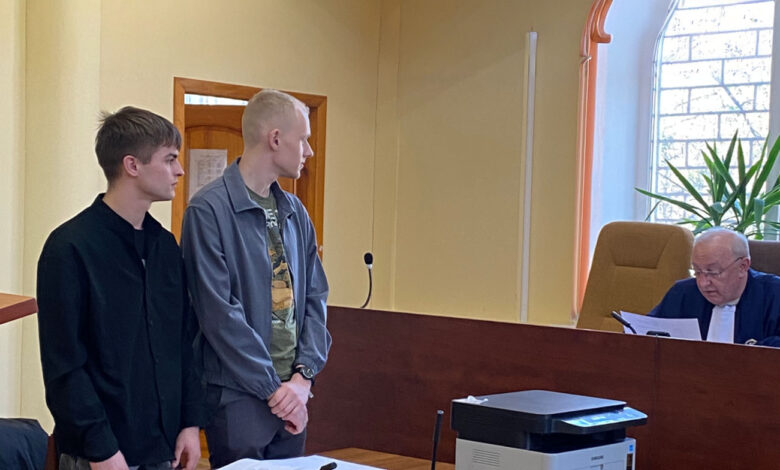
The Industrial District Court of Kharkiv considered an application to establish the fact of living together as one family by two men — a serviceman of the 17th Brigade of the National Guard Dmytro Lyaskovetsky and his partner Yevheniy Donets. Based on the results of the consideration, the court made a decision not to satisfy the said application. The main reason for this verdict was the “failure to prove the fact” of the existence of marital relations between the applicants.
Lawyer Oksana Guz, who represents the interests of the NGO “Insight” and the BO “March of Women”, explained that the refusal is related exclusively to procedural nuances.
“This means that the court refused to grant the application not because it does not recognize same-sex family relationships, but because there are certain questions about the evidentiary base” — noted Oksana Guz.
During the preliminary hearings, the judge studied the case materials and listened to the parties’ positions regarding the men’s joint life, however, the decision announced on March 20 turned out to be negative for the plaintiffs. The process was accompanied by protests outside the courthouse, where a group of young people in masks gathered to speak out against the recognition of such unions.
It is worth noting that in Ukrainian jurisprudence there are already cases of positive decisions in similar cases. In particular, in the summer of 2025, the Desnyanskyi District Court of the capital officially confirmed the existence of de facto marital relations between diplomat Zoryan Kis and his partner Timur Levchuk.
The court decision was based on the fact that, despite the definition of marriage in the legislation as a union between a man and a woman, there is a possibility of establishing the fact of living together as one family. In the case of the Kyiv couple, this allowed to resolve the issue of a joint trip abroad during a diplomatic mission.
Despite the existing precedent, the case of the Kharkiv serviceman demonstrated that the key factor in such processes remains the volume and quality of evidence of cohabitation provided to the court. The issue of recognition of de facto marital relations remains a relevant topic for discussion within the framework of family law reform and the implementation of Ukraine’s international obligations in the field of human rights protection.