Probably, everyone remembers the unforgettable scene from the legendary blockbuster “Terminator”, when the creator of the cyborg, who was supposed to be the savior of humanity, suddenly realizes with horror and despair: his desire to help progress turned into the birth of a real monster. This moment is a moment of moral breakdown, when a genius, overcome with guilt, is ready to sacrifice his own life just to stop the machine of destruction he has created. It’s a heart-wrenching climax, reminding us how dangerously and delicately dreams of grandeur are intertwined with the tragedy of creation.
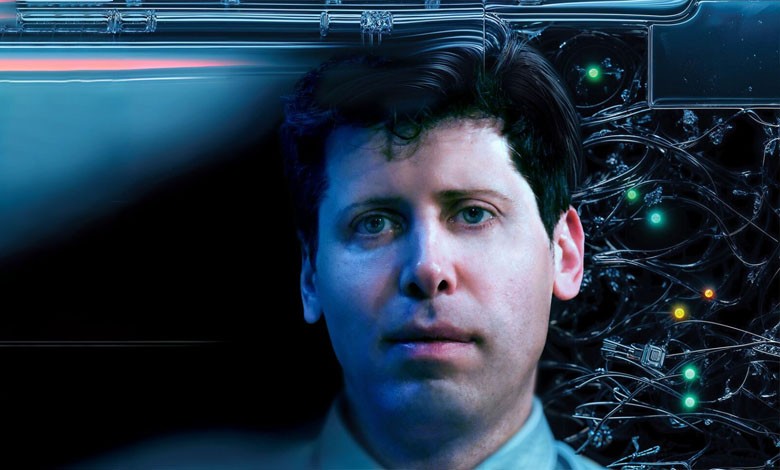
It seems that OpenAI developer Sam Altman, a key figure in the development of artificial intelligence and former president of Y Combinator, shares similar thoughts and feelings. IN interview he shared with Bloomberg the nuances of the company’s formation, its challenges, as well as professional conflicts with the team and the board of directors, reflecting the clash between the idealistic goals of a non-profit organization and the commercial needs of the development of artificial intelligence. The interview illustrates how the development of AGI – artificial general intelligence – faces ethical, technological and social challenges, and reveals the complexity of decision-making in this rapidly changing field.
When artificial intelligence goes to the side of evil
Unfortunately, artificial intelligence, this creation of human genius, sometimes ends up in the hands of those who use it for dubious purposes. Criminals are increasingly turning to AI to create manipulative technologies, mislead and harm for their own gain, exercising an instinct for power or a sense of personal superiority.
For example, deepfake technology makes it possible to create videos where politicians or public figures appear to say words they never actually said. This technology is like a knife in the back, destroying reputations, causing conflicts and fueling mistrust in society.
Scammers use text generators that are refined to the point where their messages appear completely truthful, convincing, or moving. Through these devices, people lose personal data or money by believing in false requests or promises.
In financial markets, AI is used to spread fake news and manipulate stock prices and cause economic turmoil. In the digital space, fake news generated by algorithms undermines trust and causes social divisions.
Especially dangerous are technologies that falsify voices, creating the illusion that a loved one is talking to you. Such manipulations encourage people to give their funds or share valuable information.
The “security vs. opportunity” dilemma
So, the dark side of AI is a reminder of the importance of controlling these technologies. Altman talked about the tension between the company’s board and the OpenAI executive team due to different views on how to develop artificial general intelligence. Developers had to solve a dilemma: how to balance the rapid development of artificial general intelligence with ensuring its safety for society. The company’s board felt it was important to move slowly, carefully monitor the process and consider all the risks, because AGI could pose serious threats if it got out of control. They feared that this technology could be used for criminal purposes or even become unmanageable if it reached a certain autonomy.
During the development of joint projects, Sam Altman collaborated with such influential personalities as Elon Musk. They were united by a common idea: to make AI safe and useful for everyone. However, over time, their views diverged. Musk, who fears the uncontrolled development of AI, criticized OpenAI, which he co-founded with Altman. He believed that the commercial model could put profit before safety. Instead, Altman believed that only by quickly introducing products and testing them in real-world conditions could problems be identified in time and learned to solve them. He also feared that if OpenAI didn’t step up, competitors could overtake them by creating less secure versions of AGI. For Altman, it was important to move forward, even if it involved risks, because otherwise the company could lose its leadership in the industry.
In the end, this conflict shows a broad problem of the entire industry: how difficult it is to create powerful information technologies without harming society. Altman believes that the risks can be controlled in the work process, but the board of OpenAI saw in the ultra-fast development a potential threat to society. This question remains open and very important for the future of AGI.
Changing OpenAI’s rhetoric on AGI
OpenAI has changed the way it talks about artificial general intelligence to make it easier for people to understand exactly what the company is working on and what progress it is making. OpenAI has begun to describe its developments through specific levels of development. This approach makes it possible to say more precisely at what stage the technology is now and what it can already do. This has replaced complex debates about whether they have achieved AGI with a straightforward assessment of exactly what tasks their systems are capable of performing. They used to openly discuss AGI as their main goal, but this caused a lot of confusion, because AGI is a complex idea that people understand in different ways.
Someone imagines it as machines that can do everything like people, and someone – as systems that become even more powerful, developing themselves. Some people humanize AI, suggesting that the latter can resemble a person: think, feel, analyze situations and make decisions like we do. Others see it as something more: a system that can improve itself and reach such a level of development that its capabilities will surpass anything we humans can imagine. Such systems could develop independently, creating new technologies and knowledge inaccessible to humans.
Today we deal only with artificial narrow intelligence that performs specific tasks – playing chess, translating texts or analyzing data. Perhaps fortunately, an AI that could work as a universal mind is still only a dream of scientists.
Anxiety over autonomy and risks of AGI
Altman says that while the long-term risks of AGI are difficult to model, they are real. He emphasizes that even short-term dangers, in particular, the misuse of AI for cyber security or biological weapons, are already becoming a serious challenge. OpenAI’s developer admits that it is difficult to accurately predict the lingering potential problems of AGI, such as whether an autonomous system could get out of control or act against people’s interests in the future. However, he considers these risks extremely serious.
At the same time, Altman emphasizes that short-term dangers are already becoming a reality. For example, AI models can be used to create cyber-threats or even to develop dangerous biological weapons if given the right requests. He cites cases where OpenAI technologies have increased the risk of them being misused to create such weapons. In 2022, researchers showed how AI could simulate the creation of toxic substances, raising concerns and confirming the need for regulation.
Another risk is the possibility of obtaining instructions for the manufacture of biological weapons. AI can automate the search for information on the creation or modification of dangerous pathogens that even unskilled people can use. Also, AI can be used to study the mutations of viruses or bacteria, creating pathogens that are resistant to treatment. These processes are made faster by AI, which carries the threat.
Another risk is social engineering. SHI may create believable texts, letters, or other content to trick laboratory employees into taking dangerous actions or divulging information.
These examples emphasize the importance of ethical regulation of SHI. Sam Altman is at the forefront of the battle for a future where technology can become a threat. His main challenges are the safety of the SHI and the survival of humanity in an era where a machine can become stronger than its creator.
Altman struggles for balance: how to create new things without forgetting about responsibility, how to ensure profit without betraying principles, and, most importantly, how to keep technology for everyone, and not put it in the hands of a few. His idea is simple and at the same time profound: artificial intelligence should be our ally, not our enemy.
It is not only about codes and algorithms. It’s about the power that shapes the world. For some, SHI is the future, which will help solve big problems like treating diseases or climate change. Others fear that such systems could get out of control or become tools for criminals. Therefore, discussing this topic is important not only for science, but also for all of us, because it can change our lives more than we can imagine.
Tetyana Viktorova