Retail under attack: how Ukrainian chains reformatted logistics, business model and personnel policy

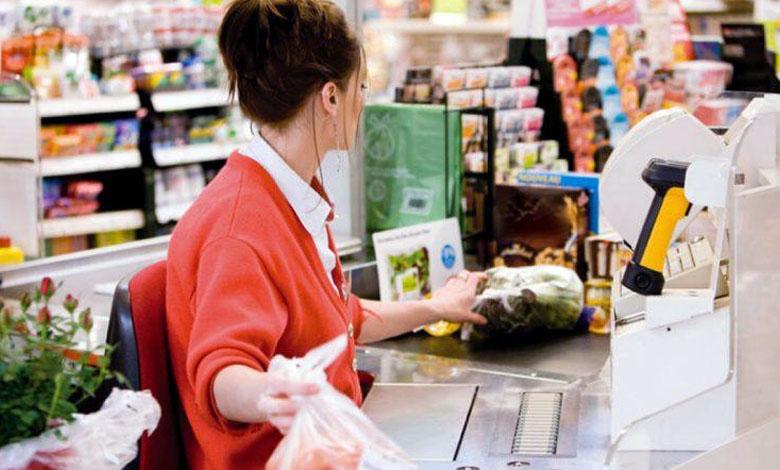
The full-scale war forced Ukrainian retail to rethink itself. What was recently a model of trade power: hypermarkets on the outskirts of megacities, extensive logistics chains, large shopping areas, is losing its relevance today. IN priority speed, flexibility and locality. The format of the future is not 5,000 square meters, but a store near the house that works even during an air raid.
The Ukrainian market demonstrates clear two-vector dynamics. First of all, this is the rapid development of minimarkets and stores of the “close to home” format. Second, the growth of online trade. Both trends have challenged classic supermarkets and hypermarkets, which have become too expensive, vulnerable to shelling, and unsuitable for mass population movements.
ATB, Kolo, Varus, Silpo Express, Thrash! are increasingly appearing in reports on the opening of new outlets. But these points are no longer similar to the pre-war “flagships”. These are small, mobile formats that can be deployed quickly, with minimal costs and as close as possible to the consumer. Location decides everything. retail goes to residential areas, to transport hubs, to front-line cities that are recovering.
In parallel, e-commerce is also growing. The segment of fast delivery, mobile applications, and dark stores is no longer just an addition to offline, but a full-fledged sales infrastructure. Rozetka, Metro, Auchan, Silpo – each player has a digital strategy in which they invest significant resources. But even here, the war imposes its limitations: without the Internet, electricity, stable online logistics – retail loses ground. Therefore, the “omnichannel” paradigm — a combination of a physical presence and a digital platform — has become the only possible strategy for survival.
The war also changed the management architecture: retailers refuse to concentrate in one area, switch to diversification of supplies, localization of warehouses, and autonomous energy supply. Generators, self-service checkouts appear in stores, the presence of staff is minimized, and flexibility in everything from logistics to assortment management comes first.
Large networks are no longer chasing the number of square meters, instead they are looking for a place in the life of the consumer, the ability to work in conditions of uncertainty, to be stable even in the event of a local disaster. In retail, the one who knows how to adapt to the market and to the war as a new reality will win.
Market representatives are already openly talking about the fact that hypermarkets are a rudiment that did not stand the test of war. They are replaced by compact formats, address logistics, and the speed of product rotation. And if scale was once the measure of a retailer’s strength, now it is the ability to survive where there is no light, stable communication and security.
Trade networks on the front lines: who survived, who disappeared and what they pay for adaptation
Ukrainian retail after 2022 resembles a battle map: on it there are heroes of growth, rear strategists, those who lost ground, and those who finally capitulated. The war was not only a challenge to consumption, but also a severe test of flexibility, profitability and the ability to think ahead.
After the collapse of turnover in 2022 — from UAH 1.44 trillion to UAH 1.16 trillion — the market is not easy recovered. In 2023, it grew to 1.54 trillion hryvnias, that is, it even exceeded the pre-war level. But according to this figure — price, which retailers paid for: generators, security, supply insurance, logistics conversion. Companies spent hundreds of millions of hryvnias on energy independence alone (in the context of blackouts).
The most vivid example is the Fozzy Group (Silpo, Fora, Thrash), which came out from the deep negative of the first war year. The company’s turnover increased by 28% to almost UAH 118 billion, and the Fora network increased its profit 8 times. Despite this, Silpo still shows a loss of UAH 1.8 billion, but this is four times less than in 2022.
The winners in this new war were those who were able to rebuild. ATB — the flagship of Ukrainian retail — for 2023 built up turnover up to UAH 181 billion (+22%) and earned a net profit of UAH 3.9 billion — 85% more than a year earlier. He did not just keep the retail network, but went into regions where competition has weakened.
The absolute record holder is the chain of small format stores “Aurora”. It became the most profitable player among the 50 largest retailers with a net profit of UAH 4.1 billion. The case of “Aurora” illustrated that even in a modest non-food segment, a breakthrough can be made if the bet is made on scale, automation and an inexpensive segment.
Not everyone survived this “retail blitzkrieg”. French giant Auchan Ukraine shortened sales by 10%, reduced the number of stores, but still shows a loss of UAH 579 million. Its format – large hypermarkets – turned out to be unsuccessful at a time when the consumer is looking for a “store near the house”, and logistics have become too complicated and risky.
Varus, despite a 14% increase in turnover, showed a drop in profit by 79% — only UAH 30 million. And the “Tavria V” network, although it expanded its trade, partially remained unprofitable, because several of its legal entities could not adapt.
In top companies, the sources of development are own profit, reinvestment and cost optimization, not external capital. Ukrainian networks practically do not have access to large-scale international investments, they have a different logic: first prove that you are stable, then enter the fund.
At the same time, some networks have already started looking for financing from international structures — IFC, EIB, and Polish banks. But these loans are still rather point-based rather than systemic.
From centralized warehouses to a network of flexible hubs
Before the full-scale war, large chains worked according to the classic model: centralized warehouses in Kyiv or the region, from where goods were delivered to points of sale by trucks. But after February 2022, this system collapsed along with the transport infrastructure and the loss of access to some regions. So Fozzy, ATB, Novus, Varus, Epicenter and other networks urgently reoriented logistics to safer regions — Lviv, Ternopil, and Vinnytsia regions.
Instead of centralized warehouses in the capital, companies began to develop local bases in the center and west of the country. It is not only more stable there, but also closer to the borders. To ensure reliable supply, some operators are opening hubs in Poland and Romania.
Pharmacy chains have practically returned to the previous level of work: 96% of points closed in 2022 are operating again. New shops and pharmacies are opening where the situation is relatively stable.
Import cargo now are coming mainly through the ports of Gdańsk and Gdynia, and rail routes through Poland and Slovakia have become standard logistics practice.
Instead of large warehouses, there are branched hubs that can work autonomously. That is why distribution centers with diesel generators, satellite Internet and a constant convoy of cars have appeared in Rivne, Vinnytsia and even in border villages.
In the new realities, storing goods has become risky. Russian rockets do not distinguish whether it is a warehouse or a factory, so logisticians switched to the “live delivery” scheme: everything that arrived immediately goes to the points. This approach not only reduces losses, but also speeds up circulation.
EKO-Market, for example, delivers up to 20 tons of goods to front-line cities every day, despite the danger. As the co-owner of the company said, “working in Kramatorsk, Mykolaiv or Nikopol is not marketing, it’s responsibility.” In each truck are not just products, but a signal to the locals: life goes on.
Every new route today is a real military operation. Trucks drive with GPS monitoring, sometimes accompanied, with built-in communication systems, cargo protection and even cabin booking. At the time of the opening of stores in Kherson after de-occupation, delivery there took twice as long as to the rear regions, and required a separate logistics logic.
For the smooth operation of the network, they began to purchase generators, starlinks, and non-volatile freezers. In 2023, more than 70% of retailers used backup power — and not because of comfort, but because of necessity.
Metro Ukraine closed one of its main logistics bases in Kyiv and instead started using smaller warehouses in the western regions.
Novus and Varus have optimized transportation by shortening route shoulders and developing systems to bypass risk points, according to the Interfax report.
Watsons, “Podorozhnyk” pharmacies, Fozzy Group created mobile warehouses — dark stores that can be deployed in a new city in a few hours.
How retail in Ukraine saves people and restarts corporate culture during war
And although the labor market lost more than 3.5 million places, the business did not respond with layoffs, but rather with a struggle for working hands. Personnel management in retail built on employee retention, not mass renewal — because dismissal is a quick way, but with a number of unpredictable consequences.
Networks don’t just hire—they do teach. A number of companies are preparing courses for women and young people to become cashiers, drivers and warehouse operators. New calltoactions: “if you want to work, we will teach you”. Win-win format: employee — with experience and stability, business — with filled vacancies.
To retain personnel, retailers offered flexible changes to meet the needs of youth, students and parents, bonus programs for goods and medical support, psychological initiatives, especially for employees who have experienced traumatic blackouts or anxiety.
In the conditions of a shortage of drivers and logisticians (preliminarily, even before the war, it was estimated at 25–30%), retailers invest to local warehouses and own deliveries — again, as a solution to the personnel problem.
The shortage of bodyguards is reaching crisis levels, because the military is at the front, and the people who remain often do not receive the necessary training. In the field of IT, the situation is less critical, because retail is moving to a hybrid model and involves remote specialists.
The war became a catalyst for the formation of values. Networks create development program, own mission, training platforms to really involve people in the brand idea, implement rich internal communication: support chats, case studies, shared pain and support; organize teambuildings, even online, to maintain unity in a crisis, launch psychological laboratories, security and emergency response training. This is the power of corporate loyalty, which grows when an employee sees that he is “not sent out of the warehouse”, but protected.
Tetyana Viktorova