After the end of temporary protection: what options will Ukrainians have in Lithuania and Latvia?

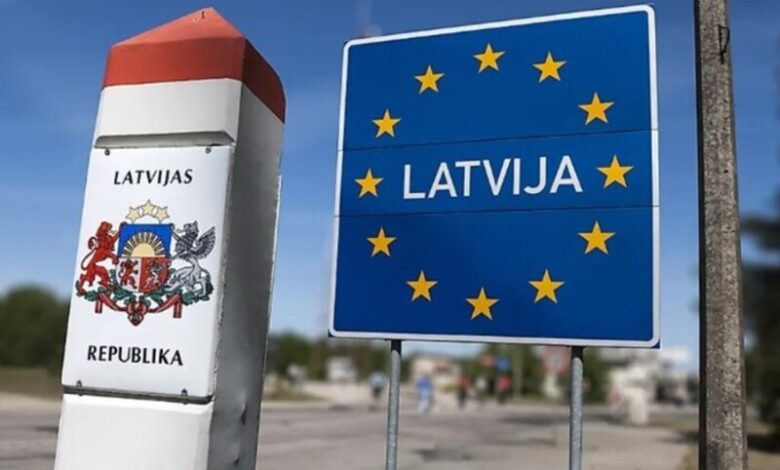
Temporary protection in the Baltic countries gave Ukrainians the right to live legally, work, receive medical treatment, send their children to school and build a life in relative stability, but this regime has a specific expiration date. Because of this, for tens of thousands of people, the issue of further status is already turning from a distant topic into a practical task with specific documents, institutions and deadlines.
When Ukrainians will have to change their status
In Lithuania, about 47 thousand Ukrainians are under such protection, in Latvia – also thousands of people, so for both countries it has long been a question not of exceptional cases, but of a large group of residents who will have to switch from the EU emergency mechanism to national residence rules.
The problem is complicated by the fact that both states operate within the framework of the same EU Directive on temporary protection, but the procedure for further legalization in them is significantly different, as are the opportunities for certain categories of Ukrainians. For people with jobs, for parents raising minor children, for entrepreneurs, for pensioners and for men of draft age, the routes for further registration look different, so there is no universal scenario here.
The key point for all those under temporary protection in Lithuania and Latvia remains March 4, 2027, since this date marks the official end of the temporary protection mechanism in accordance with EU Directive 2001/55/EC. After this date, the right to residence, access to work, healthcare and education will no longer be automatically preserved, so further stay will need to be justified by another legal status.
Due to such a time limit, the main issue for Ukrainians in the Baltics is not so much the fact of the end of protection, but how to transition to a new type of residence permit. In practical terms, this means choosing the basis for legalization, preparing documents and contacting the migration authorities before the load on these services becomes maximum.
How the temporary protection system works in Lithuania
The Lithuanian government has extended temporary protection until March 4, 2027, and at the same time, the flow of new applications does not stop, as, according to available information, from 30 to 40 new applications are submitted every day. For those already living in the country, another practical aspect remains important: the replacement of physical permits was supposed to be completed by March 4, 2026, so people who did not have time to reissue their documents should contact the Lithuanian Migration Department – MIGRI as soon as possible.
The Lithuanian system of transition after the end of temporary protection is based on the usual EU grounds: employment, family ties, entrepreneurial activity and vulnerable humanitarian status for certain categories. One of the important practical features of the Lithuanian approach is that during the transition from temporary protection, the language requirement is not established, although in real life, language proficiency undoubtedly facilitates both employment and communication with institutions, as well as the general stabilization of life.
How the temporary protection system works in Latvia
The Latvian model has a different legal framework, since Ukrainians there receive three-year temporary residence permits. The lack of a hard deadline for submitting new applications may create a deceptive sense of time, but such a pause does not guarantee easier processing closer to the end of the protection period, because with an increase in the number of applications, the bureaucratic burden will inevitably increase.
Submission in Latvia is carried out through the Office of Citizenship and Migration Affairs — OCMA, you can apply in person at the Riga center at Pēles iela 9 or in electronic format. While temporary protection is in effect, Ukrainians enjoy the same basic rights as in Lithuania, i.e. they have access to legal work, healthcare and education, but after March 2027 this right will have to be confirmed on the basis of a new residence permit.
What legalization options remain after protection ends
After temporary protection ends, several standard routes will operate in both countries, and each of them requires a separate package of documents and its own logic of consideration. The most common grounds remain work, family and entrepreneurial activity, although humanitarian mechanisms will be of additional importance for people of advanced age and other vulnerable categories.
Employment in both countries remains the most convincing reason, since an official employment contract, stable income and a confirmed place of work best show the connection of a person with the country of residence. For migration services, this reason looks the most predictable, because it confirms the person’s ability to independently provide for himself and legally stay in the state.
Family grounds also have great importance, especially in cases of marriage, registered partnership, the presence of children with the right to reside or close relatives who have already registered their legal status in the country. In such cases, original documents or notarized copies are crucial, because it is the documentary confirmation of the family relationship that becomes the basis for the subsequent decision of the migration agency.
The entrepreneurial path is suitable for those who have opened or plan to open their own business, although the requirements here are stricter and depend on national legislation. In Latvia, in particular, it is important to prove the financial viability of the business, so formal registration of a company without a real economic basis does not guarantee a positive decision.
For immigrants from regions of Ukraine that do not belong to the territories of active hostilities, including Lviv and some other regions, additional questions may arise during the consideration of applications. For men aged 18 to 60, separate checks are carried out on mobilization status, so in this category of applicants, pre-prepared documents are of particular importance.
Mothers with children: the category with the best prospects
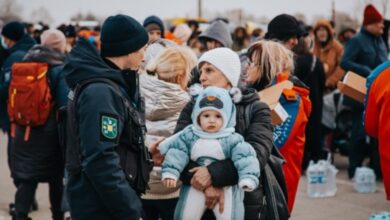
Among the various groups of Ukrainians, the most convincing chances for further registration are for mothers with minor children, especially in cases where the mother acts as the sole guardian. For the migration systems of Lithuania and Latvia, the interests of the child, the stability of residence, education at a local school, access to treatment and general confirmation that the family has already integrated into the social environment are decisive.
In Latvia, mothers raising children under 18 are provided with a Temporary Residence Permit on family grounds, and the child’s education at a Latvian school is considered a weighty argument when considering the application. Medical and educational services for such families after changing their status can be maintained on the usual terms, if the documents are submitted on time and the legal basis is properly confirmed. For sole guardians, the procedure looks more favorable, and the basic package of documents includes a birth certificate, proof of residence and documents certifying guardianship.
In Lithuania, TRP is also provided for mothers with children under 18 years of age through MIGRI, and additional weight may be given to circumstances related to the child’s stay in a combat zone and the need for psychological rehabilitation. The practical advantages of the Lithuanian route include the absence of a language requirement when transitioning from temporary protection, and another serious argument may be family reunification if one of the family members already has Lithuanian status or citizenship.
Pensioners: a more complicated route with several grounds
For people of retirement age, employment in most cases does not become a realistic way of further legalization, therefore, in both Latvia and Lithuania, humanitarian and family mechanisms play the main role for this category. The decisive factors in such cases are health status, dependence on the help of relatives, limited opportunities for independent living, and the presence of close family members who already have legal status in the country of residence.
In Latvia, a Temporary Residence Permit is available for pensioners on humanitarian grounds if a person cannot provide for his or her own accommodation due to age or health. In such cases, medical documentation becomes mandatory, without which references to poor health or a vulnerable state will not have the proper legal force. A more reliable option for many elderly people remains a family residence permit if children or grandchildren with legal status already live in Latvia. It is also worth considering that after the end of temporary protection, access to social assistance may be narrowed, so people who count on state support should clarify the conditions in advance with local social services.
In Lithuania, a status is also provided for vulnerable categories, which allows pensioners with limited opportunities for independent living to apply for a TRP. Maintaining access to medicine and social support will depend on whether a person has time to reissue documents in time and whether they have grounds for a new status. For many, the easiest route remains family reunification with children or grandchildren, if younger family members have already established themselves in the country through work or another legal channel.
Men aged 18 to 60: more checks and greater attention to documents
For men of draft age, the issue of further status in both countries will be considered more carefully, since mobilization status is checked when submitting or updating documents. In this category of applicants, any uncertainty with documents on the Ukrainian side can complicate consideration, so the reason for residence must be supported by the most clear package of papers.
In Latvia, work and business remain the most realistic routes for men, while in Lithuania, employment usually plays the main role. An additional practical argument may be a certificate related to registration in the CCC, if such an opportunity exists and the document can be issued without contradictions.
What is the difference between the rules in Lithuania and Latvia
Despite the common legal basis in the form of a European directive, the national practice of the two countries has important differences. In Lithuania, knowledge of the language is not required to transition from temporary protection, which significantly lowers the barrier for many Ukrainians, especially for mothers with children, older people and those who have not yet had time to deeply integrate into the language environment.
In Latvia, a big plus is the presence of a clearly organized submission mechanism through OCMA, in particular with the possibility of applying online or in person in Riga, however, in practical terms, applicants need to carefully monitor the package of documents and not postpone the application to the last months. For families with children in both countries, the important proof of integration remains the child’s education at a local school, although in Lithuania the topic of psychological rehabilitation of children from war zones may play an additional role during humanitarian consideration.
What should be done by the end of 2026
Delays in such cases create the greatest difficulties, because closer to the end of temporary protection, the burden on migration authorities will increase, and each error in the documents will take additional time. Therefore, it is better to consider preparation for a change of status as a consistent household chore, divided into several mandatory steps.
First of all, you need to check the validity of your own documents and understand whether there are any expired or non-renewed certificates, especially in the case of Lithuania, where the replacement of cards was supposed to take place by March 2026. After that, it is worth determining the basis that best suits your life situation, since the logic of applying for employment, family reunification, humanitarian permit or business is significantly different.
The next step is to collect documents, and it is advisable to do this in advance, without delaying until the moment of registration with the migration agency. The basic set usually includes a passport, a child’s birth certificate, documents on family ties, an employment contract, medical certificates or documents confirming guardianship, depending on the chosen basis. After that, it is worth making an appointment for a consultation at MIGRI in Lithuania or OCMA in Latvia, since preliminary clarification of details often avoids repeated applications and waste of time.
Autumn 2026 may be the busiest period for the migration services of both countries, so early application will have a purely practical advantage: more free slots, less risk of being in line at the end of the term and more time to correct possible inaccuracies in the documents.
So, the most stable position is held by people with official work, mothers with minor children, sole guardians, as well as those Ukrainians who already have close relatives with legal status in Lithuania or Latvia. The route is more complicated for pensioners, but if there are medical reasons or family in the country of residence, the possibilities for registration are preserved. Men aged 18 to 60 will require the greatest attention to documents, for whom checking the mobilization status becomes a separate element of consideration.
After March 2027, the main factor will not be the general temporary protection regime that applies to everyone, but the individual reason for each person: work, family, business, humanitarian status or belonging to a vulnerable category. The further right to reside in Lithuania or Latvia will depend on how early this reason is identified and supported by documents.