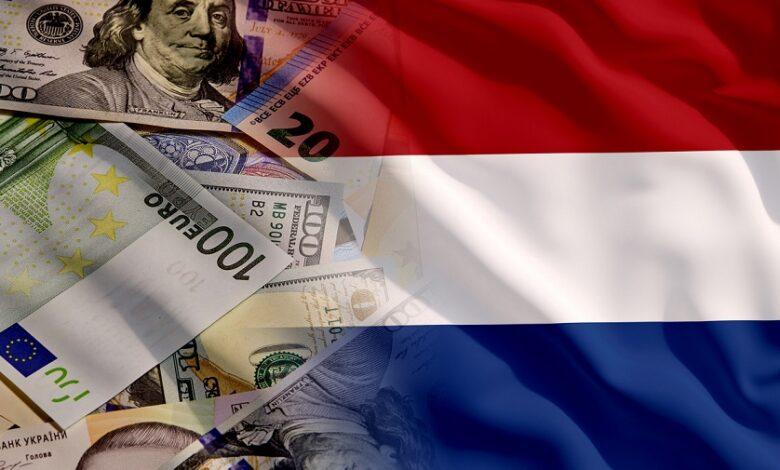
In May 2025, following a large-scale power outage in Spain that paralyzed banks, payment systems, transport and shops, the Dutch government issued a public advisory to all residents of the country: always have cash on hand. The consequences of the Spanish blackout became obvious: several million people in the south of the country did not have access to their money for several days, could not pay in shops, pharmacies, call a taxi or pay for a train in transport. ATMs were de-energized, terminals did not work, online banking was blocked due to lack of internet. This scenario has caused concern in all EU countries. The Netherlands — one of the most digitized economies — decided to act ahead of the curve.
The government of the Netherlands appealed to all residents of the country with a recommendation to keep cash at home – 70 euros per adult and 30 euros per child. The formal reason was the emergency situation in Spain, where after a large-scale blackout, people could not withdraw money from ATMs, pay in stores or buy medicine. The country’s government recognized: even in a stable state with a digital economy, power outages paralyze essential services. ATMs, payment terminals, online banking and even transport validators depend on electricity. If it disappears, access to money becomes impossible. The situation, which a few years ago could have seemed purely theoretical, has become a practical warning for all of Europe.
For Ukrainians who have found temporary protection in the Netherlands, this advice is no less important than for citizens of the country. Most Ukrainian refugees use non-cash instruments: bank cards, mobile applications, electronic tickets. It is convenient, familiar and safe. But it is precisely this reliance on electronic infrastructure that makes people vulnerable when the entire system suddenly disappears—not because of war, but because of failure. Without light, ATMs do not work, cards are not accepted, online accounts are not opened, and digital services do not work. Everything that was “one click away” yesterday is suddenly lost – and with it the opportunity to buy bread, painkillers, travel or just a bottle of water.
That is why the Dutch authorities advise to have a cash reserve at home. It is not about large sums, but about the minimum necessary for three days of autonomous survival — for food, medicine, travel and basic expenses. It is important to have not only bills, but also coins: during periods of failure, small amounts are saved, when there is no rest, when stores go to manual mode and the cash register does not work. The experience of Spain showed: cash is not a rudiment, but a way to maintain control in a situation of chaos.
Ukrainian refugees should take this recommendation as an element of basic household security. In a foreign country, without extensive family support, without the ability to quickly return “to your village” or “to your friends”, you are left with the resources you have at your fingertips – and no others. When the light goes out, everything stops working: from the navigator to Google Pay. In these conditions, having a few bills in your wallet can mean the difference between having access to food and pharmacies — or being completely isolated, unable to buy anything or get anywhere.
It is especially important to consider that in the Netherlands many household systems are also electronic: travel in transport is often paid by bank card, cafes switch to cashless payment, kiosks do not keep cash registers, and cash sometimes looks like something archaic. But as soon as the current disappears, all this automation loses its meaning. That’s when the one who has several coins and knows how to use them decides.
This call by the government is part of an official culture of preparedness, which is not the first time that the Netherlands has developed it. It should be taken as a signal that refugees from Ukraine should also become part of this social consensus: cash in the house is not a luxury, but a means of self-protection. In an environment where global digital systems show vulnerability to technical failures, cyber-attacks or natural disasters, a simple set of banknotes is no longer a reserve, but an element of resilience.
For Ukrainian families in the Netherlands, it is also a way to adapt to local rules and feel more in control of the situation. In a new environment where bureaucracy or service systems can sometimes be difficult to navigate, having a stash of cash is a small reassurance that can make a big difference at a critical moment. Therefore, you should not postpone this recommendation “for later”. It applies to everyone who lives under the light of lamps and digital screens. And can become the only source of real access to life when this light disappears.