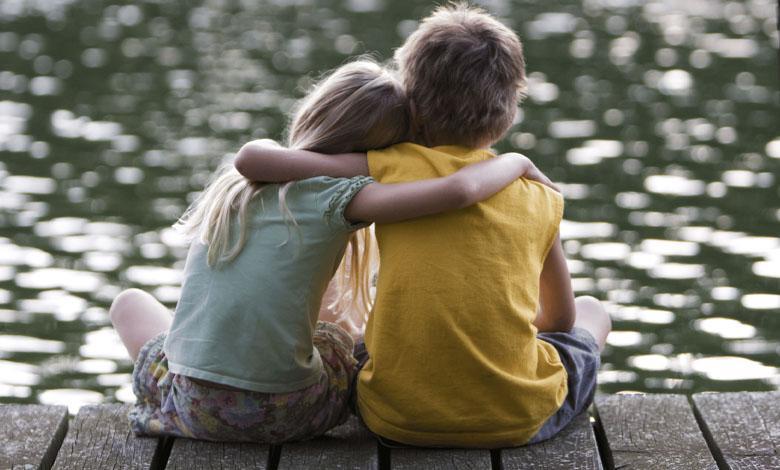
April 10 is International Sibling Day, International Special Libraries Day, World Homeopathy Day, World Music Therapy Week and International Pin Day. This day is also marked by a series of events that left a mark in the cultural, political and technical history of Ukraine and the world.
International Day of Brothers and Sisters
It’s an unofficial but heartfelt holiday that celebrates the special bond between people who grew up together, shared secrets, argued over toys, shared a room, experienced first loves and first disappointments, and often a lifetime.
Despite the fact that it is not officially a public holiday in most countries, International Sibling Day is increasingly mentioned in social networks, family gatherings and cultural events. On this day, it is customary to call or write to your brothers and sisters, remember your childhood, thank them for their support, give warm words, and sometimes gifts.
The idea of creating such a day belongs to the American Claudia Evart. She lost her brother and sister at a young age and decided to create a day of remembrance to honor them and at the same time all the brother-sister bonds. In 1997, New York State recognized Siblings Day as an official event, and other states have since followed suit. The holiday gradually gained international significance, especially in the age of social networks, where everyone proactively shares pictures from childhood, touching stories or warm greetings.
Interesting facts
In families with two children, on average, children spend twice as much time with each other as with their parents. They develop social skills precisely through competition and cooperation with siblings.
Studies show that the formation of personality is more strongly influenced by siblings than, for example, by classmates. Younger people adopt behavior models, older ones acquire responsibility.
According to a Brigham Young University study, having a sibling reduces the risk of depression in adolescence.
Many cultures around the world have separate traditions related to siblings. For example, in India, Raksha Bandhan is celebrated, when a sister ties her brother’s wrists with a symbolic thread of protection, and the brother promises to take care of her for the rest of his life.
Vincent van Gogh had a close relationship with his brother Theo, the very correspondence with which has survived to this day. The brother supported the artist financially, morally and creatively, and their letters became an invaluable source of understanding of the artist’s life and thoughts.
In classic and modern literature, the relationship between brothers and sisters is one of the most beloved themes. From Fred and George Weasley to Carrie and Christopher from Flowers in the Attic, these characters are filled with a wealth of interactions, from endless love to painful rivalry.
International Day of Special Libraries
International Special Libraries Day is celebrated every year on the second Thursday of April. This is an informal but important professional holiday that draws attention to libraries that serve narrow audiences — scientists, doctors, lawyers, military personnel, engineers, diplomats, businessmen, and representatives of creative professions. This day combines recognition, appreciation and protection of the intellectual mission that special libraries carry in the digital age.
Unlike public or university libraries, special libraries are created at scientific institutions, ministries, medical clinics, museums, corporations, military units, editorial offices, parliamentary structures — wherever operational, accurate and professional information is needed. Their task is not just to store books, but to collect, systematize and supply relevant knowledge for decision-making.
These are analytical libraries, advisory libraries, libraries working at the intersection of information and practice. Their holdings often consist of monographs, regulatory documents, standards, rare sources, technical reports, professional periodicals, and closed archives.
Interesting facts
The library of the Medical School of Alexandria (III century BC) and the archive of military papyri in Ancient Egypt, which recorded data about campaigns, routes and medicines, are considered the first special libraries.
In the USA, there is a Special Library Association (SLA) – one of the most influential international communities, which unites more than 6 thousand specialized libraries from NASA to pharmaceutical corporations.
The US Library of Congress, despite its publicity, has deeply specialized departments: from legal analysis to cartography and music manuscripts. It is an example of a hybrid library that serves scientists, government and citizens at the same time.
World-famous museums, such as the Louvre, the Metropolitan Museum or the Hermitage, have their own libraries that are not open to the public, but contain unique collections for art historians and restorers.
The IAEA Library in Vienna exclusively collects documents related to nuclear energy, safety and international control.
In Ukraine, one of the oldest special libraries is the State Scientific and Technical Library of Ukraine, which collects and processes all scientific literature on engineering, aviation, energy, materials science, etc. It has funds since the time of the USSR.
The libraries of the Verkhovna Rada, the Ministry of Justice, the Constitutional Court and other authorities play a critical role in the preparation of draft laws and legal expertise.
World Homeopathy Day
This date is dedicated to the birthday of Samuel Hahnemann, a German doctor who in the 18th century initiated the homeopathic system of treatment. This is a day of honoring the alternative direction of medicine, which has millions of supporters in different countries, but at the same time remains the object of sharp criticism from academic science.
This holiday has no official status in the health care systems of most countries, but is actively supported by homeopathic societies, clinics, pharmacies and patients who trust this approach. Popular science forums, conferences, online lectures and meetings of practitioners are held on this day.
The essence of homeopathy consists in ultra-low doses of active substances – so low that in many preparations the molecules of the original substance actually do not remain. Homeopaths explain this by the influence of “energy information” that water supposedly remembers.
Most academic scientists and medical institutions are critical of homeopathy. WHO does not recommend using homeopathy as an alternative to evidence-based treatment, especially in the case of severe or life-threatening diseases. In many countries (France, Great Britain, Australia), state medical bodies have recognized homeopathy as ineffective from the point of view of scientific evidence. In 2017, the Ministry of Health of Ukraine also emphasized that homeopathy does not have scientifically proven effectiveness, and therefore cannot be part of medical protocols.
At the same time, homeopathy continues to exist in the market as part of the field of alternative medicine, with strong support from patients who trust the “gentle treatment”, have no side effects or are disillusioned with the traditional health care system.
Interesting facts
In the 200 years since its inception, homeopathy has spread to almost all continents, and is especially popular in India, where there is a separate state system of homeopathic treatment (AYUSH) and thousands of clinics.
In France, homeopathy had official reimbursement from the state budget until 2021, until it was declared ineffective.
For the first time in history, homeopathy was used to treat malaria, typhus and even cholera. In the 19th century, homeopaths claimed to have fewer deaths in their clinics than traditional doctors. However, the modern analysis of these data is questionable due to the lack of a clear methodology.
In the 2010s, a number of countries launched massive campaigns to explain that homeopathy is not medicine in the scientific sense. So, in the UK, the Pharmacy Association openly recommends against purchasing homeopathic medicines for the NHS.
Homeopathic medicines are produced using special dilution technologies — often 1 part of the substance per 10¹⁰⁰ parts of water, that is, statistically, the probability of finding at least one molecule of the active substance there is zero.
World Music Therapy Week
Every year from April 10 to 15, the world celebrates World Music Therapy Week, which is a new initiative launched to draw attention to one of the most interesting and humane forms of non-drug health support. This week is an opportunity to talk about the power of music as a tool for recovery, rehabilitation, mental health support and social integration.
The organizer of the week is the World Federation of Music Therapy (WFMT), which unites professionals from more than 40 countries and advocates the integration of music therapy into the systems of health care, education, palliative care and psychosocial rehabilitation.
Music therapy is a clinically based and scientifically proven use of music to achieve individual therapeutic goals: reducing anxiety, improving cognitive function, supporting speech, mobility, memory, and emotional state. Music therapists work with children with autism, adults with depression, seniors with dementia, PTSD warriors, palliative care patients, women in labor, and many others.
It’s not just “listening to music” for mood, but structured work—with live music making, vocals, improvisation, rhythms, sometimes even songwriting or bodily interaction through sound. Music therapy can be both individual and group, and is always based on an assessment of the person’s condition, goals and progress.
Interesting facts
The earliest references to the healing power of music come from ancient Egyptian and Sumerian texts. In ancient Greece, Pythagoras taught that music has a harmonizing effect on the soul and body, and Plato and Aristotle attributed educational and moral power to music.
In the 1940s and 1950s, music therapy began to develop as a scientific discipline—especially after World War II, when wounded soldiers in hospitals responded positively to the playing of musicians.
Listening to your favorite music during surgery or chemotherapy is known to reduce pain and anxiety, which has been documented in many clinical studies.
In patients with Alzheimer’s disease, music therapy activates neural centers associated with memories, even in the advanced stages of dementia. This became the basis of the worldwide Music & Memory initiative.
In neuroscience, there is a concept of musical plasticity of the brain: regular practice of music activates both hemispheres of the brain, promotes the formation of new neural connections, even after a stroke.
According to research, rhythm is the oldest communication channel in humans. Rhythmic patterns were the first “languages” that provided synchronization in groups even before language.
International Pin Day
International Pin Day is celebrated as a symbol of practicality, elegance, safety and even defiance, with a long history, cultural significance and unexpectedly deep connotations. At first glance, it is an everyday little thing that is easy to lose and hard to remember when you need it, but it is used by all people in the world.
The modern English “safety pin” was patented by Walter Hunt in the USA in 1849. However, prototypes of pins existed long before that: in Ancient Egypt, Greece, Rome, as well as in the territories of Kyivan Rus. Among the Slavs, they had the form of fibulas — metal fasteners, often with an ornament.
Hunt’s invention became revolutionary thanks to the spring mechanism, which made it possible to avoid accidental punctures – that’s why the pin was called “safe”. Paradoxically, the inventor himself, having sold the patent for $400, had no idea that his idea would become global: a thing that can still be found in every home, office, first aid kit or bag today.
Interesting facts
In the 1970s, the pin became a symbol of the punk movement — thanks to designer Malcolm McLaren and singer Vivienne Westwood. Young rebels used pins as earrings, jewelry, and riot accessories. Thus, a modest household object acquired a countercultural sound.
After Brexit in Great Britain, the pin became an anti-discrimination symbol. People wore it on their clothes to show solidarity with migrants and victims of racism. The campaign was called #SafetyPin.
In the world of fashion, a pin is not only a functional, but also an aesthetic detail. In particular, in high fashion, it is used in the form of jewelry decorated with stones, or as a visual quote at fashion shows by Alexander McQueen or Versace.
In archeology, pins are one of the most studied artifacts. Their shape helps to date burials or to determine ethnocultural affiliation. In Slavic cemeteries, pins made of bronze or silver indicated the status of a woman in the community.
In emergency situations, a hairpin can become a survival tool: it can be used to fix bandages, save oneself from a seizure in the water, open locks, clean holes, even make fishing hooks.
Historical events on this day
1633 – Bananas appeared for the first time in England. These exotic fruits at that time began to be sold in one of the stores in London, and it became a real sensation for the residents of the city. Until then, most Europeans had no idea what a banana tasted or looked like. Its appearance became a window to the tropical world and the embodiment of a new era of global trade.
1710 – The Statute of Queen Anne was adopted – the first legal document in history that introduced the official concept of copyright. It is from this moment that the concept of protection of authors’ rights to their works appears in English law. The document became revolutionary, because it recognized that literary and artistic work should be protected by law in the same way as physical property.
1815 – The catastrophic eruption of the Tambora volcano on the island of Sumbawa (modern Indonesia) began, which led to global climate changes. Due to the emission of gigantic volumes of ash into the atmosphere, a “volcanic winter” came, which covered the northern hemisphere. The year 1816 went down in history as the “year without a summer” — with sharp cold snaps, crop failures, famine, and social crises.
1833 – The first serial production of matches was established. They used phosphorus, which made them toxic and dangerous to health. Although this was a big step in everyday life, the mass distribution of phosphorus matches in the 19th century also led to occupational diseases among factory workers, in particular the so-called “phosphorus necrosis”.
1912 – From the British port of Southampton, the ocean liner “Titanic” set off on its maiden voyage. It was supposed to be the most luxurious and safest ship of its time. His route was to New York, but the ship collided with an iceberg and sank on the night of April 14-15. The disaster became one of the loudest tragedies of the 20th century, claiming more than 1,500 lives.
1917 – In Donbas, during a meeting of workers and industry representatives, the decision to introduce an 8-hour working day was approved for the first time. This was an important step in protecting the rights of employees and the beginning of a long process of struggle for decent working conditions in the industrial region of Ukraine.
1922 – An international conference with the participation of European states and Soviet Russia opened in Genoa, which became the first official appearance of the RSFSR on a large diplomatic arena. This forum aimed to restore economic ties after the First World War and started the process of partial recognition of the Bolshevik government in the West.
1938 – In Nazi-occupied Austria, a plebiscite was held, during which the citizens allegedly unanimously – by 99.7% – supported the Anschluss, that is, joining Germany. The vote took place under conditions of intimidation and propaganda, and became a key element in Hitler’s plans to create a “Greater Germany”.
1954 – Special Design Bureau No. 586 (OKB-586) was founded in Dnipropetrovsk, which later turned into the world-famous Design Bureau “South”. It became one of the main centers for the development of ballistic missiles, satellites and space vehicles in the USSR, and now in independent Ukraine.
1967 – The first flight of the MiG-23 fighter took place, which became a landmark event for Soviet aviation. It was the first aircraft in the USSR with variable wing geometry, which allowed it to adapt to different flight modes, improving maneuverability and speed.
1972 – The Convention on the Prohibition of Biological Weapons was signed in London, which prohibits the development, production and stockpiling of bacteriological (biological) and toxic weapons. This document was an important step in controlling the spread of weapons of mass destruction and one of the first international arms control treaties.
1992 – In Zaporizhzhia, the first “Cossack race has no translation” arts festival began, which became a manifestation of cultural uplift after Ukraine gained independence. The festival contributed to the revival of national traditions, art and public affirmation of Ukrainian identity.
1998 – The Good Friday Agreement was concluded, ending decades of violence in Northern Ireland. This peace treaty marked a turning point in Irish-British relations, laying the groundwork for political cooperation and a peaceful settlement between Catholics and Protestants.
2010 – The tragic plane crash near Smolensk took the lives of 96 people, including the President of Poland Lech Kaczyński, his wife, the leadership of the army, government and clergy. The delegation was on its way to Katyn to honor the victims of Stalinist repressions. This tragedy became a national shock for Poland and caused a long political resonance.
2019 – The world saw for the first time a photograph of the supermassive black hole at the center of the galaxy Messier 87 (M87), created as part of the Event Horizon Telescope project. This event was a historic victory for science: for the first time, humanity was able to record what was previously only a theoretical construct in astrophysics. The picture confirmed the existence of black holes and became a real breakthrough in the understanding of the universe.