April 17 is celebrated as the Day of the Fire Department of Ukraine, the International Day of the Mastery of Important Conversations, the World Day of the Fight against Hemophilia and the International Day of the Ford Mustang. In different centuries, this day was marked by important decisions, inventions, state changes and events that left a noticeable mark on world and Ukrainian history.
Day of the Fire Department of Ukraine
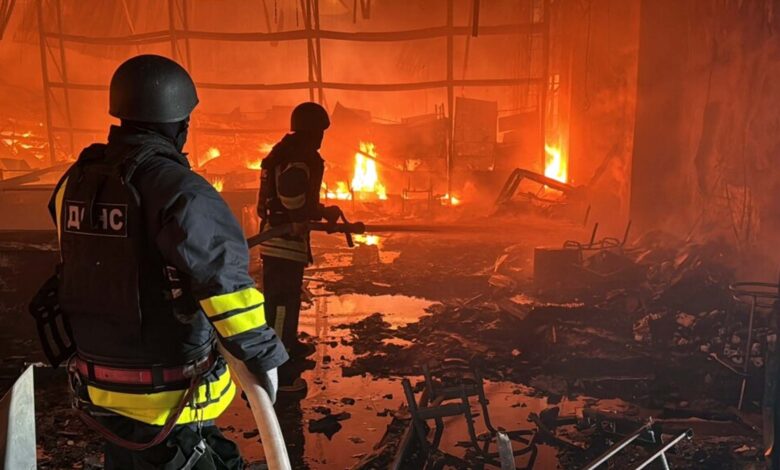
Today, Ukraine honors fire department workers – people whose work is associated with constant risk and rapid response to emergencies. Firefighters ensure the elimination of fires, rescue people, animals and property, and also participate in the aftermath of accidents, disasters and shelling. Their activities require endurance, clear coordination of actions and the ability to work in conditions of high danger, often without the right to make a mistake.
During a full-scale war, the load on the fire service increased significantly. Rescuers regularly go to the sites of rocket strikes and shelling, put out fires in residential buildings, hospitals, enterprises and infrastructure facilities. They often have to work under the threat of repeated attacks, dismantle rubble and search for victims. Their work has become an integral part of the system of protecting the civilian population in wartime.
Interesting facts
The first organized fire brigades in Ukrainian cities appeared when most of the buildings were wooden, so one fire could destroy an entire district in a few hours.
In older fire stations in Ukrainian lands, the main “signaler” was the fire tower: the person on duty would notice smoke from afar and immediately signal which side of the city the fire had broken out from.
The first Ukrainian firefighters did not travel by car, but by horse-drawn carts, which carried barrels of water, hand pumps, axes, hooks and long ladders.
Once upon a time, firefighters not only put out fires, but also literally dismantled buildings piece by piece so that the flames would not spread further to neighboring streets.
One of the most famous pages in the history of Ukrainian firefighters is associated with Chernobyl: they were the first to arrive at the burning reactor and worked there, not knowing the full scale of the radiation threat.
In 2022, after the massive shelling of Kharkiv, firefighters worked continuously in several shifts, extinguishing dozens of fires per day, and some of the calls had to be carried out without a full water supply due to damaged infrastructure.
In Mariupol, during the siege, rescuers often were unable to use special equipment due to lack of fuel and shelling, so they extinguished fires manually or with improvised means.
After strikes on Ukraine’s energy infrastructure, firefighters participated in restoration work, ensuring safety during the repair of high-risk facilities.
In the first months of the invasion, many fire departments came under fire, and some depots were destroyed along with their equipment, which complicated the response to emergencies in the regions.
When extinguishing fires after missile strikes, firefighters often face chemical threats due to burning industrial materials, which requires additional protection and special equipment.
Due to hostilities in Ukraine, the number of fires in natural ecosystems has significantly increased, and rescuers have had to simultaneously eliminate both the consequences of shelling and large-scale forest fires.
International Day of Important Conversations
This is an unofficial holiday dedicated to conscious communication and the ability to conduct difficult conversations. We are talking about situations where there is tension, different points of view or high stakes, and the outcome depends on how a person formulates thoughts and listens to the interlocutor. This type of communication requires self-control, clarity, the ability not to avoid the topic and at the same time not to aggravate the conflict.
In the modern environment, the skills of important conversations have practical importance in work, personal life and crisis situations. During the war in Ukraine, they became especially relevant: from coordinating actions in dangerous conditions to supporting people who have experienced losses or traumatic experiences. The ability to speak honestly, without undue pressure, and at the same time maintain respect for the interlocutor helps to avoid misunderstandings and make informed decisions.
Interesting facts
After the start of the full-scale war in Ukraine, the need for crisis communication specialists who help military and civilians conduct conversations about losses, evacuation and psychological state has increased sharply.
In many units of the Armed Forces of Ukraine, short instructions for communication in combat conditions were introduced, where important conversations are reduced to the most clear and short formulations without ambiguity.
Ukrainian volunteers working with evacuees are trained in nonviolent communication to avoid re-traumatization during conversations.
Psychologists note that in conditions of constant stress, people are more likely to avoid difficult conversations, which can lead to the accumulation of conflicts in families and teams.
In the first months of the war, many support hotlines in Ukraine were overloaded, and operators were forced to quickly learn techniques for conducting difficult conversations in crisis situations.
Studies show that during stress, people are more likely to perceive neutral phrases as aggressive, so the correct intonation and choice of words in important conversations become critical.
In military conditions, the incorrect formulation of an order or message can lead to serious consequences, so communication there is as standardized and tested as possible.
In Ukraine, during the war, psychological support courses have become increasingly popular, where basic skills for conducting difficult conversations with people who have experienced shock or loss are taught.
World Hemophilia Day
This day is dedicated to raising awareness about hemophilia, a hereditary disease in which blood clotting is impaired. People with this diagnosis can have prolonged bleeding even after minor injuries, as well as internal bleeding, which poses a serious threat to health. This day is associated with the need for early diagnosis, access to treatment and constant monitoring of patients.
The initiative was launched by the World Federation of Hemophilia together with the World Health Organization to join forces in the fight against this disease. In Ukraine, the issue of hemophilia treatment remains difficult due to the need for expensive blood clotting drugs and a stable supply of patients. During the war, access to therapy became more difficult in some regions, which made the problem even more acute, especially for children and people with severe forms of the disease.
Interesting facts
Hemophilia is sometimes called the “royal disease” because it spread among European dynasties through the descendants of Queen Victoria, and influenced historical events in several countries.
In Ukraine, hemophilia patients received drugs centrally under state programs before the war, but after 2022, the logistics of supply to some regions were disrupted due to hostilities.
During the evacuation from front-line areas in 2022, doctors compiled lists of patients with chronic diseases, including hemophilia, in order to provide them with drugs in new places of residence.
Modern hemophilia treatment allows people to live almost fully if blood clotting factors are regularly administered, but skipping therapy even for a short time can lead to dangerous complications.
In the first months of a full-scale war, international organizations transferred supplies of drugs for the treatment of hemophilia to Ukraine to prevent a critical shortage.
Hemophilia is more common in men, while women are usually carriers of the gene and may not even know it without special testing.
In some cases, internal bleeding in hemophilia occurs for no apparent reason and can damage joints, which eventually leads to disability.
During the war, Ukrainian doctors adapted treatment regimens for patients who could not regularly visit hospitals, teaching them to inject themselves with drugs at home.
International Ford Mustang Day
This day is dedicated to the Ford Mustang, a model that has become a symbol of American automotive culture. The car was first introduced in 1964, and it quickly gained popularity due to its combination of affordability, power and recognizable design. The Mustang launched a class of so-called “pony cars” – sports cars with a long hood and short rear, aimed at the mass buyer.
Over the years, the model has changed many times, but has retained its characteristic features and recognizable style. Mustang has been actively used in cinema, motorsport and culture, which has consolidated its legendary status. In Ukraine, these cars also have their audience, and during the war, some owners used them for volunteer trips, aid transportation or evacuation, adapting sports cars to practical needs.
Interesting facts
The first buyers of the Ford Mustang literally lined up in lines at car dealerships, and thousands of cars were ordered on the first day of sales, which was a record for that time.
The name Mustang is associated not only with wild horses, but also with the P-51 Mustang fighter from World War II, which emphasized the speed and character of the car.
In the movie “Bullitt” with Steve McQueen, the chase scene on the Mustang became one of the most famous in the history of cinema and influenced the popularity of the model.
In 2022, in Ukraine, some owners of sports cars, including Mustangs, used them to quickly deliver medicines in cities where maneuverability and speed were important.
Mustang became one of the few cars that has been continuously produced for more than half a century, having survived several crises in the automotive industry.
Over the years, the car has appeared in hundreds of films and TV series, making it one of the most recognizable vehicles in the world.
During the full-scale war in Ukraine, individual volunteers used powerful cars to transport drones and equipment, where speed was important between cities.
The electric version of Mustang — Mustang Mach-E — became a new stage in the brand’s development, showing the transition of the legendary model to modern technologies.
Historical events on this day
1492 — Christopher Columbus concluded an agreement with the Spanish crown, under which he undertook to go on a sea expedition and find a western route to India. It was this contract that became the legal basis for the journey, which later opened up new lands for Europeans and changed the course of world history.
1607 — Armand Jean du Plessis de Richelieu, who was only 21 years old at the time, received a religious order. This was an important step in his rapid ascent to high politics, as he later became one of the most influential figures in France.
1722 — Tsar Peter I introduced a tax on wearing a beard, which amounted to 50 rubles per year. With this policy, he tried to change the appearance of his subjects and bring the Moscow kingdom closer to Western European norms and customs.
1839 — after the final collapse of the Central American Federation, a separate state of Guatemala emerged. This event consolidated a new political order in the region and formalized the independent existence of the country.
1847 — Taras Shevchenko was arrested for his involvement in the Cyril and Methodius Brotherhood. For the Ukrainian poet, this was the beginning of a difficult period of persecution, exile, and a ban on writing and drawing.
1848 — Austrian Emperor Ferdinand I approved a patent that abolished peasant duties in Galicia from May 15, 1848. This decision was an important step towards weakening feudal relations and changing the situation of peasants.
1856 — Quebec City was proclaimed the capital of Canada. At that time, this was of great political importance, because it was about forming the administrative center of the country during the period of its state formation.
1875 — Briton Neville Chamberlain proposed a new billiard game, which was called “snooker”. Over time, it turned into one of the most popular varieties of billiards in the world.
1888 — twelve English football clubs united and founded the Football League. It became the oldest regular championship in world football and laid the foundations of the modern club competition system.
1895 — the Treaty of Shimonoseki was signed, ending the First Sino-Japanese War. This agreement significantly changed the balance of power in East Asia and witnessed the growth of Japan’s influence.
1907 — the immigration center on Ellis Island in New York received a record number of arrivals in one day — 11,747 people. In total, more than a million immigrants entered the United States that year, which clearly shows the scale of migration to America at the beginning of the 20th century.
1924 – The Hollywood film studio Metro-Goldwyn-Mayer was founded. Over time, MGM became one of the most famous studios in the world and created many iconic films in the history of cinema.
1941 – Yugoslavia surrendered during World War II. Its defeat was the result of a rapid offensive by the Axis powers and led to the further occupation and dismemberment of the country.
1946 – Syria effectively gained independence from France. This date became a symbol of the end of the colonial period and the beginning of the country’s independent state development.
1961 — the Bay of Pigs invasion, carried out by Cuban émigrés with the support of the US and the CIA, began with the aim of overthrowing the regime of Fidel Castro. The attempt ended in failure and became one of the most famous failures of American foreign policy during the Cold War.
1964 — American pilot Jerry Mock became the first woman to fly around the globe solo. Her flight went down in aviation history as a significant achievement and an example of overcoming gender barriers.
1968 — the television program “In the World of Animals” was first broadcast. The program became one of the most famous educational programs about nature and the animal world for many years.
1970 — the “Ukraine” Palace was opened in Kyiv. Since then, it has become one of the main concert and cultural venues in the capital, where the most important artistic and ceremonial events took place.
1970 — Paul McCartney’s debut solo album, entitled Paul McCartney, was released. Its release actually marked the end of the history of the legendary band The Beatles, who never returned to joint work.
1980 — Southern Rhodesia officially became the state of Zimbabwe. This meant the end of the colonial period and the emergence of a new independent country on the political map of Africa.
1989 — the activities of the independent trade union “Solidarity” were legalized in Poland. This decision was a turning point in the dismantling of the communist system and brought about major democratic changes in the country.
1991 — The Supreme Rada of the Ukrainian SSR adopted a law on the rehabilitation of victims of political repression. The document was an important step towards restoring historical justice for people who suffered from Soviet terror.
2014 — The European Parliament in Strasbourg, by its resolution, refused to support the Russian gas pipeline project “South Stream”, which was supposed to go to Europe bypassing Ukraine. This decision had not only energy, but also a clear political significance in the context of aggravation of relations with Russia.