During the study of the Great Pyramid of Giza, archaeologists discovered new inscriptions that helped shed light on who exactly built this majestic structure about 4,500 years ago. Contrary to the ancient Greek legends about 100 thousand slaves who supposedly built the pyramid of Cheops for 20 years, the new discovery completely refutes this theory. About this informs Daily Mail.
According to the results of the research of Egyptologist Zahi Hawass and his team, the pyramid was not built by slaves, but by skilled workers who received wages. They worked almost non-stop, with only one day off every ten days. Inscriptions testifying to this were found in narrow chambers above the so-called pharaoh’s chamber, which researchers were able to examine thanks to modern technology. The markings left by labor teams as early as the 13th century BC remained unnoticed until recently.
In addition, to the south of the pyramid, archaeologists excavated tombs in which the builders were buried. Statues and hieroglyphic inscriptions were also found there with titles, including “supervisor of the side of the pyramid” and “artisan”.
“Our discovery confirms that the builders of the Cheops pyramid were not slaves. Otherwise, they would not have been buried in the shadow of the pyramids. Slaves would not have had their own tombs.” said Dr. Havass.
Also, these discoveries made it possible to better understand the technical aspects of construction. It turned out that the limestone from which the pyramid was built was mined in a quarry located only 300 meters away. A ramp made of crushed stone and dirt was used for its transportation – its remains were found to the northwest of the structure.
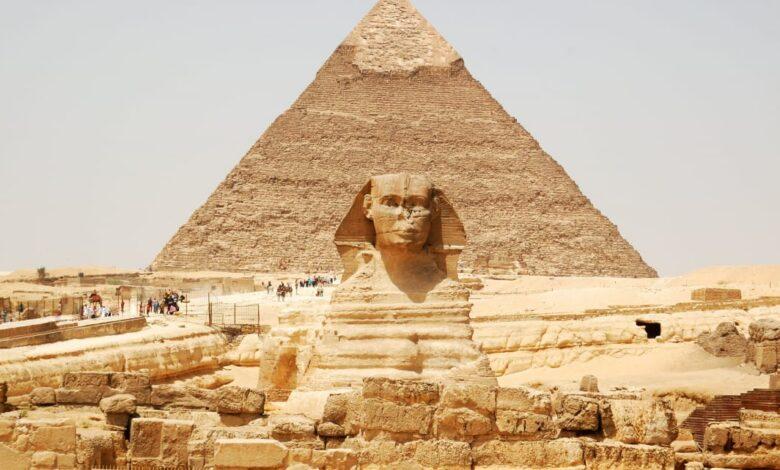
Dr. Hawass is preparing a new expedition, which for the first time involves excavations inside the Cheops pyramid itself – the largest in Egypt. It was built by Pharaoh Khufu (Cheops) of the IV dynasty of the Old Kingdom. The pyramid is part of a complex on the Giza plateau that also includes the pyramids of Khafre and Menkaure, as well as the Great Sphinx. These structures remain enigmatic due to unknown construction methods, precise astronomical alignment, and unclear purpose. The names of the workers were found on the stones inside the Cheops pyramid.
“They were found in chambers that are difficult and dangerous to access, and they use writing styles that only trained Egyptologists can accurately interpret. It’s almost impossible that someone in recent times could have forged something like this. You have to climb about 13 meters and crawl through narrow spaces to get to these chambers.”, the researcher said.
During the research, along with the inscriptions, archaeologists discovered the tombs of those who built the pyramids. Inside the burials, tools were found, including flint tools and hammer stones, which were probably used during the construction of the Great Pyramid.
Workers were organized into teams with a division of responsibilities: some mined stones, others shaped them, and the rest transported materials. Sledges were used for transportation, which were dragged along the sand. Ready-made blocks for the construction of the pyramid were moved along specially equipped ramps, the remains of which were found during excavations.
Photo: i.dailymail.co.uk