August 2 is the Day of Remembrance of Fallen Paratroopers in Ukraine, and the International Day of Remembrance of the Victims of the Roma Genocide, International Day of the Blues, and International Day of Twins. On this day, humanity experienced revolutionary scientific discoveries, geopolitical changes, acts of resistance, important cultural events and military tragedies.
Memorial Day of fallen paratroopers in Ukraine
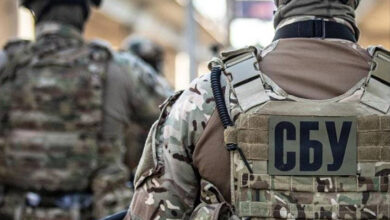
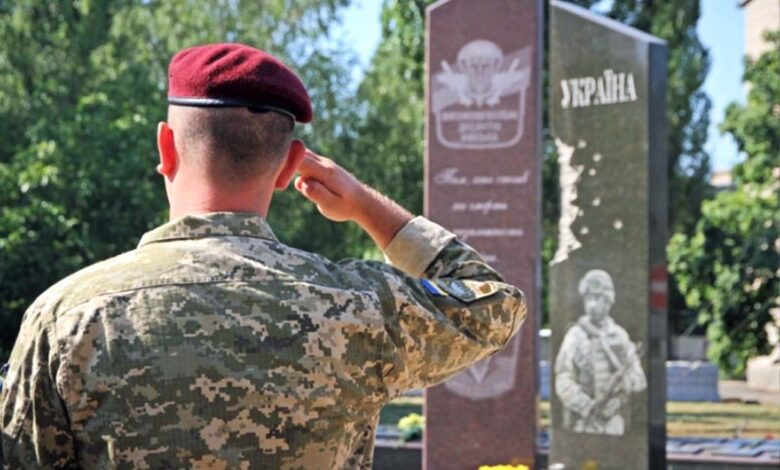
On August 2, starting from 2017, Ukraine officially commemorates the soldiers of the airborne units who died during hostilities — from the time of the Soviet Union to today’s war against Russia. The date was chosen in opposition to the Soviet tradition of celebrating “Airborne Forces Day” and became a day of mourning, not pathos.
On this day, fallen paratroopers of all generations are honored: from Afghanistan to Donbas, Ilovaisk, Luhansk Airport, Gostomel, Bakhmut and Pokrovsk. This day is about those who fought for Ukraine, often in a hopeless situation.
Ukrainian paratroopers were the first to strike in many hot spots of the war: the 25th, 79th, 80th, 81st and 95th brigades were among those who held back the enemy in the most difficult areas of the front. They suffered the greatest losses during the defense of DAP, Gostomel and near Ilovaisk.
In 2014, the first Ukrainian paratrooper to die during the battle in Donbas was the battalion commander of the 25th Airborne Brigade, Lieutenant Colonel Serhiy Gulyuk. His death became a symbolic beginning of a new war for the landing party.
During the defense of the Luhansk airport in the summer of 2014, the fighters of the 80th brigade held positions without rotation and water for more than 60 days. Paratrooper Andriy Kizylo, posthumously Hero of Ukraine, was one of those who saved his comrades during the breakthrough.
One of the biggest losses among paratroopers occurred on June 14, 2014 — the downing of an IL-76 near Luhansk. 49 Ukrainian soldiers died, 40 of them paratroopers of the 25th brigade. It is still one of the most tragic days in the history of the modern army.
Ukrainian paratroopers are not only “classic” troops with a parachute component. Modern assault brigades work as mobile, maneuverable and highly professional infantry, capable of operating in difficult conditions with minimal rear support.
Separate airborne units are currently serving in the most dangerous areas of the front, in particular near Chasovoy Yar, Kupyansk and in the Zaporizhzhia direction. Among them is the legendary 79th brigade, which in 2022 held the Gostomel airport during the first days of the invasion.
International Day of Remembrance of the Victims of the Roma Genocide
On the night of August 2-3, 1944, the Nazis liquidated the so-called “gypsy camp” in the Auschwitz-Birkenau death camp. About 3,000 Roma were killed in a few hours — mostly women, children, and the elderly. This night went down in history as “Zigeunernacht” – “Gypsy night”. It is considered the culmination of the genocide of the Roma in Europe, which was hushed up for a long time.
More than 23,000 Roma were deported to Auschwitz from various European countries. Most of them are from Germany, Poland, the Czech Republic, Austria, Hungary, and France. Only a few survived. Roma were kept in a separate sector marked with the letters Zigeunerlager. Their conditions of detention were as inhuman as in the other blocks, but the treatment was even more humiliating: they were considered “antisocial elements” unfit for life in the Aryan world.
In Nazi Germany, discrimination against Roma began even before the war: they were subjected to forced sterilization, deportation, and were deprived of civil rights. After the beginning of the Second World War, the persecution turned into physical destruction. Tens of thousands of Roma were shot in forests, on the outskirts of villages and cities, in death camps.
Historians estimate that in general, 220,000 to 500,000 Roma died as a result of the genocide. Some sources call even higher figures. These losses represent at least a quarter of the pre-war Roma population in Europe.
Little known facts
On the night before the liquidation of the camp, the Roma in Auschwitz managed to organize resistance. They had information about the Nazis’ intention to destroy them and several times prevented the withdrawal of individual groups. After that, the SS surrounded the entire block and killed everyone at once to avoid a repeat.
Individual Roma families in Auschwitz were forced to live together, which was unusual for death camps. This made it possible to at least partially preserve the connection between generations – until the moment of complete extermination.
After the war, the Roma genocide was not officially recognized for a long time. Only in 1982 did Germany recognize the mass extermination of Roma as genocide. In a number of countries, particularly in the USSR, this tragedy remained on the margins even in general narratives about the Holocaust.
The term “Porajmos” (translated from Romani – “absorption”, “destruction”) became a designation of the Roma genocide only at the end of the 20th century. It is used by the Roma themselves, but it is not as widespread as “Holocaust”.
Ukrainian Roma also suffered from the genocide. During the Nazi occupation of Ukraine in 1941–1944, entire camps were shot — in particular, in the Zhytomyr, Odesa, and Dnipropetrovsk regions. For the most part, the names of the dead have not been preserved, and their memory was pushed out of public space for a long time.
International Blues Day
This day is celebrated on the first Saturday of August, it is a ghost to remember one of the most influential musical genres that shaped an entire era and left its mark in jazz, rock and roll, funk, hip-hop. The blues originated at the end of the 19th century in the United States, among African Americans who experienced slavery, racial discrimination, and hard labor. It was these experiences that became the basis for songs that combined pain, hope, protest and inner strength.
Blues music had no need for complex arrangements – just a voice, guitar, harmonica or piano. The main thing is the rhythmic structure and emotional tension. The basis of the genre was the 12-bar and blues scale, which creates the effect of a “stretched string” that keeps the listener in suspense. Themes — betrayal, loneliness, loss, road, prison life, struggle — became universal.
Thanks to the blues, the world learned about artists such as Muddy Waters, Robert Johnson, BB King, Willie Dixon, Etta James. They not only shaped the genre, but also paved the way for future rock musicians. Without the blues, there would be no The Rolling Stones, Led Zeppelin, Eric Clapton, Janis Joplin.
Today, the blues is not only an American phenomenon. In Ukraine, blues has its own community, festivals, and musicians. In particular, there are clubs in Odesa, Kyiv, Kharkiv where the blues lives on, and its own interpretation of the genre is formed – at the intersection of Eastern European intonations and Western heritage.
Interesting facts
One of the first blues works to be printed with sheet music was called Dallas Blues (1912), which was when the blues first officially moved beyond the oral tradition.
The legendary Robert Johnson, who is considered the “forefather” of modern blues, had almost no fame during his lifetime – he recorded only 29 songs. According to legend, he got his talent by selling his soul to the devil at a crossroads.
In 2003, the US Congress officially recognized the blues as America’s national music, recognizing it as a unique contribution to culture.
Instrumental blues is no less emotional than vocal: the guitar in this genre often acts as a “second voice” – it literally “cries” and “speaks” using the technique of bands and slides.
In African-American prisons in the United States, the blues was a form of communication, a way of preserving identity and supporting each other in inhumane conditions. Often the texts were composed spontaneously, during work, and were not written down.
International day of twins
This is an unofficial but popular holiday dedicated to people who were born in pairs or trios. It is a day that focuses on the unique biological and psychological phenomenon of simultaneous birth and life in close connection with someone else from the very beginning.
Identical (monozygotic) twins arise from a single egg that split after fertilization, so they have the same genetic code. They are often difficult to distinguish from the outside, but this does not mean that their characters are mirror images. Dizygotic twins, on the other hand, are normal siblings born on the same day: their DNA is different, like normal siblings, and they may even be of different sexes.
Worldwide, twins occur in approximately 1 in 40 births. In recent decades, the number of multiple pregnancies has increased due to artificial insemination and later pregnancies, because as women age, the probability of releasing several eggs at once increases.
In culture and science, this phenomenon is studied from the point of view of the influence of heredity and environment: observations of twins provide unique data on how personality, behavior, and diseases are formed.
Interesting facts
Identical twins have the same DNA, but it changes with age. After 30 years, identical twins can have differences in their epigenetic profile that affects health, personality and even appearance.
Nigeria, especially the Igbo city of Ora, has the highest number of twins in the world. There, the frequency of twins is ten times higher than the average for the planet. The causes are still not fully understood, but locals attribute it to diet, in particular the consumption of sweet potatoes and yucca leaves.
There are cases when twins are born with a difference of several hours, days or even months. In 2018, one child was born in Poland, and the second was left in the womb for a few more weeks – doctors artificially stopped labor to give the second child more time to develop.
Scientists recorded cases when twins have different parents. Such a phenomenon is called superfecundation — when a woman becomes pregnant from two men during one ovulation cycle. This is a rare but documented phenomenon.
Several countries (eg, USA, Brazil, India) have twin associations that hold annual festivals—the largest in the world is held in Twinsburg, Ohio. He collects up to 2 thousand pairs of twins from all over the world.
Historical events on this day
1776 – In Philadelphia, in the building of the State House of Pennsylvania (now Independence Hall), the official ceremony of signing the Declaration of Independence of the USA was held. Although the text itself was approved on July 4, delegates signed the document on August 3. This step sealed the exit of 13 colonies from the British crown.
1791 – French aviator Jean-Pierre Blanchard conducted an experiment in Vienna with the first practical use of a parachute. From a hot air balloon, he dropped pets into a basket — this proved that even falling from a great height can be safe. This case became a starting point for the development of the parachute business.
1865 – Lewis Carroll’s book “Alice’s Adventures in Wonderland” was first published by the British Macmillan publishing house. The publication immediately attracted the attention of the literary community, becoming a landmark example of the “nonsense literature” genre and the basis for dozens of translations, screen adaptations, and theatrical productions.
1887 – American Rovell Hodge received a patent for the invention of barbed wire. The innovation changed the landscape of agriculture, because it made it possible to fence large areas cheaply and efficiently, especially in the conditions of the Wild West. It also affected the development of private ownership in the agricultural sector.
1909 – The Wright brothers handed over their first military aircraft to the US Army. It was a two-seater machine with a biplane design, which was tested and became the first step towards the creation of the Air Force.
1914 – At the height of the First World War, Italy declared neutrality, despite its alliance with Germany and Austria-Hungary under the Triple Alliance. This decision affected the course of campaigns in the south of Europe.
1917 – The deck of the British aircraft carrier HMS Furious became the site of the first successful landing of the Sopwich Camel aircraft in history. This marked the beginning of the combat use of deck-based aviation in the fleet.
1918 – In August, a British expeditionary force landed in Arkhangelsk, which became part of the intervention of the Entente countries against the Bolsheviks during the Russian Civil War. On the same day in Ukraine, Hetman Pavlo Skoropadskyi signed the law on the creation of the National Library Foundation, which was to become the cultural and scientific center of the young state.
1933 – The White Sea-Baltic Canal, built by Gulag prisoners in less than two years, was officially opened. Because of the inhumane working conditions and mass mortality, the channel has gone down in history as a symbol of the repressive economy of the Stalin era.
1939 – Albert Einstein addressed a personal letter to US President Franklin Roosevelt, warning about Nazi research in the field of nuclear energy. This document became one of the factors in launching the American atomic program — the Manhattan Project.
1940 – The Verkhovna Rada of the USSR adopted a number of important decisions. Northern Bukovina and parts of Bessarabia, annexed to Romania, were approved as members of the Ukrainian SSR. Also, the Moldavian ASSR was liquidated as part of the Ukrainian SSR and the Moldavian SSR was created.
On the same day, General Charles de Gaulle finally left France. From London, he called not to put up with surrender and to continue resisting the Nazis.
1941 – Italian troops entered the territory of the USSR for the first time, supporting Germany in Operation Barbarossa. This was the formal beginning of Italy’s participation in the war against the USSR.
1943 – An armed uprising of prisoners took place in the Treblinka concentration camp. The prisoners set fire to the buildings, destroyed the crematorium and tried to break out of the camp. More than two hundred people were killed or recaptured. This is one of the most massive attempts at resistance in the death camps.
1945 – The Potsdam Conference of the leaders of the anti-Hitler coalition ended. Its decisions became the basis of the post-war division of Europe, the formation of new borders, as well as demands for the surrender of Japan.
1953 – A children’s railway was opened in Kyiv – an educational and technical facility where children could learn the basics of working on the railway. It still functions today as a monument of the pedagogical and technical heritage of the Soviet era.
1970 – During the protests in Belfast, British troops used rubber bullets for the first time. It marked a new phase in the conflict in Northern Ireland, which has escalated into a decade of violence known as the “Strip of Sorrow”.
1990 – At 14:00 local time, the Iraqi army invaded Kuwait, capturing the country within a few hours. This act of aggression became the pretext for the war in the Persian Gulf.
In the same year, Days of Cossack Glory began in Dnipropetrovsk, dedicated to the 500th anniversary of the Ukrainian Cossacks — an attempt to understand national history in the context of the changing Soviet identity.
1991 – The United States of America officially recognized the independence of Lithuania, Latvia and Estonia. This was an important step towards the complete collapse of the USSR, which took place already at the end of the same year.
1999 – Detachments of Islamic militants led by Shamil Basayev and Khattab invaded the territory of Dagestan. This was the beginning of the second Chechen war, which had devastating consequences for both sides.
2001 – General Radislav Krstic, Ratko Mladic’s deputy, was sentenced by the International Tribunal in The Hague to 46 years in prison for his involvement in the genocide in Srebrenica, where more than 8,000 Bosnian Muslims were killed in July 1995.
2006 – In Johannesburg, South Africa, it snowed for the first time in 25 years. This became a real meteorological curiosity for one of the warmest metropolises on the planet.
2017 – For the first time in history, using CRISPR technology, researchers have removed a defective DNA fragment from a human embryo. This was a breakthrough in genetic editing, opening perspectives for the treatment of hereditary diseases even at the stage of embryonic development.
Caesar’s Victory: “I came, I saw, I conquered”
August 2, 47 BC. Gaius Julius Caesar won a lightning victory over King Pharnacus in the Battle of Zela, leaving behind a phrase that became an aphorism: “Veni, vidi, vici” – “I came, I saw, I won.”
The Pontic king Pharnacus II, the son of the famous Mithridates Eupator, had at that time the fame of a victor: he had recently defeated the Roman legions in the battle of Nicholas, and this victory had finally made him dizzy. The meeting with Caesar himself, however, did not alarm him: the Pontians had almost twice as many soldiers, and Caesar acted without reinforcements, cut off from the main Roman forces.
Pharnak took commanding heights near the city of Zela (modern Turkey). Caesar, having arrived at the place, pitched his camp on a neighboring hill. When the Romans began urgently to build fortifications, the Pontic king suddenly went on the offensive up the slope. This decision seemed so ridiculous that Caesar, according to eyewitnesses, at first simply did not believe in the seriousness of the attack. However, the attack was real and disastrous for the Pontians. The Romans quickly launched a counterattack, defeated the enemy on the slope, and then, in pursuit, seized the nearby hill and broke into the enemy’s camp. King Pharnak fled from the battlefield. The campaign was completed in a flash – literally in a few hours.
After the victory, Caesar sent a short three-word message to Rome: I came, I saw, I conquered. A classic Latin tricolon without a single extra sound, in which there is not just victory, but total contempt for the opponent. It was this brevity that made the phrase aphoristic: some see in it the mundanity of another triumph, others – on the contrary, emphasized pride, because Caesar did not have time to properly launch the campaign, as he had already won it.
According to ancient sources, during the triumph in Rome, a tablet with an inscription was carried in front of Caesar I came, I saw, I conquered — a phrase that later became synonymous with rapid, undeniable success.
Interestingly, this formula is only the second most popular quote associated with Julius Caesar. The first position is occupied by a replica “And you Brutus?”, which testifies to a deep-rooted attraction to the theme of betrayal, not victory, in human consciousness.
In the 21st century, Caesar’s phrase received an unexpected political reinterpretation. In 2011, during one of the interviews, US Secretary of State Hillary Clinton was informed of the death of Libyan leader Muammar Gaddafi. Smiling, she commented: «We came, we saw, he died» – “We came, we saw – and he died.” The allusion to Caesar was obvious, but the reaction to her joke was mixed: critics considered Clinton’s words unethical, cynical, and some even suggested that there was “something wrong” with her mental state.
Anyhow, I came, I saw, I conquered remained a phrase that survived the centuries. It continues to appear in headlines, ad campaigns, music tracks, and memes—as an ironic or triumphant formulation of uncompromising victory.
A story about a combination of poker cards “Dead Man’s Hand”
On August 2, 1876, the legendary Wild West gunslinger James Butler Hickok, known as Wild Bill Hickok, was killed in a saloon in Deadwood, South Dakota. He was playing poker that day, as usual. But unlike his habit of sitting facing the entrance, this time he sat with his back to the door. This mistake cost him his life. He was shot in the back of the head by Jack McCall, an unknown youth who claimed he was avenging his brother, allegedly killed by Hickok. The name and existence of this “brother” have never been confirmed.
At the time of the murder, Hickok had a combination of poker cards in his hands – two black eights (a club and a spade) and two black aces (also a club and a spade). Since then, this combination has gone down in history as the “Dead Man’s Hand” (English: Dead Man’s Hand) – a symbol of fate, the cards that bring death. The fifth card has remained a mystery: some say that it was a jack or a queen, others say that Bill dropped the card and did not have time to take a new one. There is also a version that the fifth was nine or five.
After the murder, McCall was arrested, but the first trial in Deadwood somehow believed the story of revenge for the “brother” and acquitted the murderer. Only later, after the case was transferred to a court in another district, he was found guilty and executed. Since then, “Dead Man’s Hand” has acquired a mystical reputation. In modern poker tradition, winning with such a combination is considered a sign of good luck and an act of respect for a poker legend.
Years later, another “hand of death” appeared – a full house of three jacks and two tens. It is said that the player who was holding her was also shot dead just during the game. But this combination never gained the same fame as the first “Dead Man’s Hand”, in which two black eights and two black aces became a symbol of curse for the player sitting on the wrong side.
Appearance of barbed wire
On August 2, 1887, barbed wire was patented in the USA and the world first learned about the “devil’s rope”. This cruel, brutal and expressive symbol of unfreedom, violence and cruel control was invented by cowboys. In 1873, a farmer from Illinois, Henry Rose, invented a new method of restraining cattle. He nailed a wooden board to the cow’s head, into which he hammered sharp pieces of wire. The idea was that the cow, trying to push through the fence, would hurt itself every time. Later, Rose realized that these wire boards could be attached not to the animal, but directly to the fence itself. The experiment turned out to be effective – the cattle learned not to approach the painful limit.
In 1875, cowboy John Gates, eager to demonstrate the power of the new technology, turned an entire square in the city of San Antonio into a cattle pen, covering it with his wire structure. His publicity stunt was a huge success. Eventually, Gates opened a plant in St. Louis, where he introduced converter casting, and by the end of the 19th century he had become a monopoly manufacturer of barbed wire, president of the American Steel Company, and one of the richest men in the United States.
This technical invention was too apt to remain only a tool for farmers. So, Sophia Loren compared women’s clothing to barbed wire: “The dress must fulfill its function without obscuring the view”, and the American comedian and singer Danny Kaye quipped: “Modern dress is like barbed wire: it protects the territory, but allows it to be viewed.”
However, barbed wire did not remain in history as a means of fencing for livestock or as an engineering barrier on the battlefield. It turned into one of the most prominent symbols of totalitarianism, concentration camps, humiliation, repression, colonial control, state borders, as well as psychological and social barriers.
However, not everywhere the “devil’s rope” is perceived as a symbol of oppression. A few years ago, Lithuania officially asked Ukraine to provide barbed wire as humanitarian aid to strengthen the physical barrier on the border with Belarus. Kyiv was ready to transfer the materials free of charge. Here, the barbed wire became a symbol of strength, protection, sovereignty and border.