Practice proves that only some Ukrainian retailers, trying to expand their networks in Europe, were able to gain a foothold in new markets. The majority of domestic chains were not successful in conquering new markets, facing high competition, peculiarities of local regulations, differences in the tastes of buyers and large financial risks.
For example, Fozzy Group planned to enter European markets, but due to high competition, it focused on development in Ukraine. Rozetka also tried to expand into the Eurozone, but could not compete with such a giant as Amazon. ATB is currently focusing on internal growth. VOVK and MustHave tried to sell their products in Europe, but did not have much success.
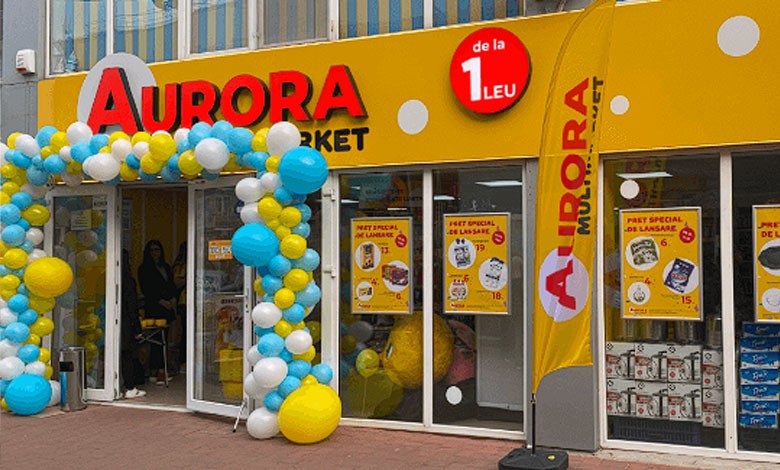
Against this background, the case of the chain of stores looks advantageous.Aurora“, the first Ukrainian retailer that successfully expanded its business in the European Union. Last October, the company opened its first store in the Romanian city of Suceava. And this year, in December, the one dollar store format network in Romania already had 30 stores, which indicates the successful development of Ukrainian business in the new market. Over a million customers visited the stores during the year, most of them local residents. This is a real triumph for a company that has just started working on the foreign market.
Why Aurora succeeded in what other Ukrainian retailers could not do
Currently, the chain of multi-markets “Aurora” counts more than 1,300 stores throughout Ukraine. The company continues to actively expand the geography of its presence, planning to increase the number of retail outlets in Ukraine to 2,000. And in the EU countries, Aurora plans to open more than 50 stores in the near future.
The success of the “one dollar store” with Ukrainian roots in Romania is explained by its co-founders by choosing a less competitive market, supporting Ukrainian manufacturers and taking into account local needs. “Aurora” chose Romania for its debut in Europe after careful analysis, taking into account the key advantages of the Romanian market – stable economic growth, high level of purchasing power of the population and the absence of strong players in the “all for one price” segment of stores.
The Romanian market is less saturated than, for example, Poland, where the competition is much tougher. A big plus for “Aurora” was the almost absence of strong players in the “all for one price” store format in Romania. This allowed the company to quickly occupy this niche and gain the trust of customers.
Romania, with a population of about 18 million, has great potential for business expansion. The adaptation of Aurora’s business model was probably facilitated by the cultural similarity between Ukraine and Romania. The popularity of affordable products fits well with the habits of local consumers. In addition, Romania’s proximity to Ukraine facilitates logistics, allowing for quick delivery of goods and maintaining competitive prices. “Aurora” actively supports the export of domestic goods, contributing to the economic development of both countries.
Why is it usually difficult for Ukrainian retail chains to adapt to the conditions of the European market
The fate of Ukrainian retailers in Europe varies greatly depending on their strategy and market conditions. Most of them faced strong competition, regulatory barriers, cultural differences and financial risks.
European markets, particularly Germany or Poland, are saturated with local and international brands, making entry even more difficult for newcomers who need to offer something unique to stand out. Regulatory standards in Europe require significant resources to adapt, and cultural differences and consumer preferences add to the challenges.
Thus, the German market is known for its high competition, dominated by both local players and multinational corporations. In Germany, the format of stores similar to the “one dollar store” is less common in the classical sense, but similar concepts exist. For example, Action is an international chain that offers a wide range at very low prices. Although the prices are not fixed at the level of one euro, the store focuses on the budget segment. The German TEDi chain also operates in the budget segment, offering goods from home decor to stationery and toys at a price of one euro. Another chain of stores with the concept of a fixed price of one euro is EuroShop. A chain of clothing and home goods stores operating in the budget segment, KiK is not exactly a “one dollar store”, but its low prices make it attractive to thrifty consumers.
Such formats are adapted to European markets and take into account regulatory requirements and consumer habits, which slightly differentiates them from American “dollar stores”.
As for the Polish market, it is less saturated than the German one, but still has high local competition, especially in retail and services, where brands with strong regional recognition dominate. Pepco is one of the largest chains in Poland with a format similar to the “one dollar store”, offering clothing, home goods, decor and toys at affordable prices.
The European chain Dealz from the Poundland group offers products at fixed low prices – groceries, household goods, cosmetics and toys. The well-known supermarket chain Biedronka often offers seasonal promotions on goods at low prices, which is similar to the concept of “dollar stores”. Tiger (Flying Tiger Copenhagen) is an international chain that offers original products at affordable prices: gifts, stationery, decor and toys. As in Germany, in Poland Kik offers budget products, including clothing, textiles and home decor.
European regulatory standards such as GDPR (General Data Protection Regulation) require companies to implement technical and organizational measures to protect personal data. This may require significant investment in new technologies, changes in infrastructure, or the hiring of specialists. Environmental requirements for producers may also require large adaptation costs. This is a challenge for companies operating in markets with less stringent requirements.
Cultural differences can also create obstacles for the integration of new brands, for example, the preferences of German consumers for environmentally friendly products or the popularity of local traditional tastes in Poland.
In addition, the investment of Ukrainian companies in European markets has risks due to economic instability in Ukraine. This affects the ability to attract capital and stable production for export.
Secrets of success of “one dollar store” stores in the world
Dollar store format shopping platforms are popular in many countries around the world, although their format may differ depending on the region. The secret of their success is, first of all, low prices, which attracts people of all incomes, especially in times of economic instability, when people seek to save.
A wide range of products makes them popular – from products to household chemicals, stationery and electronics. Makes shopping comfortable and convenient location in residential areas or near transport interchanges. Finally, the very concept of “everything for one dollar” causes the psychological satisfaction of a profitable purchase, even if the savings are insignificant.
Examples of successful chains in the world include Dollar Tree, Dollar General and Family Dollar in the USA, Dollarama in Canada, “100 yen” stores (Daiso, Seria) in Japan, Poundland in Great Britain and Euroshop in Germany in Europe. In developing countries, such stores are even more popular, for example, “99 rupees” in India or “10 pesos” in Latin America.
But the dollar store format has its challenges. Due to inflation, many chains are forced to revise the “everything for one dollar” rule, for example, Dollar Tree in the USA has included products for $1.25 and more. The proliferation of single-use products in such stores raises concerns about the impact on the environment. Creates competition and the growing popularity of e-commerce, which forces dollar stores to adapt to the times and launch online platforms.
Despite this, dollar stores continue to operate successfully, adapting their business model to local markets and consumer needs. They evolve, staying relevant and competitive.
…Aurora’s success on the Romanian market is a landmark achievement for the entire Ukrainian business. This success story demonstrates that, subject to a competent strategy and adaptation to local conditions, entering European markets can be successful even in difficult competitive conditions. Aurora’s case becomes a benchmark for other domestic retailers who plan to expand abroad, and opens new horizons for supporting Ukrainian manufacturers.
Aurora’s entry into the European market is also a contribution to the development of the domestic economy, the creation of new jobs and support for local producers. For the state budget, this means an increase in tax revenues, an inflow of currency, and the development of export infrastructure. This strengthens the hryvnia, supports economic stability and creates a basis for social programs. Such achievements form a positive image of Ukraine, inspire foreign investors and motivate other companies to expand.
Tetyana Viktorova