
Black and white photo in a passport: why is the document monochrome and how does it help with identification

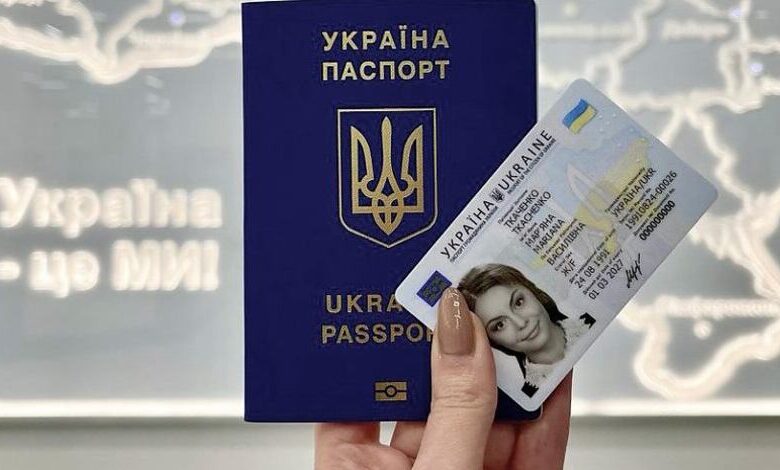
The photo in an international passport is perceived as a familiar detail of the document, although its format is determined not by design considerations, but by technical requirements for security, data reading and stable operation of identity verification systems. Because of this, the image in passport documents is made in black and white, which complies with international rules and is better adapted to machine identification during document processing and border checks.
Why was a monochrome format chosen for the passport
The reasons for this approach were told by the Passport Service “Gotovo”, where they drew attention to the fact that a monochrome photo has several practical advantages for processing biometric data. This explanation suggests that the black-and-white format is related to the international standards of the International Civil Aviation Organization, which are used in different countries to prepare documents suitable for automated control.
According to experts, in a passport document, a photograph performs a much broader function than simple visual recognition of a person, since it is part of the security system and participates in the process of digital face recognition. Because of this role, the image should be as suitable as possible for technical analysis, where the contours of the face, the distance between the features, the shape of the eyes, nose, lips and the general geometry by which the system compares the photo with the biometric parameters of a person are important.
A color photo, despite its familiarity for everyday use, creates more variables that complicate stable reading. The result can be affected by skin tones, lighting during shooting, camera features, color saturation, cosmetics or minor distortions that occur during printing or transferring the image to the document structure. The monochrome version removes this array of visual differences and leaves the system with the main thing – the shape of the face and its clearly recorded features.
As noted by the Passport Service “Gotovo”, identification systems work more accurately when the image is devoid of unnecessary color fluctuations that can change the perception of details at different stages of verification. In this format, algorithms focus on the light-shadow model of the face, the contrast between individual zones and geometric features, which are crucial when comparing the photo with the data of the document owner.
This is of practical importance for border control and automated verification systems, since in the flow of a large number of people, the equipment must quickly process information without additional errors. The fewer secondary visual factors that enter the analysis, the more stable the system recognizes a person in different conditions, in particular under different lighting, after a change in skin tone due to tanning or in the presence of minor differences in color reproduction between devices.
What external factors does monochrome eliminate
A separate advantage of a black and white image is that it weakens the influence of factors that often change the overall impression of a face in a color photo. Such factors include makeup, shadows from lighting, glare, room color temperature, printing features, and tonal differences that can be transmitted differently when photographing, scanning, and further using the document.
For identification, such unification is of practical value, since the system does not have to take into account a wide range of color details that do not define a person as a biometric object. Thanks to this, verification becomes less dependent on random shooting conditions, and the photo in the document retains the stability of perception during repeated use in different countries and on different equipment.
Why monochrome reduces the risk of technical failures
As experts note, any automated system works more reliably when the input data has a standardized appearance and does not contain unnecessary parameters that need to be interpreted separately. In the case of a passport photo, the black-and-white format simplifies image processing, since from a technical point of view the system receives more unified material for analysis and verification.
Due to such standardization, the equipment focuses on the key characteristics of the face, without wasting resources on analyzing color transitions and shades. For a document that must work correctly in different countries, at different checkpoints and in combination with different software complexes, such consistency is of great importance, because it reduces the likelihood of errors during identity verification.
How a black-and-white photo is related to passport protection
The explanation of the Passport Service specialists concerns not only biometrics, but also the physical protection of the document. The monochrome image is integrated into the structure of the passport by laser engraving, making the photo part of the document material, rather than a separate element that can be easily replaced or reproduced without a trace of interference.
This method of application significantly complicates forgery, since changing the photo would require interference with the structure of the document itself. This is important for the security system, because the protected photo works both as an element of identification and as part of the general mechanism for protecting against forgery.
A passport is one of those documents that must be read equally correctly in different countries and comply with uniform technical approaches. Therefore, the standards of the International Civil Aviation Organization are used for its design, which set the rules for machine-readable and biometric documents and ensure compatibility between national systems.
In such a system, the unification of the photo has an obvious goal: the document must be suitable for verification regardless of where it was issued and where it is presented. The black-and-white format in this case serves as part of an overall technical solution that combines a standardized photo, biometric accuracy, and protection against forgery.
Thus, a black-and-white photo in a passport is a technically justified solution that is subject to the requirements of security, verification accuracy, and international document compatibility. For the passport holder, such a detail may seem familiar, but for identification systems it has practical significance at every stage — from document issuance to control.


