
Air defense systems should only work in coordination with the Defense Forces: the Armed Forces of Ukraine warned business owners who install them

After the statements about the first shooting down of a Shahed jet in the Kharkiv region with the participation of private air defense, the topic of involving business in airspace protection went beyond the narrow professional discussion and quickly became the subject of public debate. Along with this, a simplified interpretation appeared, as if business owners could install electronic warfare equipment near factories, warehouses or other facilities at their own discretion and thus create their own system of protection against drones.
Some Ukrainian entrepreneurs began to independently purchase electronic warfare equipment to protect their facilities from air attacks. The Ground Forces explained that such logic is erroneous, since any equipment within the so-called private air defense should work only in coordination with the Defense Forces, with appropriate permits and within a single system. The reason is that without such coordination, the equipment that a business owner turns on to protect his facility can interfere with the operation of Ukrainian interceptor drones, control channels, and other defense elements during an attack.
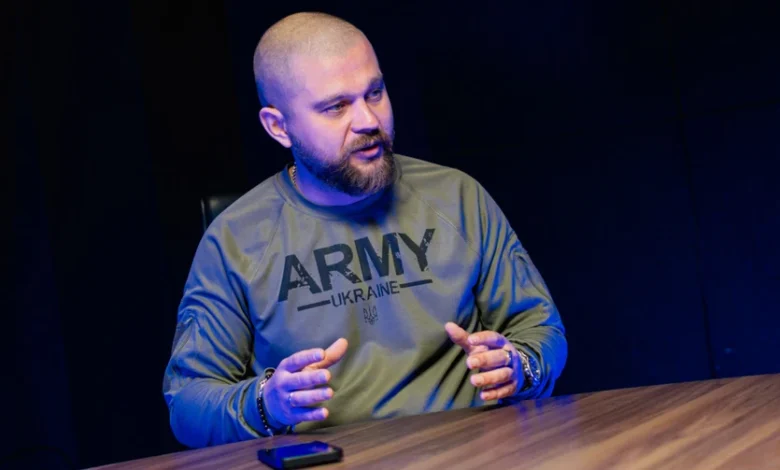
Maksym Skoretsky, Head of the Electronic Warfare Department of the Ground Forces, stated that business owners cannot install electronic warfare equipment on their facilities at their own discretion and call it private air defense. According to him, such infrastructure should operate only in coordination with the Defense Forces, since its operation affects the overall system for intercepting air targets.
Skoretsky also drew attention to the fact that some entrepreneurs purchase equipment without understanding its real purpose. Because of this, complexes designed to counter FPV drones at short distances are being used against the Shahed, although such equipment is not suitable for this.
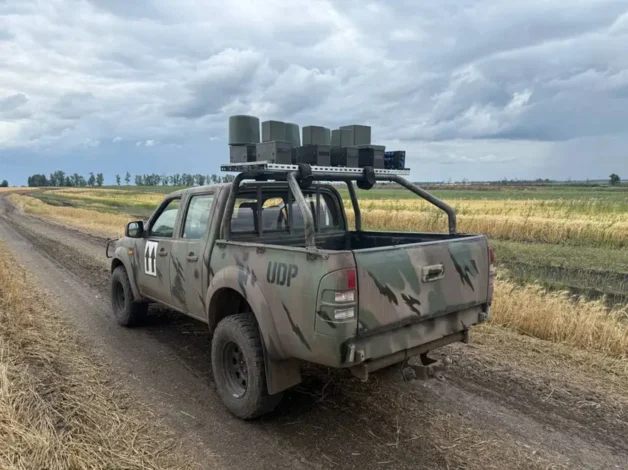
The main problem that the military command speaks of is that without approval, businesses can purchase too powerful electronic warfare equipment, which begins to jam the frequencies needed by Ukrainian units when repelling an attack. In such a situation, equipment installed to protect one object interferes with the operation of drones, control channels, and other defense elements.
Maksym Skoretsky stressed that even when the equipment is privately owned, the military should determine how it is used. They should decide when such equipment can be turned on, at what power it should operate, and against what targets it is allowed to be used without threatening defense.
“EW systems are capable of deflecting a Russian drone from your facility in such a way that it falls into a field outside the city. But this will only work if everything is done wisely.
The set of means and the number of specialists involved depends on the location of the facility and the types of potential threats. Somewhere the area is already well covered, and it can be strengthened in a specific area. And somewhere it is less covered, and you have to actually build a defense system from scratch. To clarify all these points, you need to contact me or other representatives of the EW Forces and ask how we can organize cover.
Representatives of some large private and state companies have approached this quite adequately. We have already established direct communication and were able to organize a more or less effective defense system,” – noted the Head of the Electronic Warfare Department of the Ground Forces.
As an example, Maksym Skoretskyi cited a case where an entrepreneur independently purchased electronic warfare equipment and installed it near his facility. During an air attack, this system jammed the control channels, which prevented Ukrainian drones from taking off for interception.
Describing this episode, the head of the electronic warfare department noted that six interceptor crews were jammed due to the actions of one businessman. This case is used in the Ground Forces as an argument in favor of tight coordination of any private means of protection with military structures.
“Among the infrastructure, the following are needed: first, constant power supply, second, altitude, third, constant communication between points with installed equipment (Starlink, WiFi bridges, etc.), fourth, the electronic warfare equipment itself, fifth, people who will remotely control the system.
Building infrastructure is the responsibility of the business. But we provide consultations, monitor the performance of the equipment. If we see that the equipment is not working, we call and ask what happened. If necessary, we can do the service ourselves.
But here I warn you right away: if the entrepreneur does everything on his own, nothing will work. All infrastructure and equipment must work in a single air defense system. Nothing will work individually.
There are funny cases: civil take a dome-shaped automotive electronic warfare, which only protects against FPV drones at a distance of up to 100 meters, and put it on a tower near his factory, thinking that it helps against “Shaheds”, – said Skoretsky.
Defense Minister Mikhail Fedorov reported that in the Kharkiv region, private air defense for the first time shot down a Shahed jet, which was moving at a speed of over 400 kilometers per hour. After that, interpretations began to appear in the media that linked private air defense with the independent installation of electronic warfare equipment by businesses.
Later, the Minister’s advisor Sergey “Flash” Beskrestnov clarified that such an understanding is erroneous. The Ground Forces after that once again emphasized: private participation in airspace protection is possible only when it is built into a single system and works in coordination with the Defense Forces.


