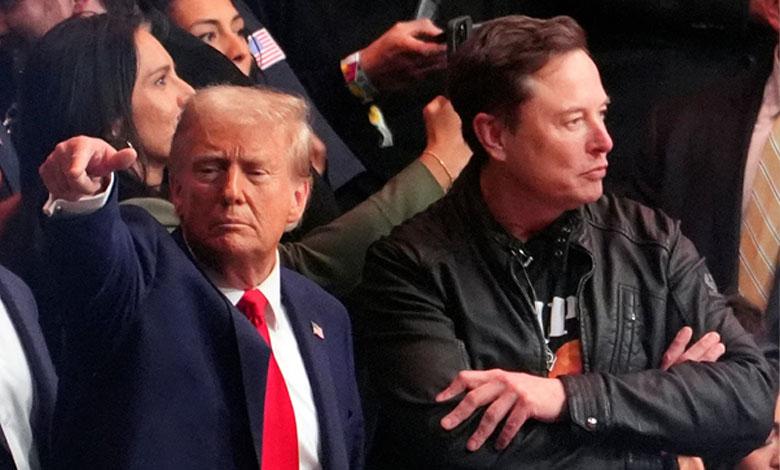
Elon Musk, once an ally of the White House on tariff policy, is now publicly and fiercely attacking it. His unsuccessful attempts to convince Donald Trump to cancel the new tariffs became the most high-profile clash between the two figures who, just a few years ago, spoke in unison about “economic sovereignty”. Musk is no longer restrained: he calls tariffs “stupidity”, Trump’s adviser – incompetent, and the policy itself – populist and harmful. In response, Peter Navarro contemptuously calls Musk a “car collector” who does not know how to trade strategically. In the new trade war, Musk is no longer in the headquarters – he is on the front lines.
“Space” tariffs: how Elon Musk turned 180 degrees on Trump’s customs policy
When President Donald Trump launched a trade war for the second time this year — and this time with even greater ambition — it was not just the business world that turned against him, but also someone he once publicly praised for his support, Elon Musk.
“I saw Elon Musk’s tweet – he’s using our space powers and doing a great job“, Trump said at a briefing in 2018, while signing an executive order imposing tariffs on steel and aluminum. Then Musk, albeit cautiously, supported the need to revise the principles of international trade, lamenting that the current system is like “run in the Olympics in lead shoes” (Twitter/X, March 8, 2018, CBS News). Musk’s tweet, which Trump referred to, drew attention to the trade imbalance with China. For example, China imposes a 25 percent tariff on auto imports from the US, while the US only has a 2.5 percent import tariff on auto imports from China. Trump echoed Musk’s concerns, writing back: “We know about it for years and do nothing. It’s time to change that!”.
Seven years later, when Trump, as the 47th president, announces new import tariffs under the slogan of “economic sovereignty”, Elon Musk becomes one of the sharpest critics of such a course.
Musk has been outspoken in his condemnation of the Trump administration’s imposition of large-scale import tariffs, arguing that such actions would destabilize markets and could lead to a global economic downturn. He publishes in X (Twitter) a fragment of Milton Friedman’s speech on interdependence in the world economy, accompanied by his comment: “Tariffs are taxes on American consumers and producers. They harm us. Time to stop this stupidity”.
His post immediately hit the headlines of the world media because it directly contradicted Trump’s policy. The Wall Street Journal came out with the headline: “Elon Musk destroys Trump’s trade philosophy”. Reuters wrote: Musk hopes for “zero tariffs” between the US and Europe.
The current head of the White House has announced new tariffs on electric vehicles, microchips, and — ironically — the same steel products he already imposed tariffs on during his first term as president. But this time, Trump’s protectionism has become much tougher. It has evolved from targeted tariffs on China to a broader policy that no longer distinguishes between who is an ally and who is a rival – as they say, “one size fits all.”
From prophet to critic
The contrast with 2018 is striking. At that time, Musk not only tried to draw attention to the trade asymmetry between the United States and China (25% tariff on American cars versus 2.5% on Chinese cars), but also emphasized the need for “fair play” for Tesla in the Asian market. In an interview for The Verge he even said: “It would be better if all countries lowered their tariffs.” In 2025, Musk’s rhetoric can no longer be called cautious. After announcing the new tariffs, he criticized Trump’s top trade adviser, Peter Navarro, suggesting he “doesn’t understand economics.” And the myth characterized the politics itself as “harmful, populist and economically short-sighted.” Edition Political came out with an article about the incident under the headline “Musk lashes out at Navarro amid tariff turmoil.”
Peter Navarro is the chief ideologue of protectionism in the Trump administration and the author of many of the most high-profile tariff initiatives — sharply reacted to Elon Musk’s call for freer trade. In an interview with CNBC, he disparagingly described Musk as a “car collector” who, they say, depends too much on imported parts to judge the state’s tariff policy.
According to Navarro, the Tesla CEO is well versed in government optimization, but his dreams of “zero tariffs” between the US and Europe are more commercial naivety than strategic vision.
On Monday morning, Musk continued his attack on Trump’s tariffs. He published in social networks, an archival video with Milton Friedman, a well-known apologist for free trade. In the video, the economist vividly explains how even a simple thing — a pencil — is a product of a complex global production chain. All this is taking place against the background of the obvious aggravation of trade competition between the US, China and the EU. For companies like Tesla — with global supply chains, manufacturing in Germany and sales in Asia — such a turnaround risks losing billions.
A trade war without winners
In 2018, Musk still tried to discuss Trump’s trade policy from the inside: he joined his councils and cooperated publicly. Now that the stakes have risen and the U.S. economy teeters on the brink of recession, Musk has gone from ally to independent critic.
His position is shared by other influential businessmen. Financier Bill Ekman the other day statedthat protectionism “can destroy the position of the dollar in the world”. And Bloomberg published data according to which the new tariffs have already caused panic on the stock exchange in the manufacturing sector.
April 7, 2025 US stock markets suffered significant losses amid concerns about President Trump’s aggressive tariff policy. The S&P 500 index fell 3.3%, approaching a “bear” market, the Nasdaq Composite fell 4% and the Dow Jones lost nearly 1,100 points. European and Asian indices also suffered heavy losses, with Germany’s DAX down more than 6%, Hong Kong’s Hang Seng down 13.2% and Taiwan’s TAIEX down 9.7% after the 32% tariff was announced. These developments highlight the global impact of the new tariffs on financial markets.
Larry Fink, CEO of BlackRock, the world’s largest asset management company, expressed concern that the US economy may already be in recession. He noted that the majority of company executives with whom he communicates share these fears. A CNBC poll found that 69% of CEOs predict a recession is imminent, and more than half expect one within a year. Fink also warned that the market could fall another 20%, underscoring the seriousness of the situation.
Tesla is trapped
Another aspect of Musk’s criticism is personal business logic. Tesla depends on the global market: China is its second most important region, and the German factory in Berlin is a key hub for European supplies. All this becomes a target in the new tariff war.
Tesla’s quarterly sales plummeted amid backlash over Musk’s work with the new “Department of Government Efficiency.” As of the last close on Monday, the company’s shares are trading at $233.29, down 42% from the beginning of the year.
Today, Elon Musk remains the richest man in the world. His wealth is estimated at $348 billion according to the Bloomberg Billionaires Index and $342 billion according to Forbes. At the same time, Musk loses a lot of money due to cooperation with Trump, which hurts his reputation. It is known that back in December 2024, Musk was the first person whose fortune exceeded $400 billion.
When Musk wrote in 2018 that “American companies do not have the right to have control in China, and China freely invests in the United States,” he was looking for a level playing field. In 2025, he is already talking about the threat of an open conflict in the world economy.
So, in 2018, Elon Musk perceived Trump’s customs policy as a problem that could still be “calibrated.” In 2025, he sees it as a direct threat to the economic future of the United States. He went from an ally of the administration to its most vocal critic — and that’s what makes the current trade war fundamentally different.