China’s rare earth resources: how new deposits are strengthening the country’s influence on the global economy

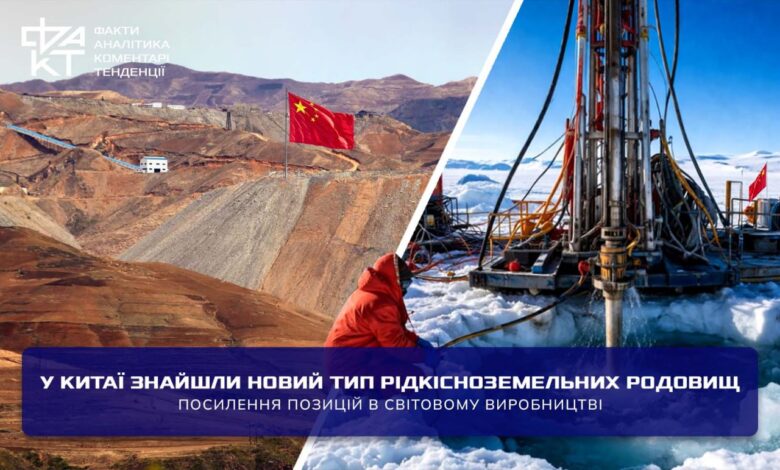
While the world has become accustomed to explaining China’s power in terms of factories, exports, and cheap production, the country is actively developing a much deeper foundation for its influence—its resource base. The new rare earth deposits in Heilongjiang and Jilin come as China already controls most of the world’s processing of critical minerals and continues to expand its raw material map from Inner Mongolia to Antarctic stations near the Ross Sea. The most acute thing about this situation is that China’s new rare earth resources could further shift the global economy toward dependence on a single supply center.
Northeast China Changes the Balance of Rare Earth Resources
China’s rare earth advantage, which has long kept global industry on edge, has taken on a new northeastern dimension after reports of unusual formations in the provinces of Heilongjiang and Jilin. Chinese scientists discovered a new type of rare earth formation there, and the main significance of this discovery lies not in yet another addition to the raw materials register, but in a possible change in the entire internal scheme of distribution of such resources in the country.
The scientists’ discovery makes this story much more interesting than the usual news about minerals. In southern China, there are known clay deposits from which rare earth elements have to be released through chemical leaching. At the same time, the picture is different in Heilongjiang and Jilin: the formations there consist of loose sand and gravel, formed under the influence of natural cycles of freezing and thawing. This difference can affect further development, because the structure of the rock determines not only the method of extraction, but also the economy, speed of work and environmental impact.
After research and sampling in two northeastern provinces, Chinese scientists have identified a new type of deposit, in which significant levels of both light and heavy rare earth elements were found. For China, this detail is of particular importance, because the discovery of new deposits can potentially change the distribution pattern of rare earth resources according to the principle: heavy – in the south, light – in the north.
Until now, this pattern looked almost like a geological constant of the Chinese raw material model. Significant deposits found in southern China contain mainly heavy rare earth elements, while northern deposits, in particular the Bayan Obo mine in the Inner Mongolia Autonomous Region, the largest rare earth element deposit in the world, contain mainly light elements. The new data from Heilongjiang and Jilin do not cancel this picture in one fell swoop, but they make it much less convenient and much less predictable.
Rare earths have long ceased to be a narrow topic for geologists, because a whole set of technologies on which modern industry depends depends. This group includes 17 critical minerals, among them cerium, neodymium and dysprosium. They are needed for the production of electronics, large magnets, superconductors, green technologies and defense systems. In such a chain, each new promising layer of raw materials becomes a lever of influence far beyond the quarry or laboratory.
China’s advantage in this area was already almost unattainable for competitors, and new discoveries could make it even tighter. China is the world’s largest producer and consumer of rare earths and controls almost 90% of the world’s processing of these critical minerals. Its share in mining exceeds 70%, so the country holds not only ore, but also industrial chains, without which the ore remains a semi-finished product.
The announcement in March of large deposits of rare earth elements, fluorite and barite in Sichuan province in southwestern China has already shown that the country’s resource base continues to grow in different regions. In 2025, Chinese geologists also discovered a large deposit of a previously unknown rare earth mineral in the Inner Mongolia Autonomous Region in the north of the country. The discovery in Heilongjiang and Jilin adds a new quality to this sequence, because it affects not just the volume of reserves, but the internal geography of heavy and light elements.
It should be noted that China’s mineral base generally looks like one of the foundations of its economic strength. More than 170 types of mineral raw materials are concentrated in the country, and rare earth and non-ferrous metals remain the main strength of China’s subsoil. Neodymium, dysprosium, and yttrium are needed for electronics, microcircuits, batteries, and electric vehicles, while tungsten, antimony, and molybdenum put China in first place in the world in terms of reserves of these refractory metals.
China’s industrial weight is also supported by large deposits of bauxite, zinc, lead, copper, and tin. This set of resources creates a broader support for the country than a separate rare-earth monopoly: some metals power high-tech sectors, while others support mass production, construction, engineering, and export chains.
At the same time, fuel and energy resources remain a separate area of strength and dependence for China at the same time. The country consumes a huge amount of energy, so it is actively developing its own fuel resources. Coal is of key importance here, because China has one of the largest world reserves and is the largest producer of this fuel, and the main basin is Shanxi.
However, oil and gas in the Chinese resource system look much more vulnerable. Their reserves are estimated as medium, the main deposits are located in the northeast, in particular Daqing, as well as in the Tarim Basin. The country does not have enough of its own oil, so it is its largest importer. Significant uranium reserves, at the same time, give China a resource base to ensure its own nuclear energy.
Ferrous and precious metals add another important detail to this situation: a large number of reserves does not always mean complete self-sufficiency. In terms of iron ore volumes, China is among the world leaders, but its own ore often has a low iron content. Because of this, Beijing massively imports higher-quality ore from Australia and Brazil. Large industrial reserves of manganese and vanadium strengthen the metallurgical base, and gold consolidates the country’s status as one of the world’s largest producers and consumers of this metal.
At the same time, non-metallic minerals are less visible, but without them China’s industrial machine would not be as complete as it is today. Graphite, especially layered and amorphous, is critical for lithium-ion batteries. Phosphorites and salts provide raw materials for fertilizer production, and vast reserves of limestone, marble and clay support the construction industry.
This whole resource mosaic explains why the discoveries in Heilongjiang and Jilin are more important than they first appear. China is not just finding another layer of valuable raw materials, but getting a chance to expand its rare earth geography where previously it was expected mainly light elements. For a world dependent on Chinese processing, Chinese mining and Chinese industrial infrastructure, such a change means an even denser concentration of advantages in the hands of a country that already sets the rules in one of the most sensitive markets of the 21st century.
China in Antarctica: Stations on the Ice, Minerals Under Ban, and the 2048 Frontier
China’s presence in Antarctica has long gone beyond the romance of polar expeditions, as five research stations on the icy continent already form a well-thought-out system of constant access to one of the most secretive spaces on the planet. Where most countries see a harsh edge of snow, storms, and scientific observations, Beijing is building an infrastructure that works for climatology, oceanography, geology, satellite measurements, logistics, and political weight in the Antarctic system.
In general, Antarctica is a unique territory for world science and diplomacy. As of 2026, 29 countries, including Ukraine, which are consultative parties to the Antarctic Treaty, have their own research stations here. This treaty, signed in 1959, transformed the continent into a space free of mining, weapons, nuclear tests and military rivalry, leaving it for peaceful research. It is the scientific presence that gives states the right to influence the future of the continent, which is why Antarctica has become a place where countries compete not with armies, but with laboratories. China is building a network of five stations there (Qinling, Changcheng, Zhongshan, Kunlun, Taishan), while the United States maintains the giant McMurdo base and the Amundsen-Scott station right at the South Pole.
The first Chinese station was Changcheng, opened in 1985 on King George Island near the Antarctic Peninsula. Its appearance was a sign of China’s entry into the club of states that do not just send seasonal expeditions, but leave their own mark on the continent. In 1989, Zhongshan was commissioned in Pruds Bay, giving China another foothold, closer to intracontinental routes and exploration of East Antarctica.
After that, the Chinese program began to move deeper into the ice sheet. Kunlun, established in 2009 in the Dome A area, is of particular importance because this area is among the coldest, driest, and highest parts of Antarctica, where the atmosphere is suitable for unique astronomical and climatic observations. Taishan, built in 2014, became an intermediate link between the coast and the interior, that is, not just a station, but part of a route that supports more complex expeditions.
The newest station, Qinling, opened in February 2024 on Nevymovny Island in the Ross Sea, showed that China is consolidating its activities in a strategically important part of the continent. The Ross Sea has immense scientific value as one of the least disturbed marine ecosystems on Earth, but at the same time this region is often mentioned in the context of possible offshore oil and gas reserves. Because of this, each new base there looks not only like a laboratory on the edge of the world, but also as a long-term presence near an area that may become the subject of fierce debate in the future.
Antarctica attracts China and other countries because the resource potential of the planet’s future is hidden under the ice and on the shelf. Coal, iron ore, copper, nickel, platinum, zinc, gold and diamonds have been discovered on the continent; various geological assessments also mention chromium, cobalt, silver, manganese, uranium and rare earth elements. A separate topic is the projected reserves of oil and natural gas on the shelf, in particular in the Ross and Weddell Seas, where underwater sedimentary basins could theoretically contain hydrocarbons.
However, between the words “deposits” and “mining” in Antarctica lies not just a layer of ice, but a whole legal wall. China does not mine minerals there, just as no other country in the world does. The Madrid Protocol to the Antarctic Treaty categorically prohibits any activity related to mineral resources, except for scientific research. This means that drilling for commercial extraction, industrial development of deposits and the transformation of the continent into a raw material platform remain outside the law.
The ban is in effect until at least 2048, but this date is often given in an oversimplified way. In 2048, the restriction does not automatically disappear, but a procedure for reviewing the regime can be opened if the parties to the treaty demand it. Because of this, current geological, geophysical and cartographic work officially has scientific status, although international analysts often see it as preparation for a possible future where knowledge of the territory will become a political advantage.
In this logic, Chinese stations work as a tool for the long game – they collect climate data, study glaciers, the ocean, the atmosphere, the magnetic field, biological systems and the geological structure of the continent. However, at the same time, they form a presence that cannot be quickly created from scratch. In polar politics, not only the flag matters, but also supply routes, icebreakers, seasonal routes, fuel depots, communications, trained teams, wintering experience and the right to participate in the conversation about the rules.
China’s interest in Antarctica should not be reduced to the crude scheme “a station equals a future mine”. Such a conclusion would be too primitive and inaccurate. Another picture looks much more convincing: Beijing is increasing its scientific and logistical presence in a region where resources exist, but are locked by law, technological difficulties and environmental risks. If the rules are ever revised, the advantage will not be given to those who first talk about minerals, but to those who have spent decades collecting data, building routes, and proving their “legitimate” presence through science.
Antarctic resources remain a temptation that has not yet been transformed into an industry. Coal under the ice makes no practical sense when its extraction is more expensive than the resource itself, and metal ores are difficult to obtain due to the ice shell, extreme weather, and lack of infrastructure. Oil and gas on the shelf are associated with the risk of catastrophic spills in an environment where the elimination of an accident would be almost impossible. Because of this, the ban on extraction is based not only on morality and ecology, but also on a sober understanding of the cost of error.
Antarctica today is like a safe with the key hidden in a contract. China does not crack this safe, but it carefully studies its shape, the temperature of the metal, the location of the locks, and the behavior of other key holders. That is why China’s ice stations should be seen as a sign of a deliberate state strategy, designed for decades, in which science, infrastructure and political presence merge into one cold, precise and very long-term calculation.
China’s resource system is increasingly looking less like a collection of individual deposits and more like a complex construction, where each new layer of raw materials strengthens the already existing control over processing, production and industrial chains. Discoveries in Heilongjiang and Jilin, new finds in Inner Mongolia and Sichuan, huge reserves of graphite, tungsten, coal and uranium, as well as a presence in Antarctica, show that Beijing is expanding the space in which other countries’ dependence on Chinese subsoil and processing is becoming increasingly difficult to break.
New deposits in northeastern China are therefore important for the global economy, as they could strengthen Beijing’s position in the rare earths market, on which production chains in the US, EU, Japan and South Korea depend. If China’s control over raw materials and processing becomes even stronger, the global market will have less room to maneuver, and prices, supplies and production rates in key industries will increasingly depend on its decisions.