IMF eases lending conditions for Ukraine: 32 years of debt dependence and international lessons for the economy

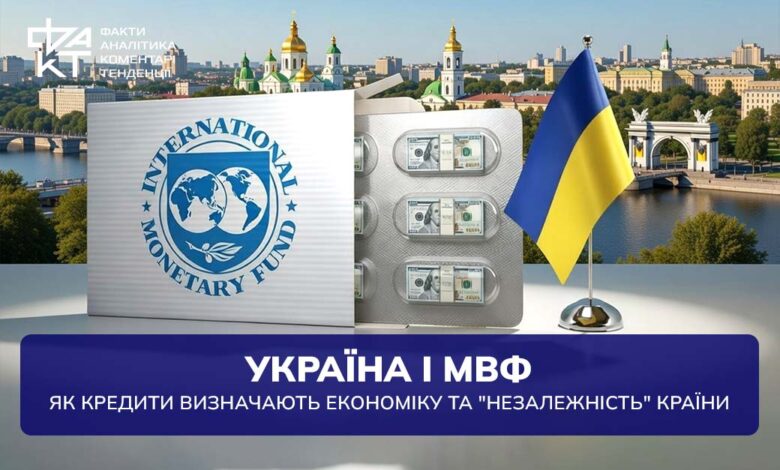
The IMF made concessions to Ukraine, softening the terms of the new lending program. However, this does not eliminate the rigid dependence that the country has been accumulating since 1994. It was then, after joining the Fund, that our country received its first systemic transformation loan, and since then each tranche has become a set of obligations that determine the order of reforms, budget discipline, the formation of supervisory boards and tax policy. On the one hand, loans save the state from financial collapse and allow it to cover deficits. On the other hand, they make Ukraine dependent on external institutions.
The IMF’s concessions in 2026, the shift in the threshold for VAT payment by individual entrepreneurs and the transformation of mandatory “prior actions” into structural beacons demonstrate the Fund’s flexibility, but do not eliminate the main problem: Ukraine remains forced to build its own economy and policy under constant external control.
IMF approves new Extended Fund Facility for Ukraine: Key Terms and Implications
On February 26, 2026, the International Monetary Fund (IMF) approved new terms for a 4-year Extended Fund Facility for Ukraine worth $8.1 billion. The first tranche of about $1.5 billion will be used to cover the State Budget deficit and support the country’s macro-financial stability. This program is integrated into a broader financial framework that provides for covering the projected budget deficit of UAH 136.5 billion in the period 2026–2029, which allows the state to plan economic and fiscal measures for the medium term.
The terms of the new credit program include 12 structural benchmarks that Ukraine must ensure by 2026. Unlike previous programs, the IMF has abolished mandatory prior conditions (“prior actions”), which removes some of the administrative pressure on the government and paves the way for more flexible implementation of reforms. In particular, the requirements for the broader introduction of VAT for individual entrepreneurs, taxation of parcels up to 150 euros, the introduction of a tax for digital platforms, and the extension of the 5% military levy have been transferred to structural beacons.
One of the key changes was the change in the threshold for mandatory VAT payment for individual entrepreneurs. If previously the tax had to be paid with annual income of more than 1 million hryvnias, the new norm sets the threshold at 4 million hryvnias. This means that the new requirement will affect about 257 thousand entrepreneurs instead of the previously planned 660 thousand, and the final dates for its implementation are still being discussed: they will probably be tied to the end of the war or to the moment of Ukraine’s accession to the European Union.
At the same time, the government plans to integrate all planned tax and customs changes into a single bill — the so-called One Big Beautiful Tax Bill, which is to be submitted to the Verkhovna Rada in March 2026. It will include provisions on taxation of parcels, digital platforms and maintaining the military levy at the level of 5%, which will allow systematizing tax policy and ensuring more transparent rules for businesses and consumers.
The most difficult task, which requires prompt implementation, will be the adoption of a package of tax measures in March. The main components of this package are: the introduction of a tax on income from digital platforms, the abolition of the duty-free limit for parcels up to 150 euros, and the introduction of VAT for individual entrepreneurs from January 1, 2027. At the same time, the IMF agreed to raise the threshold for registering individual entrepreneurs as VAT payers, which allows reducing the burden on small businesses and at the same time expanding the tax base among large entrepreneurs.
In addition to tax initiatives, the program provides for a number of measures to stabilize the financial and banking sector. Among them are the refusal to recapitalize non-systemic banks at the expense of the budget, the implementation of recommendations on the nomination of supervisory boards of state-owned banks, as well as the appointment of a permanent head of the State Customs Service by the end of March 2026. The program also includes submitting to parliament amendments to the Tax Code to align transfer pricing rules with OECD standards and implement Article 4 of the EU Anti-Tax Avoidance Directive.
An important component of the program is an updated strategy for state-owned banks, which includes mechanisms for protecting against political interference and privatization goals, as well as the implementation of a supervisory system to reduce the risks associated with banks engaging third-party organizations to perform critical functions. In addition, it is planned to issue new rules for the National Agency for the Prevention of Corruption on the verification of asset declarations, priority for high-ranking officials in high-risk areas, publish an analysis of quasi-fiscal expenditures in the energy sectors, and develop a centralized data repository for tax and customs administrations by the end of 2026.
The program also includes measures to enhance the independence of financial market regulators, including amendments to the law on the National Securities and Stock Market Commission and the appointment of all members of the Accounting Chamber of Ukraine according to the list of verified candidates by the end of December 2026.
Overall, this program combines tax, financial, and regulatory instruments aimed at ensuring economic stability, expanding the tax base, and increasing transparency of public administration in the context of a protracted military crisis and recovery from large-scale attacks on energy infrastructure.
IMF Lending Conditions and Their Impact on Ukraine’s Economic Policy
The IMF provides loans as an instrument that provides for the fulfillment of clearly defined obligations set forth in the Memorandum of Economic and Financial Policies. For Ukraine, this means that access to Fund resources is directly linked to the adoption of the State Budget, the implementation of labor law reforms, and the implementation of revenue mobilization measures, as well as ensuring transparency and accountability of state institutions. That is, IMF loans become not only a financial resource to cover the deficit or stabilize the balance of payments, but also a tool for shaping state policy and the governance structure in our country.
To receive tranches under the new Extended Fund Facility (EFF) for 2026, Ukraine has committed to fulfilling a number of structural milestones, the key emphasis of which has shifted from the “survival” of the economy to creating conditions for transparency of state processes. The main areas of reform are tax and financial policy, the fight against corruption, energy and corporate governance reforms, as well as changes in the financial sector, including the privatization of state banks and currency liberalization.
It should be noted that one of the strictest in the IMF credit program is the anti-corruption block. The plan includes a reboot of the Bureau of Economic Security with a transparent competition for management positions, a reform of the High Anti-Corruption Court with an expansion of the number of judges and ensuring their independence, and a full verification of officials’ asset declarations through the NACP’s automated systems. These measures are aimed at increasing transparency, reducing the risks of abuse, and creating conditions in which access to international financing depends not only on the country’s ability to reform its own institutions. Despite these demands repeatedly made by the IMF, corruption in Ukraine continues to flourish, and its scale has significantly increased during the war.
In the area of tax and financial policy, the IMF expects the implementation of the National Revenue Strategy measures, which include the digitalization of tax and customs administration and the revision of tax benefits. An important element is a return to medium-term budget planning and tight control over the deficit, which ensures macro-financial stability and at the same time demonstrates to international partners the state’s ability to systematically manage finances.
In the energy and corporate governance areas, the IMF expects gas and electricity tariffs to gradually be brought back to market levels while protecting vulnerable groups through subsidies, as well as completing the reform of the supervisory boards of the largest state-owned enterprises, in particular Energoatom and Ukrenergo, in line with OECD standards. The financial sector envisages preparations for the privatization of state-owned banks, including Sense Bank and Ukrgasbank, in order to reduce the state’s share, as well as the gradual lifting of currency restrictions that were introduced at the beginning of the war.
Fulfilling these conditions is critically important not only for the IMF, but also for the G7 countries, which, based on the Fund’s reports, make decisions on direct budget support to Ukraine. Thus, loans become both a stabilization mechanism and a factor of external influence on the state’s economic policy, creating a system in which the government is forced to coordinate budgetary and structural decisions with international institutions.
History of Ukraine’s Credit Cooperation with the IMF: Lessons, Risks, and International Experience
Ukraine joined the International Monetary Fund 32 years ago – in 1992, and already in 1994 received its first credit program – a systemic transformation loan. This first tranche was aimed at stabilizing the economy, which was emerging from the post-Soviet crisis, and was supposed to stimulate market transformations. However, from the very beginning, cooperation with the IMF formed a structural dependence, since financing was provided only under strict conditions: budget discipline, stabilization of the national currency exchange rate, and tax system reforms.
The first Stand-by programs in 1995–1998 helped to avoid hyperinflation and stabilize the hryvnia, but at the same time limited the state’s ability to independently finance social and infrastructure needs. In conditions of limited resources, the State Budget reduced spending on health care, education, and industry support, which caused a decrease in the pace of domestic development and social tension. Ukraine gained financial stability, but at the cost of limited political and economic autonomy.
A comparison with other countries shows the universality of this model: the IMF provides loans to dozens of countries with a similar logic. Loans help to avoid defaults and stabilize the macroeconomics, but are accompanied by requirements that limit state sovereignty in financial decisions. For example, in Argentina, similar programs led to temporary stabilization, but increased social inequality and protest sentiment. In Pakistan, strict fiscal conditions led to increased pressure on the population and increased external dependence.
As of the beginning of 2026, the IMF provides loans to 86 countries around the world, the main recipients of which are countries facing a balance of payments crisis, the consequences of wars, or in need of structural reforms. The largest borrowers by volume for 2025–2026 include Argentina ($56.8 billion), Ukraine ($14.1 billion), Egypt ($9.4 billion), Pakistan ($9 billion) and Ecuador ($8.8 billion). At the same time, Ukraine is the second largest IMF borrower in the world.
It should be noted that the situation with lending to developed world economies is significantly different. The United States does not attract IMF loans and is the largest donor to the Fund, having the highest quota and veto power over key decisions. The last case of the United States turning to the Fund to support the dollar dates back to 1978. At the same time, advanced European countries, such as Germany, France or Italy, are also mostly creditors or partners of the Fund, rather than its borrowers.
European states that attracted IMF loans did so mainly during crises. Thus, Greece, Ireland, Portugal and Cyprus received large-scale anti-crisis packages in 2010–2015, often as part of the “troika” of the IMF, the ECB and the European Commission. Currently, these countries have mostly fully repaid their debts and are not in active lending programs.
Eastern and Southern Europe provide another example: Moldova, Albania, Armenia, Azerbaijan, Belarus and North Macedonia are or were active borrowers to stabilize the economy or carry out structural reforms. Poland has not borrowed from the IMF in recent years, it used them in 2008–2010, and the last major agreements with the Fund date back to around 2017.
For Ukraine, cooperation with the IMF has a double effect: on the one hand, loans ensure coverage of the State Budget deficit, support for the hryvnia exchange rate and stability of the banking sector, especially during the war. On the other hand, the country has become structurally dependent on external resources. The complexity of the situation is exacerbated by the fact that IMF conditions are not limited to short-term stabilization. Each new program — from 1994 to the current EFF in 2023–2024 — includes structural beacons and fiscal commitments that shape a long-term order of economic reforms, often regardless of military or social realities. Compared with other countries where the IMF plays the role of a “mediator of financial discipline,” for Ukraine this means a double burden: restoring the economy during wartime and simultaneously adhering to strict macro-financial rules.
Without IMF loans, Ukraine could avoid some of the external constraints, but this would have led to a financial collapse, rapid devaluation and a growing deficit. At the same time, active dependence on the IMF creates systemic risk: the economy becomes sensitive to changes in international programs, the government’s political decisions are limited, and any deviation from the financing plan can lead to serious macroeconomic consequences.
Thus, IMF loans for Ukraine are both a stabilization tool and an external control mechanism that determines the country’s economic policy for decades to come. According to existing forecasts, our country will be able to fully repay its current debts to the IMF only by 2037, but on condition that after the completion of the current programs it will not attract new loans.
In order to reduce the risks of excessive dependence on external creditors, Ukraine must focus on economic development, self-sufficiency, increasing the transparency and efficiency of its own institutions. At the same time, the most important step is to end the war and restore infrastructure. The return of refugees is also extremely important, for which it is necessary to create decent living conditions and restore economic activity in the regions affected by the conflict. At the same time, the fight against total corruption and the shadow economy is critical, because without this, the mobilization of domestic revenues and the formation of a sustainable State Budget will remain impossible.
Ukraine’s goal should not be to fulfill the IMF’s requirements, but to use its resources as a tool for its own development and strengthening statehood. Tax, financial and other reforms should become part of a long-term sensible state strategy, and not a mechanism for obtaining tranches. In the long term, the state should create economic and social conditions that will allow avoiding external dependence, increasing domestic productivity and ensuring stability for centuries to come. Therefore, IMF loans should be considered not as a permanent support, but as a temporary resource for the transition to an independent, sustainable and transparent economy.