
Cockroaches in rooms and utility outages: a scandal broke out around KNEU dormitories

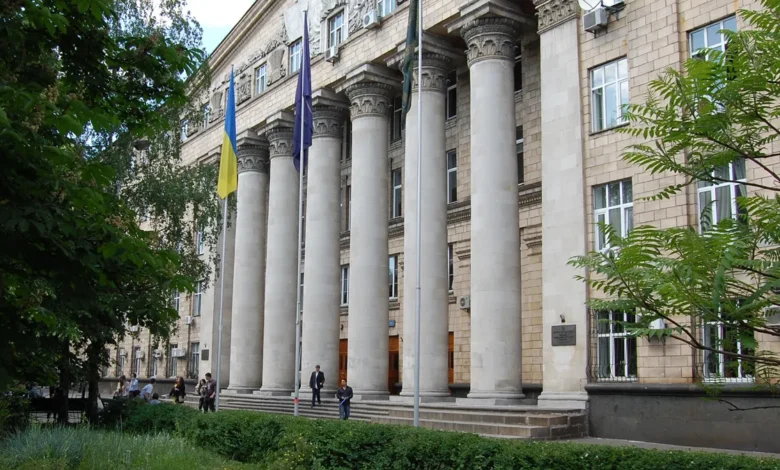
Living conditions in student dormitories during the war have traditionally remained one of the criteria by which applicants and their families evaluate educational institutions. That is why public complaints about the sanitary condition, disruptions in basic utilities, and problems with the maintenance of residential buildings quickly attract the attention of not only the student community, but also the general public. In recent days, the Kyiv National Economic University has been at the center of such a discussion, where students have begun to massively report difficult living conditions.
Students have taken the problem to the public space
A wave of complaints appeared on social networks and the media on the eve of the start of the admission campaign. Students talk about long-term problems with hot water supply, power outages, and the unsatisfactory sanitary condition of individual premises.
According to the residents of the student campus, the issues had been accumulating for a long time, but after another utility problem, the dissatisfaction went beyond internal chats and discussions between students.
The most resonant were the reports of the mass appearance of cockroaches in living rooms, corridors and showers. Students claim that there are so many insects that some residents already perceive them as a familiar element of everyday life, although this situation causes serious concern due to sanitary risks.
Residents of the dormitories report that they have repeatedly requested disinsection. According to them, the relevant work was planned, but was postponed after problems with the power supply arose.
Information about the limitation of the functionality of student chats, where the administration prohibited taking screenshots of messages, caused particular dissatisfaction. Some students perceived this as an attempt to reduce the spread of information about the situation in the dormitories.
Among the main complaints of residents are also interruptions in the hot water supply. Students claim that the restrictions last much longer than a few days, and refer to messages that the administration sent to internal chats back in early June.
In addition to the water supply, students also recall previous difficulties with electricity. According to them, the outages were an additional factor that complicated living and affected everyday life in the dormitories. Some residents also recalled the winter period, claiming that due to problems with heating, the temperature in the rooms was so low that comfortable living became problematic.
What the university administration said
After the situation became public, the administration’s position was voiced by the rector of KNEU, Dmytro Lukyanenko. According to him, the scale of the problem is greatly exaggerated. He explained the lack of hot water by an emergency situation in the centralized boiler room, where outdated boilers failed. The rector reported that the outages lasted one or two days.
According to the rector, the power outages in the dormitories occurred due to technical reasons. He confirmed that the campus had been without electricity for about a day and a half, starting on the morning of June 17. The head of the university explained that the payment had been made, but the funds had not been credited to the accounts immediately due to treasury procedures.
“Now all the dormitories have electricity, it was restored a few hours ago. Dormitory No. 6 was the first to be connected, then all the others. And the fact that there was no electricity for a long time is incorrect information. As for hot water, we will turn it on tomorrow morning. We have our own centralized boiler room, and we serve ourselves, that is, the entire campus, to which water is supplied to all our dormitories. The breakdown occurred due to old boilers. But there was cold water, but there was no hot water for a day or two. It will appear in the dormitories on Friday morning,” explained Dmytro Lukyanenko.
The rector also explained how the electricity debt arose:
“In mid-April, the one-year contract with the energy company expired. A new contract was being concluded. Probably, some kind of technical failure occurred then. We paid half of the month for April, and half was suspended. And in May, this amount turned out to be unpaid. And then we didn’t have to pay for the payment yet. By the way, we have been paying on time for decades, because we are not bankrupt, we have money. The amount that was suspended — whether due to a computer failure or something else — appeared as a debt for April. The first payment was 80 thousand hryvnias, and the second was 400 thousand for May. Now we have repaid all the debts. But I agree, such overlaps should not occur and those responsible should be held responsible for this.”
Social media also reported that students were allegedly being forced to leave their dormitories for the summer due to utility problems.
Dmytro Lukyanenko denied this and stated that the university allows students to stay in Kyiv in the summer upon application. According to him, the inconveniences with utilities were temporary, and the kitchens in the dormitories are equipped with gas stoves, so residents could cook food.
“Students write applications, and those who want to stay in Kyiv in the summer. That is why none of the children from the dormitories survive, as they write on social media. On the contrary, we give them the opportunity to live normally in the dormitory. During the shelling, a thousand windows were broken. We fixed all this without a single penny from the state. We purchased generators at our own expense and we had no power outages in the winter,” the head of the educational institution emphasized.
Students questioned the official explanations
After the management’s comments, some dormitory residents expressed disagreement with the version of events. Students emphasize that the actual duration of the hot water outages was longer than officially reported.
To confirm their words, residents began to publish photos of the premises, which showed traces of fungus, damage to the ceilings, and the condition of individual shower rooms. There were also complaints that students had to perform some of the repair work at their own expense.
After public complaints, some of the utility problems were resolved. Hot water was restored in dormitories No. 1, No. 3, and No. 5.
At the same time, residents of dormitories No. 2 and No. 4 continue to wait for a full resolution of the issue. Thus, the conflict between students and the administration has moved into the public sphere, where the parties have different assessments of both the scale of the problems and the speed of their elimination.


