
Every third person no longer sees a future in Ukraine: how the mood of Ukrainians in Europe is changing

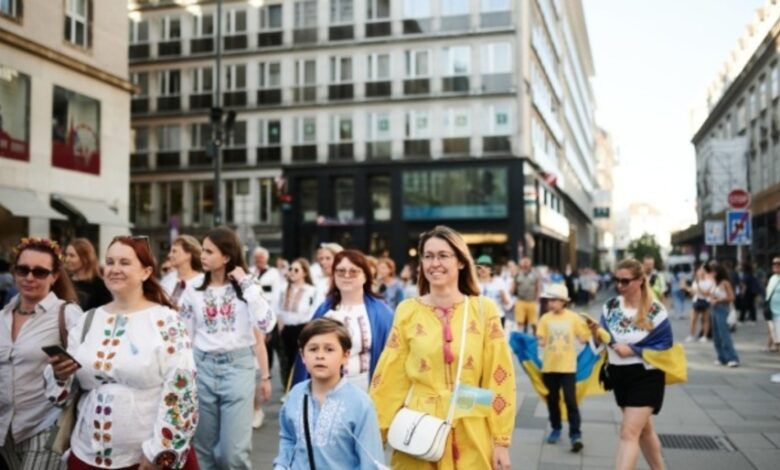
The mass exodus of Ukrainians after the start of the full-scale war was initially perceived as a forced and temporary phenomenon. Many people left their homes with the expectation of returning after the situation stabilized, while maintaining their jobs, housing, and connections in Ukraine. However, a long stay abroad, adaptation to new conditions, and the prolongation of the war are gradually changing the mood of a significant part of citizens. A new study shows that more and more Ukrainian migrants no longer associate their future with returning home, even after the end of hostilities.
The desire to return is noticeably decreasing
The Gradus study showed a significant change in mood among Ukrainians living in the European Union. If last year 68% of respondents stated their intention to return after the end of the war, this year 53% remained so.
At the same time, the number of people who do not plan to return to Ukraine is growing. Over the year, the share of such respondents has more than doubled – from 13% to 31%. This trend demonstrates that for a significant part of internally displaced persons, staying abroad is gradually turning from a temporary stage into a long-term life strategy.
The survey results show that even among those Ukrainians who retain the intention to return, the majority are not considering such a step in the near future.
Only 4% of study participants stated their willingness to come to Ukraine this year. Another 11% allow for a return within the next twelve months. At the same time, 9% of respondents associate their return with the first month after the end of the war.
Such indicators demonstrate that for many people, the key factor remains not a calendar date, but an overall assessment of the security situation and prospects for further life.
Security remains the main argument
Among the reasons that influence the decision to stay in the European Union countries, security continues to take first place. This factor was indicated by 86% of respondents.
Over the years of the war, millions of Ukrainians have settled in countries where there is no threat of missile strikes, air raids, and the need to constantly take into account military risks. For families with children, this issue is of particular importance due to the ability to plan education, work, and daily life without constant uncertainty.
The standard of living also remains an important factor. According to the study, 77% of respondents named it one of the reasons why they continue to stay abroad. After several years of living in EU countries, many Ukrainians have found work, learned the language, integrated into local communities, and adapted to new social systems.
The impact of adaptation and family circumstances
The gradual consolidation of Ukrainians in their host countries is also confirmed by data from international organizations. According to the estimates of the Office of the United Nations High Commissioner for Refugees, millions of Ukrainian citizens are under temporary protection in European countries, a significant part of whom have been living abroad for over three years.
During this time, many children have started studying in local schools, students have entered European universities, and adults have integrated into the labor market. The longer this process lasts, the more difficult the decision to return becomes, since it no longer concerns one person, but the entire family, which is building a life in a new environment.
A new factor is the fear of condemnation after return
The study draws special attention to the indicator related to the public perception of Ukrainians who left during the war. 53% of respondents expressed concerns about a possible negative attitude from fellow citizens.
A year earlier, only 30% of respondents were concerned about this factor. The growth of this indicator indicates that for some people, the issue of return is related not only to security or economic opportunities, but also to expectations about how they will be perceived after many years of living abroad.
Demographic challenge for the country
The change in mood among Ukrainian migrants is taking place against the backdrop of a long-term population decline. According to demographers, the largest share of those living abroad are women of working age and children. It is these categories of the population that have a decisive influence on the future labor market, education system, and birth rate.
Against this background, the results of the Gradus study demonstrate a new trend: more and more Ukrainians who left because of the war view the countries of the European Union not as a temporary refuge, but as a place for long-term residence. It is this change in mood that has become one of the most noticeable features of the survey.


