
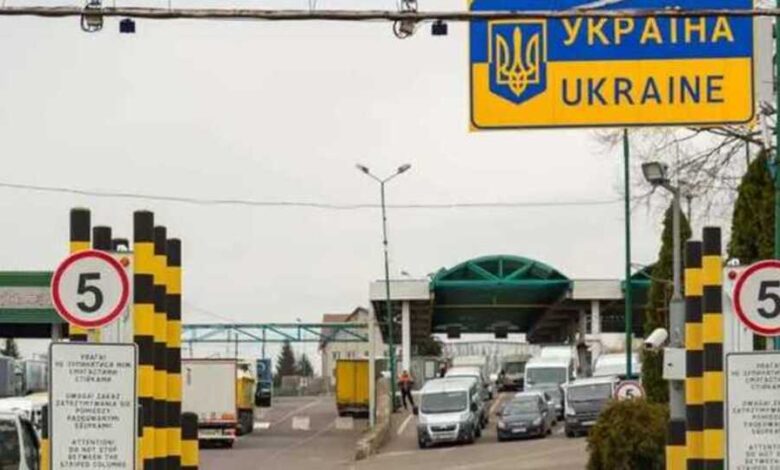
Moving across the Ukrainian border in wartime has turned into a procedure that requires not only nerves and endurance, but also a clear understanding of legislative exceptions. Refugees from Ukraine heading to EU countries often find themselves in long-hour queues — both at pedestrian and car checkpoints, especially during peak hours. However, some individuals have the legal right to cross the state border without waiting. This is not a benefit, but a legally established mechanism that is based on health, job status or the presence of special circumstances.
Who can pass without queuing according to the law
Ukrainian legislation regulates the procedure for crossing the border and defines the categories of persons who may be allowed to pass in an extraordinary manner. It is about the Law of Ukraine “On Border Control” and normative acts that regulate the actions of the State Border Service at checkpoints. The basis for making a decision is made up of documents confirming that a person belongs to a certain category.
These categories include:
- Persons with diplomatic and official powers. Those with diplomatic, official or service passports can go through control outside the queue. This applies to employees of the Ministry of Foreign Affairs, accredited persons and official delegations. The basis is the presence of a corresponding document that determines the status. If a person is accompanied, the members of the delegation also go with him.
- Representatives of intergovernmental organizations. Employees of international institutions, such as the UN, the EU, the OSCE and others, can expect to pass without a queue, provided that they present an official ID card or a letter from the institution. They must clearly indicate the purpose of the trip and justify the need to urgently cross the border.
- Persons with disabilities and seriously ill persons. Everyone who has a confirmed disability (in particular, an ID card with a disability of the I or II group), as well as persons with an escort, can pass border control with priority. In cases of urgent treatment or the need for medical intervention, it is sufficient to present a medical certificate, an extract from the medical history or a document on referral for treatment abroad. The practice of border guards in these cases is mostly loyal.
- Parents with babies. One of the most sensitive categories. If there is a child under one year old when crossing the border, the parents have the right to an extraordinary crossing. To do this, you need to have a child’s birth certificate or other document confirming age. It should be emphasized that this norm applies only to babies. In the case of children older than one year, there is no automatic right to pass without queuing. But in the presence of several children, in the case of an unsatisfactory state of health of the child or other objective reasons, the border guards may allow passage outside the queue at their discretion.
- Other cases at the discretion of the border guard. All decisions about passing without a queue are made by the senior border guard. He has the right to assess the situation, draw up an act and allow or deny passage in a simplified manner. This means that even in the presence of certain supporting documents, no exception is absolute – the final decision is made by the border guard on the spot.
It should be noted that, unlike babies, pregnant women do not have the legal right to skip the line. This means that they have a common order of passage. However, border guards often take into account the circumstances — the period of pregnancy, the presence of medical examinations, complaints or accompanying persons. If the situation threatens health or involves complications on the way, the decision can be made in favor of the woman. But this is not the norm, but an exception to practice.
What documents should you have with you?
In order to use the right of priority crossing, a person must provide confirmation. These can be:
– diplomatic/service passport;
– ID card with a disability;
– medical certificate or epicrisis;
– the baby’s birth certificate;
– a letter from an international organization or a power of attorney;
– referral for treatment;
– a certificate of participation in a humanitarian mission.
In case of disputes, the border guard draws up an act and records the decision.
However, even with the exceptions defined by law, the majority of Ukrainians cross the border in general. Queues are formed due to several factors: limited capacity of checkpoints, a large number of refugees and tourists, complicated checks under martial law and the operation of new control systems (biometrics, electronic queues). In this context, exceptions are not a mass phenomenon, but rather a mechanism of individual regulation.
When planning to cross the border, especially with children or in the case of medical examinations, you should prepare a complete package of documents. If in doubt, consult with lawyers or representatives of volunteer initiatives. In addition, it is important to have health insurance, a valid passport, documents for a child, a green card for a car — all this can be checked not only by border guards, but also by the police on the EU side.
Therefore, the right to cross the border without queuing is a legal procedure that should protect people in vulnerable categories. But this right is not automatic. The final decision always depends on the border guard on the spot, so you should prepare for the trip as if you will have to explain your situation, even if formally you fall under the exceptions. The situation at the borders remains tense, but understanding the mechanisms of its crossing will help avoid misunderstandings and delays.


